
⛰️ LifeOS — The AI-powered Life Operating System that helps you hill climb to wherever you're going.
feat: Add Principle #1 'Pursuit of the Foundational Algorithm' - 15 principles
Daniel Miessler3cd20da601a6
diff --git a/README.md b/README.mdindex 9dd844dc..6b5cc2d5 100644--- a/README.md+++ b/README.md@@ -22,7 +22,7 @@<br/>-**Getting Started:** [What is PAI?](#what-is-pai) · [Quick Start](#-quick-start) · [14 Principles](#the-14-founding-principles)+**Getting Started:** [What is PAI?](#what-is-pai) · [Quick Start](#-quick-start) · [15 Principles](#the-15-founding-principles)**Packs & Bundles:** [Browse Packs](#-available-packs) · [Browse Bundles](#-available-bundles) · [How Packs Work](#-how-pai-packs-work) · [v1 → v2 Journey](#the-journey-pai-v1x--v20)@@ -111,7 +111,7 @@ To understand your current capabilities and what to build next, see the **[Perso----## The 14 Founding Principles+## The 15 Founding PrinciplesThese principles guide how PAI systems are designed and built:@@ -119,59 +119,62 @@ These principles guide how PAI systems are designed and built:**[Read the full breakdown of each principle →](https://danielmiessler.com/blog/personal-ai-infrastructure)**-#### 1. Clear Thinking + Prompting is King+#### 1. Pursuit of the Foundational Algorithm+All progress follows the same universal pattern: **Current State → Desired State** via verifiable iteration. This is the outer loop. The inner loop is the 7-phase scientific method (OBSERVE → THINK → PLAN → BUILD → EXECUTE → VERIFY → LEARN). The critical insight: verifiability is everything. If you can't measure whether you reached the desired state, you're just guessing.++#### 2. Clear Thinking + Prompting is King[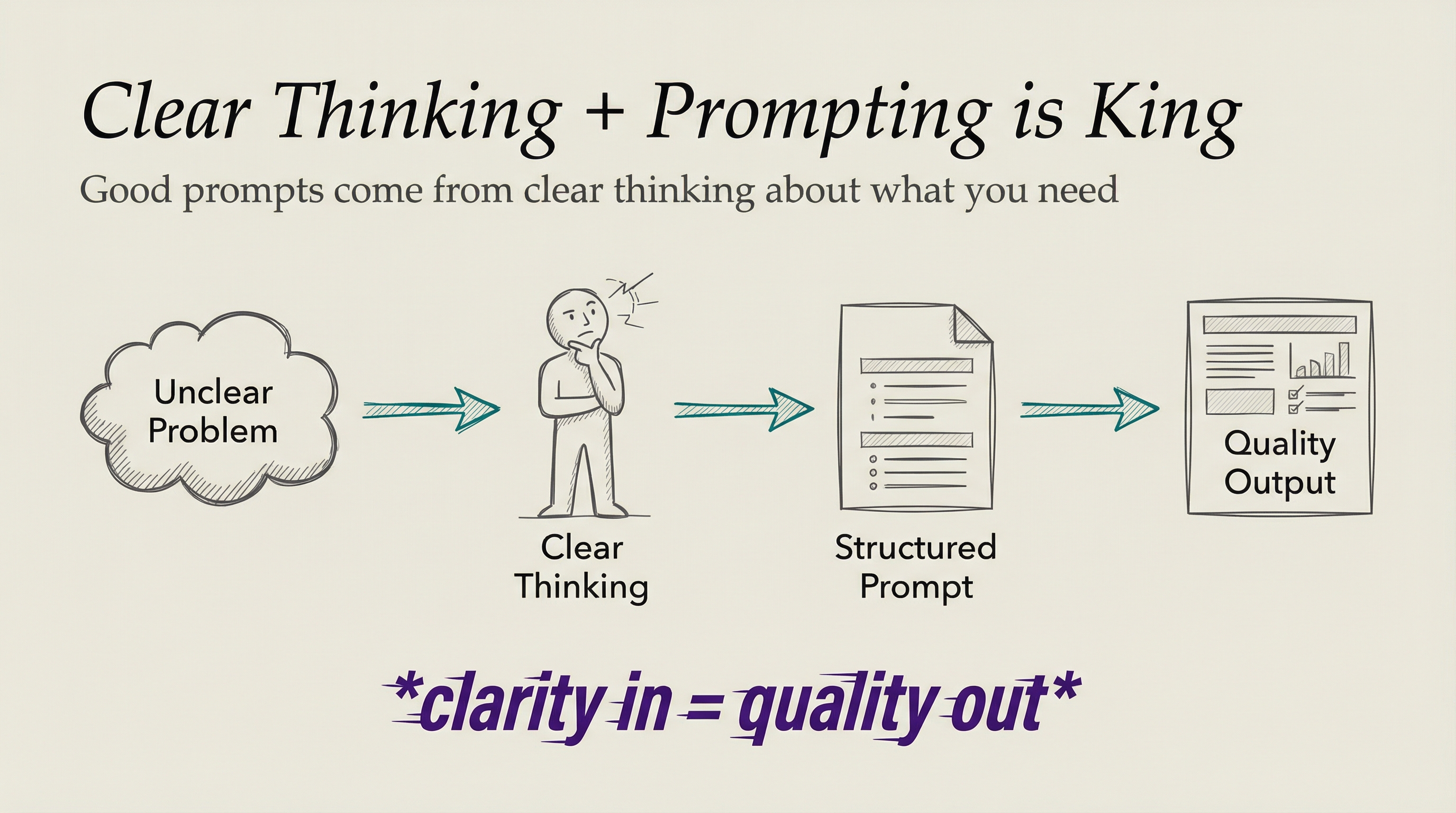](https://danielmiessler.com/blog/personal-ai-infrastructure)Good prompts come from clear thinking about what you actually need. Spend more time clarifying the problem than writing the prompt.-#### 2. Scaffolding > Model+#### 3. Scaffolding > Model[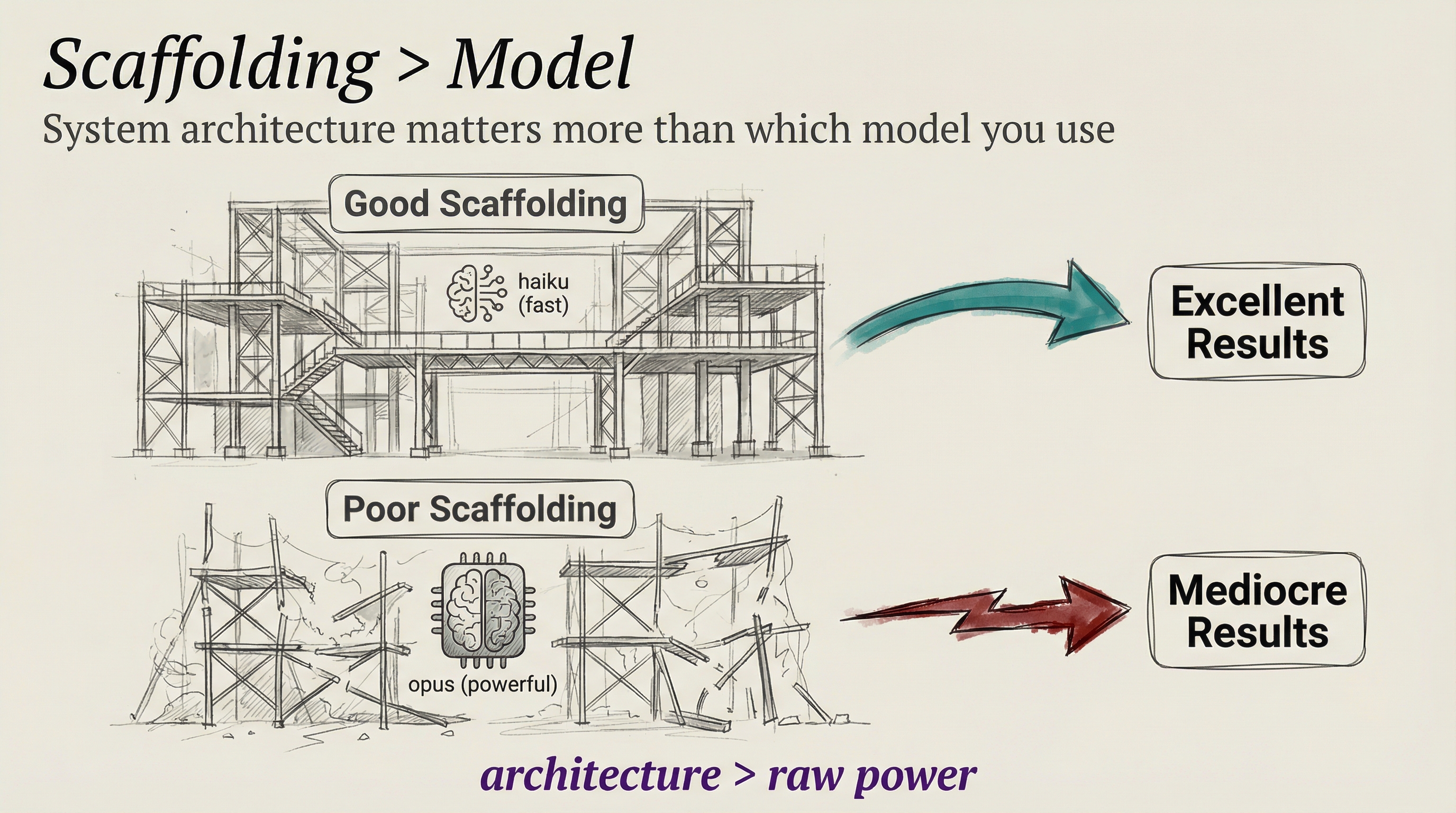](https://danielmiessler.com/blog/personal-ai-infrastructure)The system architecture matters more than which model you use. Good scaffolding makes even smaller models perform well.-#### 3. As Deterministic as Possible+#### 4. As Deterministic as Possible[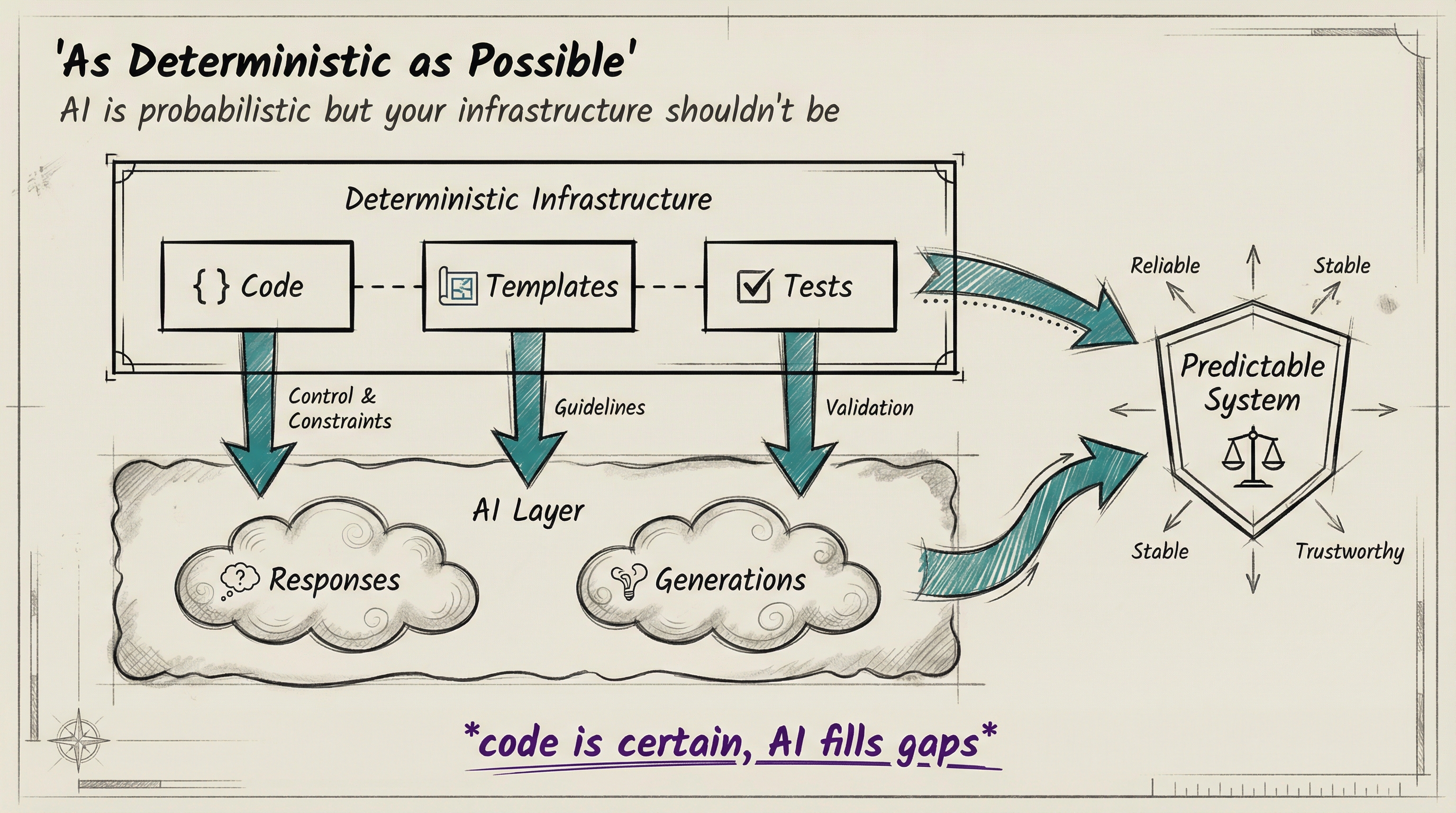](https://danielmiessler.com/blog/personal-ai-infrastructure)AI is probabilistic, but your infrastructure shouldn't be. Use templates and consistent patterns.-#### 4. Code Before Prompts+#### 5. Code Before Prompts[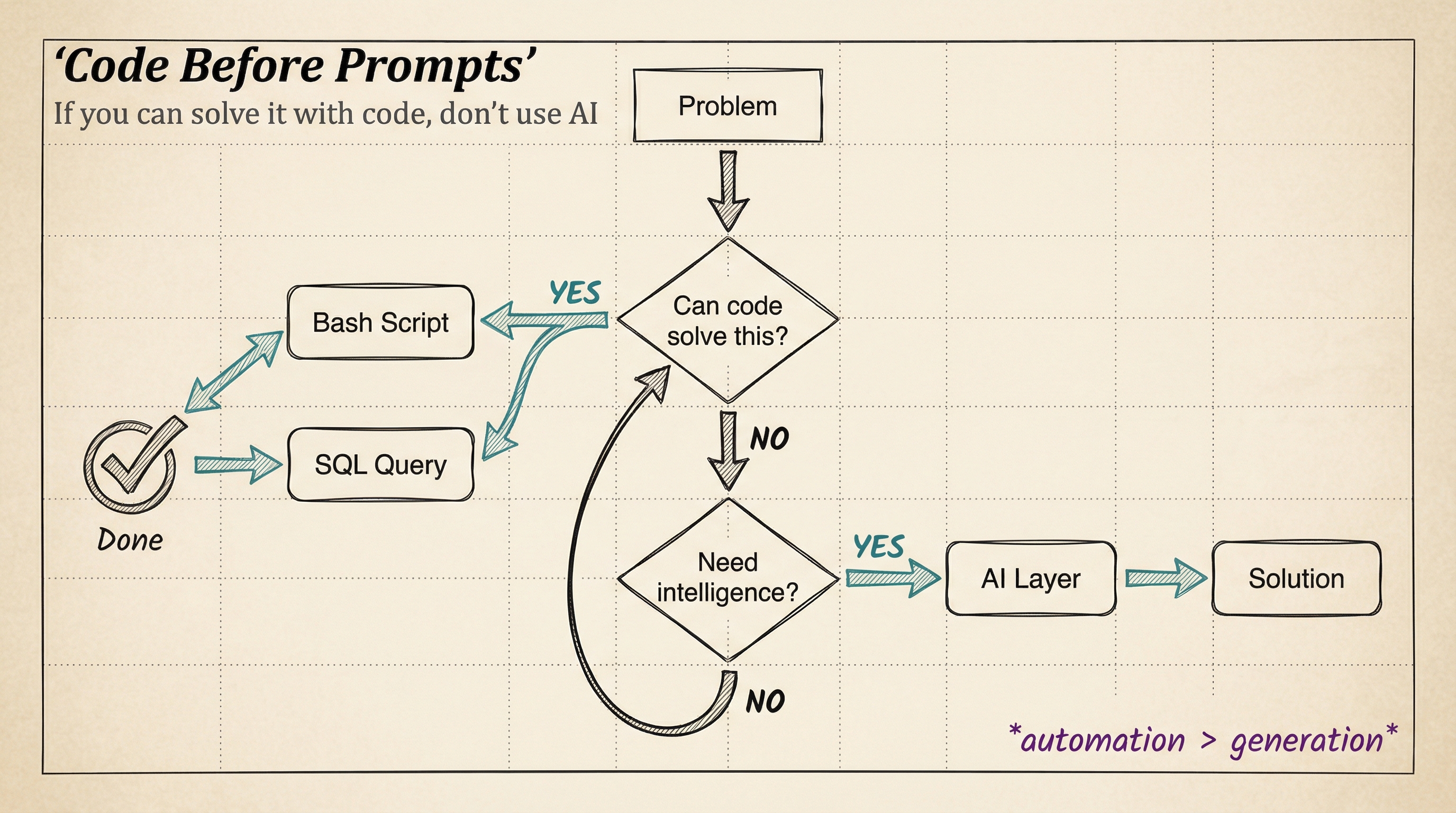](https://danielmiessler.com/blog/personal-ai-infrastructure)If you can solve it with a bash script, don't use AI. Only use AI for the parts that actually need intelligence.-#### 5. Spec / Test / Evals First+#### 6. Spec / Test / Evals First[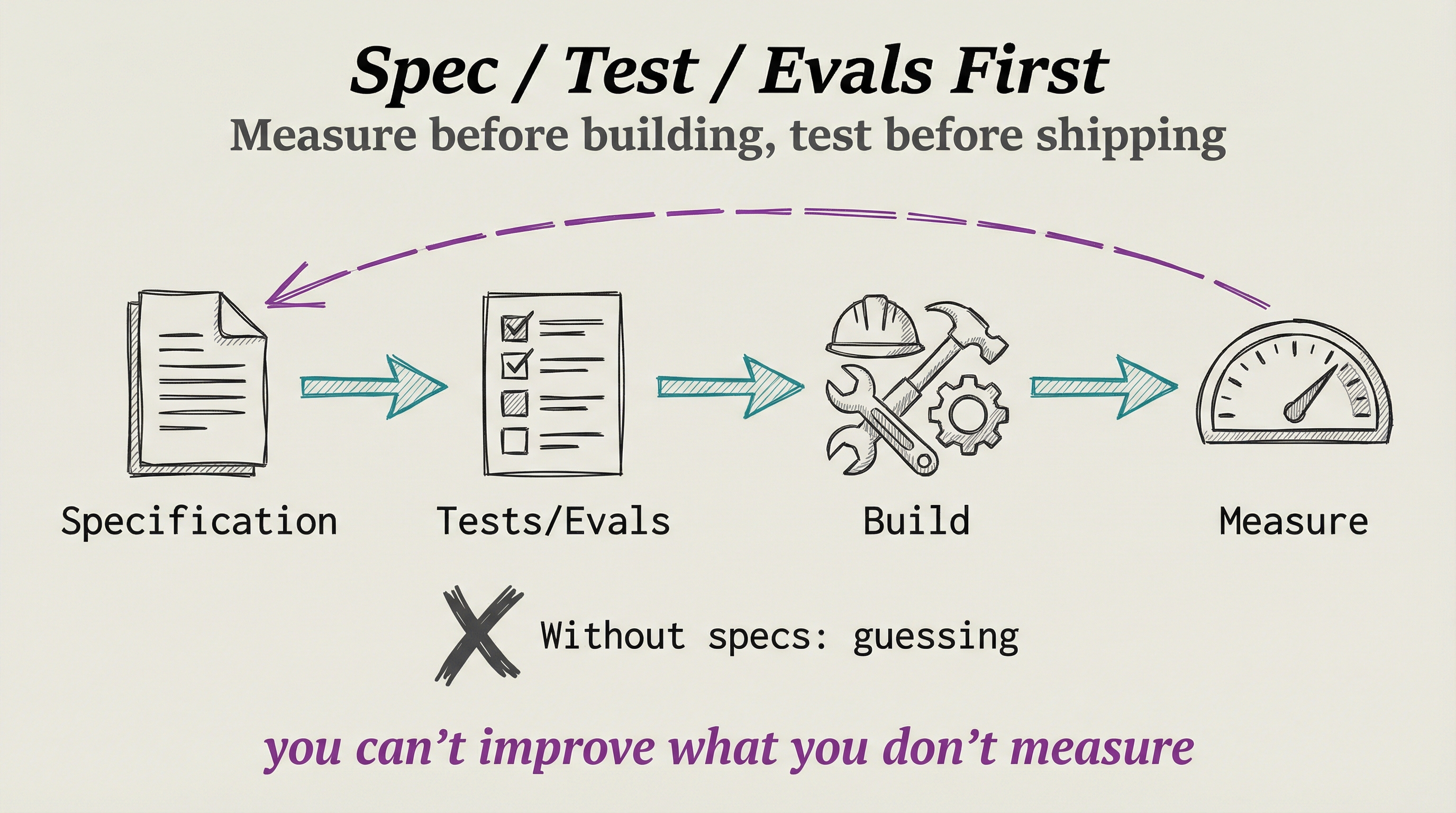](https://danielmiessler.com/blog/personal-ai-infrastructure)Before building anything complex, write specifications and tests. Use evals to measure if the system is actually working.-#### 6. UNIX Philosophy (Modular Tooling)+#### 7. UNIX Philosophy (Modular Tooling)[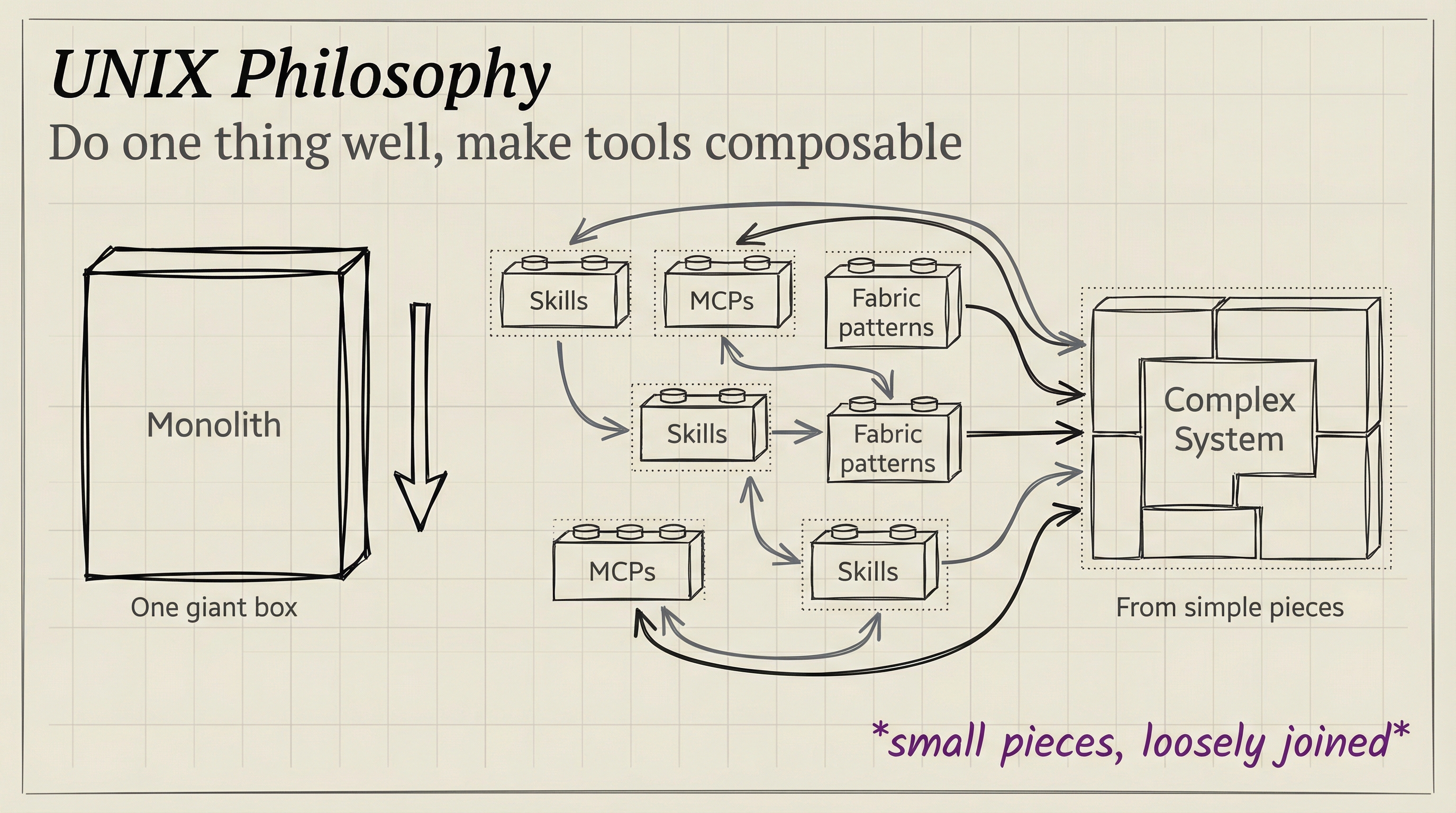](https://danielmiessler.com/blog/personal-ai-infrastructure)Do one thing well. Make tools composable. Use text interfaces.-#### 7. ENG / SRE Principles+#### 8. ENG / SRE Principles[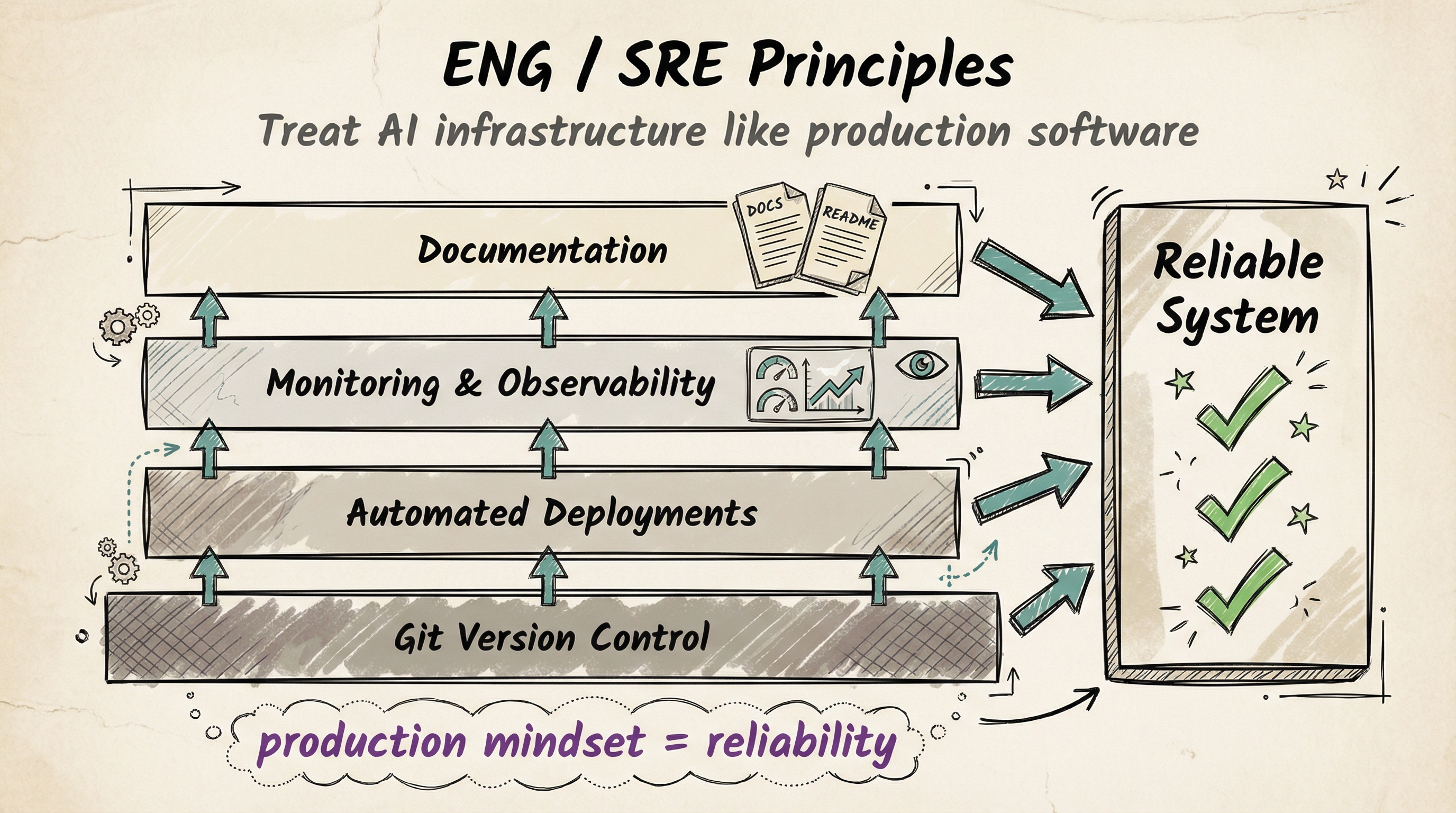](https://danielmiessler.com/blog/personal-ai-infrastructure)Treat your AI infrastructure like production software: version control, automation, monitoring, rollback plans.-#### 8. CLI as Interface+#### 9. CLI as Interface[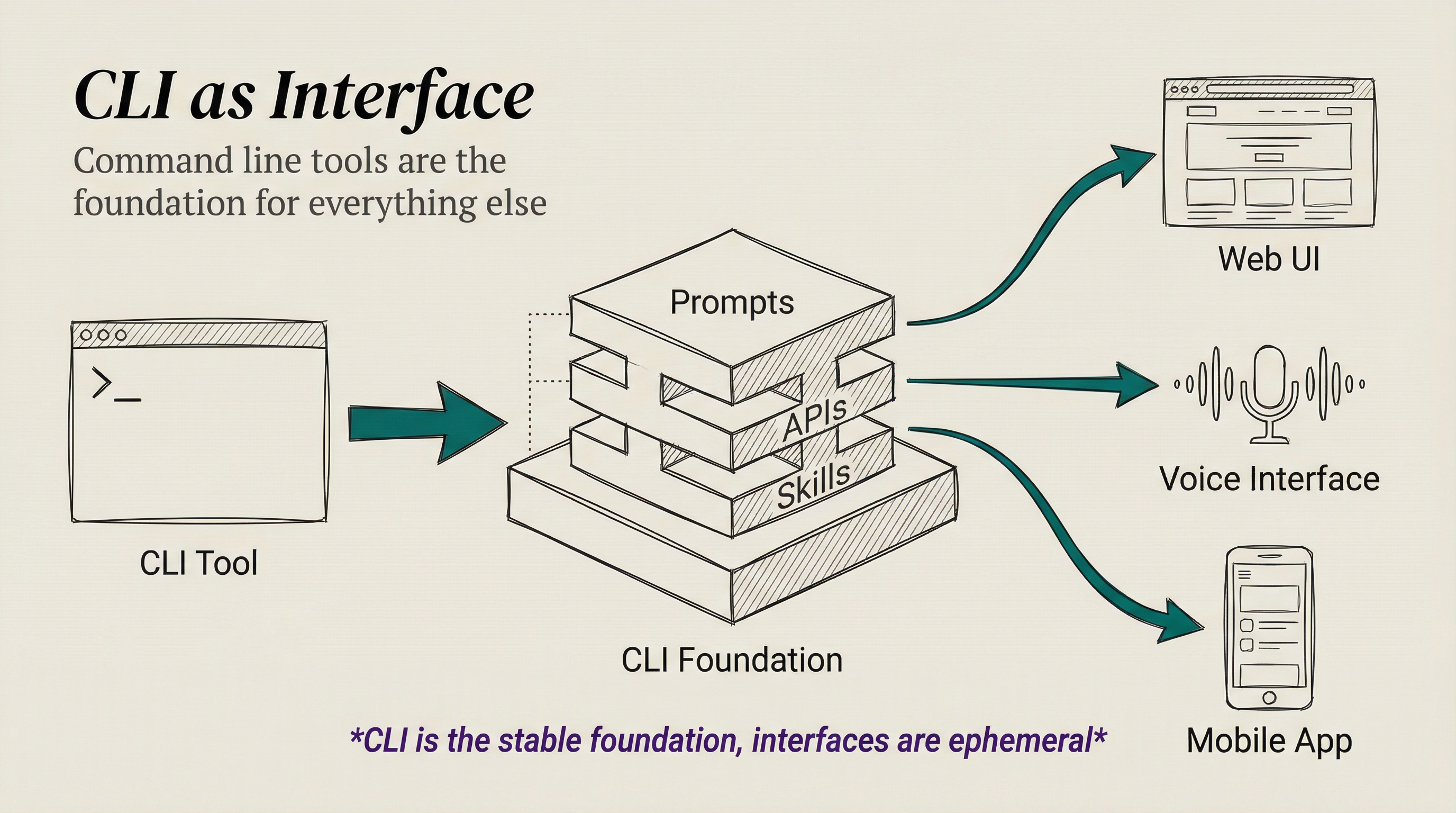](https://danielmiessler.com/blog/personal-ai-infrastructure)Command-line interfaces are faster, more scriptable, and more reliable than GUIs.-#### 9. Goal → Code → CLI → Prompts → Agents+#### 10. Goal → Code → CLI → Prompts → Agents[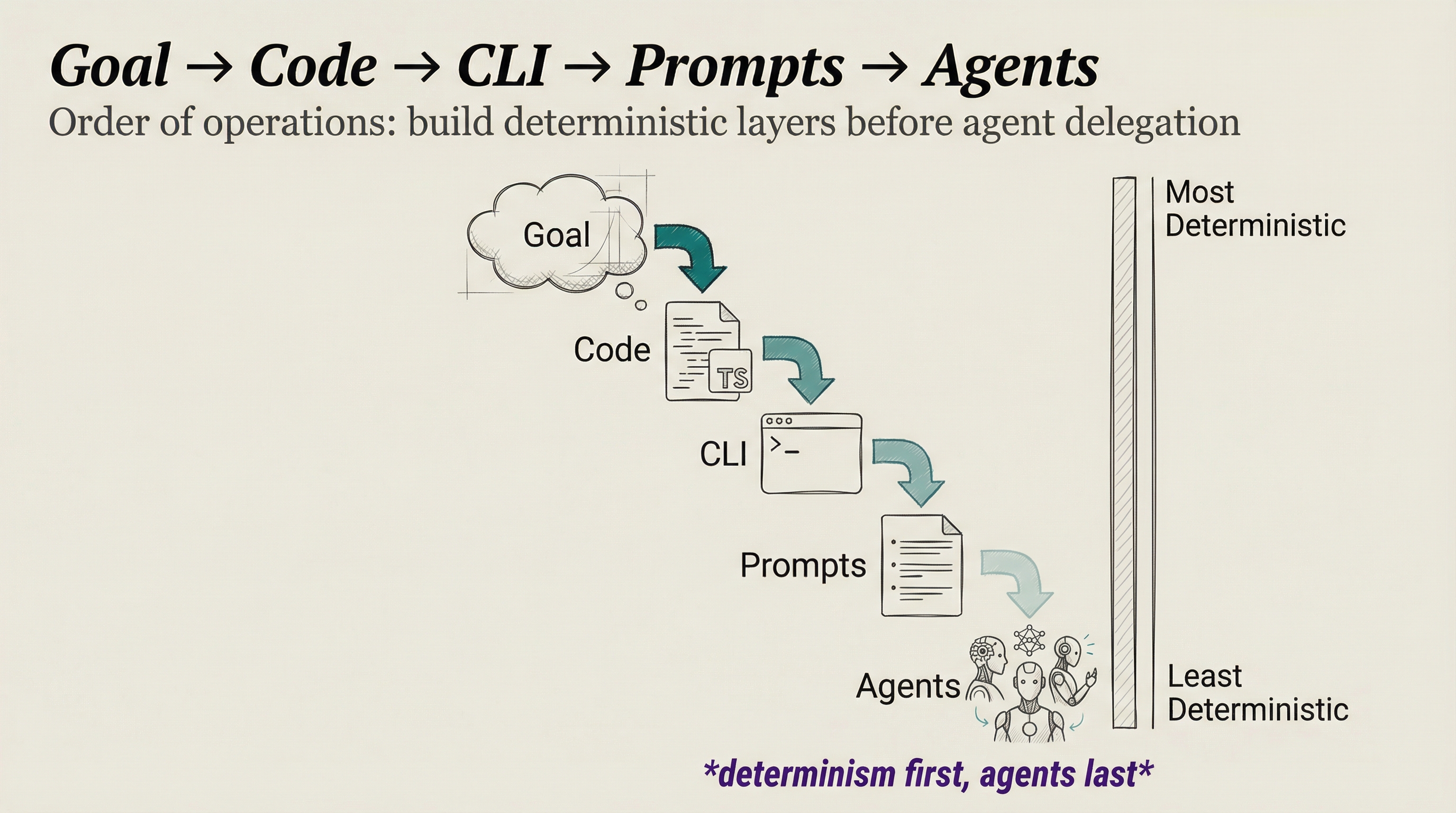](https://danielmiessler.com/blog/personal-ai-infrastructure)The decision hierarchy: clarify the goal first, then try code, then CLI tools, then prompts, and only then agents.-#### 10. Meta / Self Update System+#### 11. Meta / Self Update System[](https://danielmiessler.com/blog/personal-ai-infrastructure)The system should be able to modify itself. Encode learnings so you never forget.-#### 11. Custom Skill Management+#### 12. Custom Skill Management[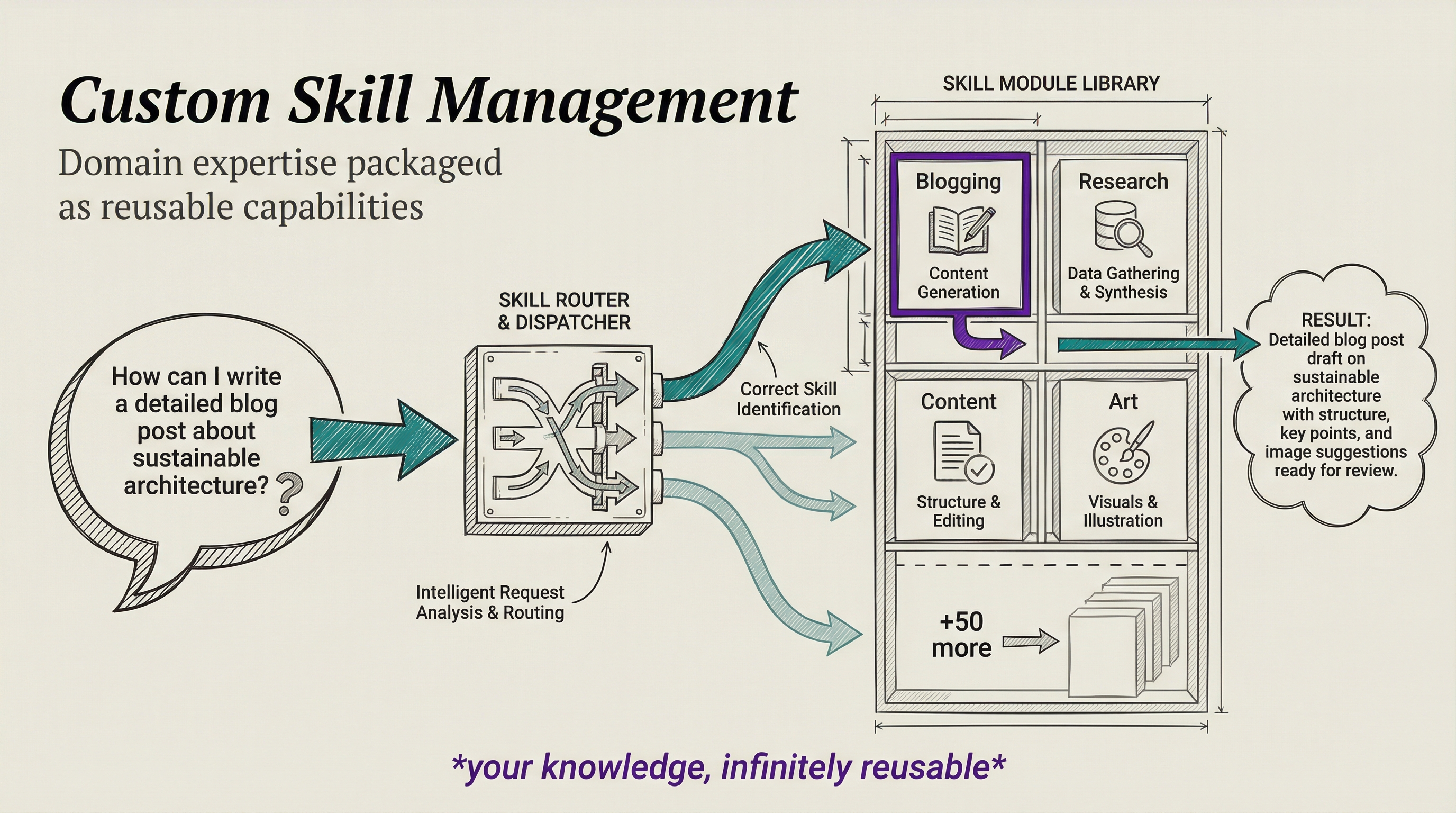](https://danielmiessler.com/blog/personal-ai-infrastructure)Skills are the foundation of personalization - modular capabilities that route intelligently.-#### 12. Custom History System+#### 13. Custom History System[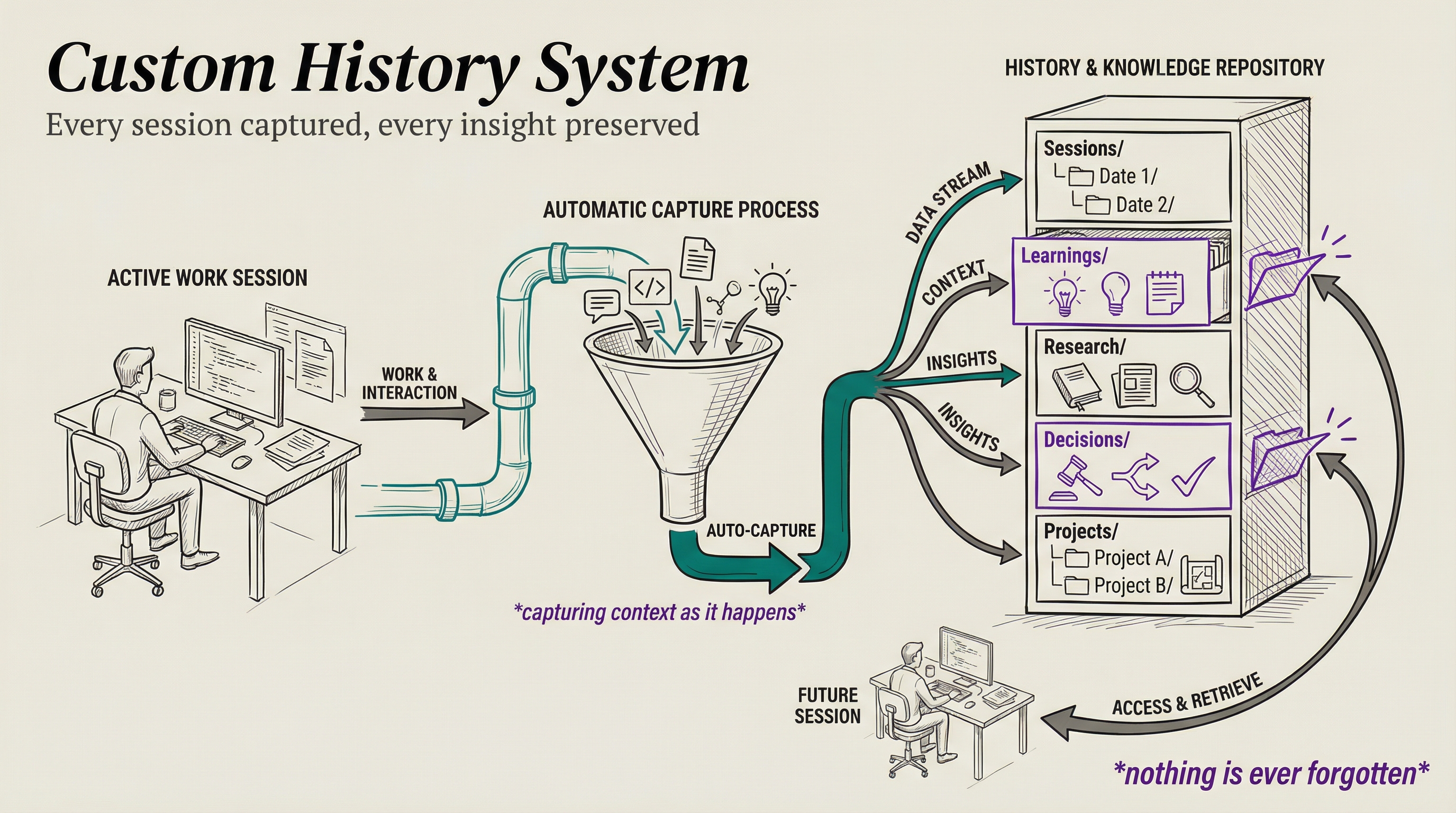](https://danielmiessler.com/blog/personal-ai-infrastructure)Everything worth knowing gets captured. History feeds back into context for future sessions.-#### 13. Custom Agent Personalities / Voices+#### 14. Custom Agent Personalities / Voices[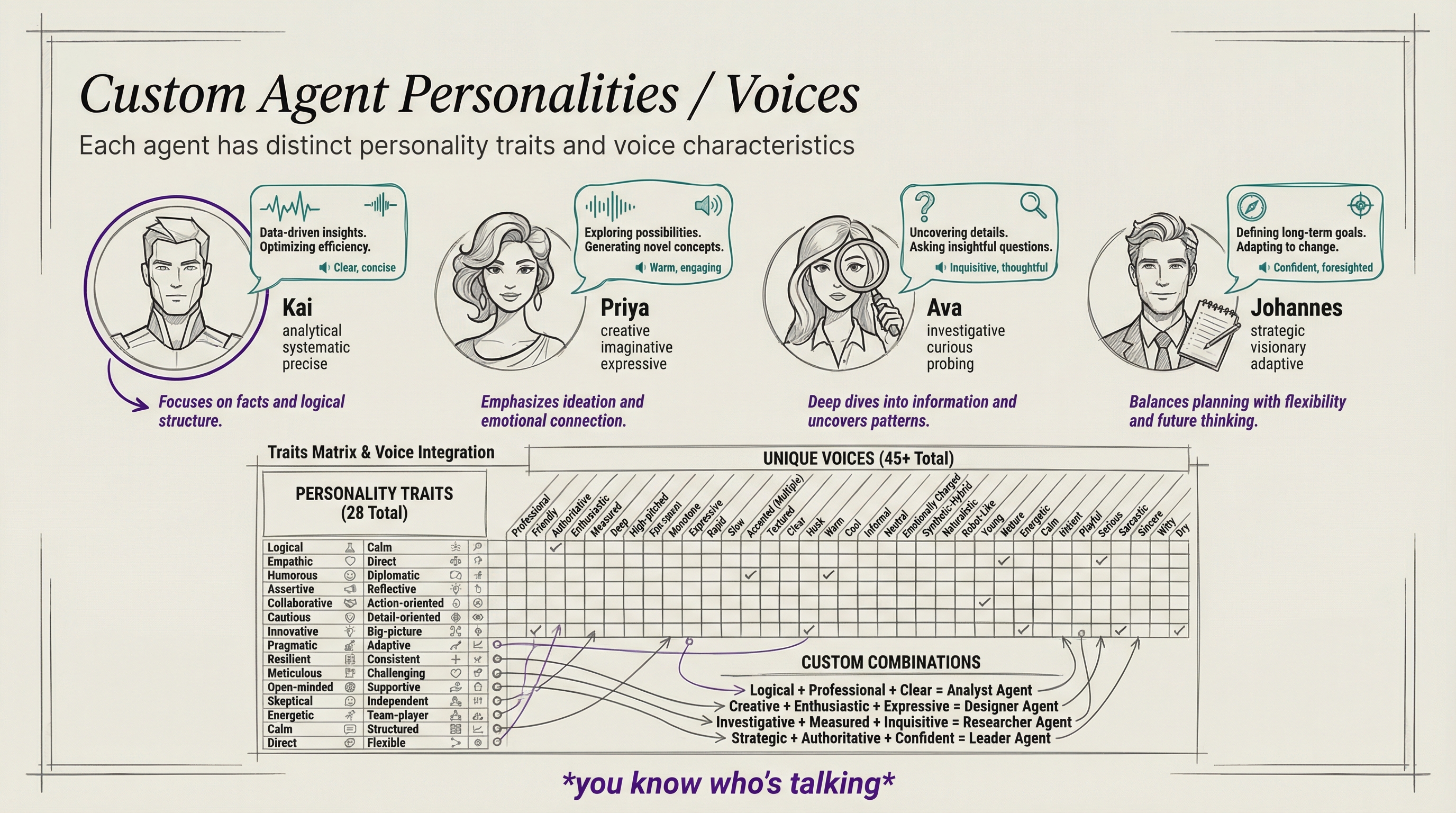](https://danielmiessler.com/blog/personal-ai-infrastructure)Different work needs different approaches. Specialized agents with unique personalities and voices.-#### 14. Science as Cognitive Loop+#### 15. Science as Cognitive LoopThe meta-principle: Hypothesis → Experiment → Measure → Iterate. Every decision follows this pattern.---