
Open-Source Frontier Voice AI
Python
Add VibeVoice-ASR
Zhiliang Peng56cb11e7b2fd
diff --git a/Figures/VibeVoice_ASR_archi.png b/Figures/VibeVoice_ASR_archi.pngnew file mode 100644index 0000000..0d24affBinary files /dev/null and b/Figures/VibeVoice_ASR_archi.png differdiff --git a/README.md b/README.mdindex 4c4e68a..41a98de 100644--- a/README.md+++ b/README.md@@ -23,8 +23,9 @@<img src="https://img.shields.io/badge/Status-New-brightgreen?style=flat" alt="New" /><img src="https://img.shields.io/badge/Feature-Realtime_TTS-blue?style=flat&logo=soundcharts" alt="Realtime TTS" />+<strong>2026-01-21: 📣 We open-sourced <a href="docs/vibevoice-asr.md"><strong>VibeVoice-ASR</strong></a>, a unified speech-to-text model designed to handle 60-minute long-form audio in a single pass, generating structured transcriptions containing Who (Speaker), When (Timestamps), and What (Content), with support for User-Customized Context.</strong>-<strong>2025-12-16: 📣 We added more experimental speakers for exploration, including multilingual voices and 11 distinct English style voices. [Try it](docs/vibevoice-realtime-0.5b.md#optional-more-experimental-voices). More speaker types will be added over time.</strong>+2025-12-16: 📣 We added more experimental speakers for exploration, including multilingual voices and 11 distinct English style voices. [Try it](docs/vibevoice-realtime-0.5b.md#optional-more-experimental-voices). More speaker types will be added over time.2025-12-09: 📣 We added experimental speakers in nine languages (DE, FR, IT, JP, KR, NL, PL, PT, ES) for exploration—welcome to try them out and share your feedback.@@ -123,4 +124,4 @@ We do not recommend using VibeVoice in commercial or real-world applications wit## Star History-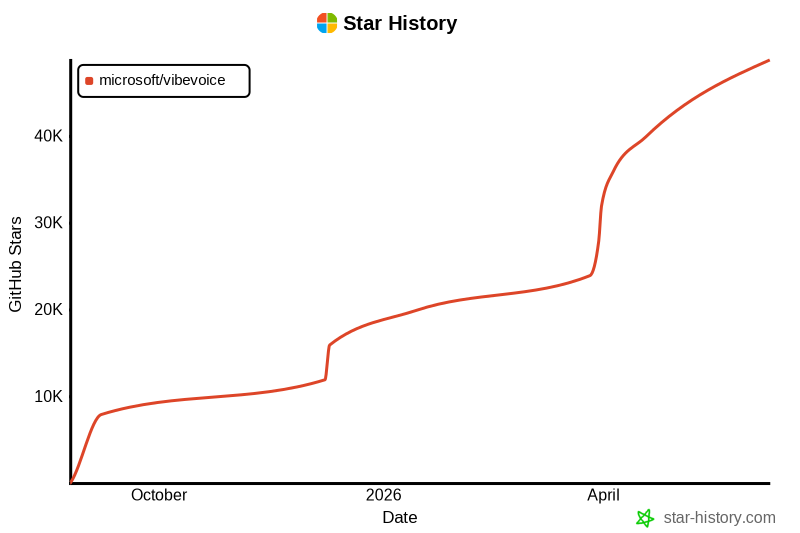\ No newline at end of file+diff --git a/demo/vibevoice_asr_gradio_demo.py b/demo/vibevoice_asr_gradio_demo.pynew file mode 100644index 0000000..c334f95--- /dev/null+++ b/demo/vibevoice_asr_gradio_demo.py@@ -0,0 +1,1177 @@+#!/usr/bin/env python+"""+VibeVoice ASR Gradio Demo+"""++import os+import sys+import torch+import numpy as np+import soundfile as sf+from pathlib import Path+import argparse+import time+import json+import gradio as gr+from typing import List, Dict, Tuple, Optional, Generator+import tempfile+import base64+import io+import traceback+import threading+from concurrent.futures import ThreadPoolExecutor, as_completed++# Import TextIteratorStreamer for streaming generation+from transformers import TextIteratorStreamer, StoppingCriteria, StoppingCriteriaList++try:+ from liger_kernel.transformers import apply_liger_kernel_to_qwen2+ # Only apply RoPE, RMSNorm, SwiGLU patches (these affect the underlying Qwen2 layers)+ apply_liger_kernel_to_qwen2(+ rope=True,+ rms_norm=True,+ swiglu=True,+ cross_entropy=False,+ )+ print("✅ Liger Kernel applied to Qwen2 components (RoPE, RMSNorm, SwiGLU)")+except Exception as e:+ print(f"⚠️ Failed to apply Liger Kernel: {e}, you can install it with: pip install liger-kernel")++# Try to import pydub for MP3 conversion+try:+ from pydub import AudioSegment+ HAS_PYDUB = True+except ImportError:+ HAS_PYDUB = False+ print("⚠️ Warning: pydub not available, falling back to WAV format")++from vibevoice.modular.modeling_vibevoice_asr import VibeVoiceASRForConditionalGeneration+from vibevoice.processor.vibevoice_asr_processor import VibeVoiceASRProcessor+from vibevoice.processor.audio_utils import load_audio_use_ffmpeg, COMMON_AUDIO_EXTS+++class VibeVoiceASRInference:+ """Simple inference wrapper for VibeVoice ASR model."""++ def __init__(self, model_path: str, device: str = "cuda", dtype: torch.dtype = torch.bfloat16, attn_implementation: str = "flash_attention_2"):+ """+ Initialize the ASR inference pipeline.++ Args:+ model_path: Path to the pretrained model (HuggingFace format directory or model name)+ device: Device to run inference on+ dtype: Data type for model weights+ attn_implementation: Attention implementation to use ('flash_attention_2', 'sdpa', 'eager')+ """+ print(f"Loading VibeVoice ASR model from {model_path}")++ # Load processor+ self.processor = VibeVoiceASRProcessor.from_pretrained(model_path)++ # Load model+ print(f"Using attention implementation: {attn_implementation}")+ self.model = VibeVoiceASRForConditionalGeneration.from_pretrained(+ model_path,+ dtype=dtype,+ device_map=device if device == "auto" else None,+ attn_implementation=attn_implementation,+ trust_remote_code=True+ )++ if device != "auto":+ self.model = self.model.to(device)++ self.device = device if device != "auto" else next(self.model.parameters()).device+ self.model.eval()++ # Print model info+ total_params = sum(p.numel() for p in self.model.parameters())+ print(f"✅ Model loaded successfully on {self.device}")+ print(f"📊 Total parameters: {total_params:,} ({total_params/1e9:.2f}B)")++ def transcribe(+ self,+ audio_path: str = None,+ audio_array: np.ndarray = None,+ sample_rate: int = None,+ max_new_tokens: int = 512,+ temperature: float = 0.0,+ top_p: float = 1.0,+ do_sample: bool = False,+ num_beams: int = 1,+ repetition_penalty: float = 1.0,+ context_info: str = None,+ streamer: Optional[TextIteratorStreamer] = None,+ ) -> dict:+ """+ Transcribe audio to text.++ Args:+ audio_path: Path to audio file+ audio_array: Audio array (if not loading from file)+ sample_rate: Sample rate of audio array+ max_new_tokens: Maximum tokens to generate+ temperature: Temperature for sampling (0 for greedy)+ top_p: Top-p for nucleus sampling (1.0 for no filtering)+ do_sample: Whether to use sampling+ num_beams: Number of beams for beam search (1 for greedy)+ repetition_penalty: Repetition penalty (1.0 for no penalty)+ context_info: Optional context information (e.g., hotwords, speaker names, topics) to help transcription+ streamer: Optional TextIteratorStreamer for streaming output++ Returns:+ Dictionary with transcription results+ """+ # Process audio+ inputs = self.processor(+ audio=audio_path,+ sampling_rate=sample_rate,+ return_tensors="pt",+ add_generation_prompt=True,+ context_info=context_info+ )++ # Move to device+ inputs = {k: v.to(self.device) if isinstance(v, torch.Tensor) else v+ for k, v in inputs.items()}++ # Generate+ generation_config = {+ "max_new_tokens": max_new_tokens,+ "temperature": temperature if temperature > 0 else None,+ "top_p": top_p if do_sample else None,+ "do_sample": do_sample,+ "num_beams": num_beams,+ "repetition_penalty": repetition_penalty,+ "pad_token_id": self.processor.pad_id,+ "eos_token_id": self.processor.tokenizer.eos_token_id,+ }++ # Add streamer if provided+ if streamer is not None:+ generation_config["streamer"] = streamer++ # Add stopping criteria for stop button support+ generation_config["stopping_criteria"] = StoppingCriteriaList([StopOnFlag()])++ # Remove None values+ generation_config = {k: v for k, v in generation_config.items() if v is not None}++ start_time = time.time()++ # Calculate input token statistics before generation+ input_ids = inputs['input_ids'][0] # Shape: [seq_len]+ total_input_tokens = input_ids.shape[0]++ # Count padding tokens (tokens equal to pad_id)+ pad_id = self.processor.pad_id+ padding_mask = (input_ids == pad_id)+ num_padding_tokens = padding_mask.sum().item()++ # Count speech tokens (tokens between speech_start_id and speech_end_id)+ speech_start_id = self.processor.speech_start_id+ speech_end_id = self.processor.speech_end_id++ # Find speech regions+ input_ids_list = input_ids.tolist()+ num_speech_tokens = 0+ in_speech = False+ for token_id in input_ids_list:+ if token_id == speech_start_id:+ in_speech = True+ num_speech_tokens += 1 # Count speech_start token+ elif token_id == speech_end_id:+ in_speech = False+ num_speech_tokens += 1 # Count speech_end token+ elif in_speech:+ num_speech_tokens += 1++ # Text tokens = total - speech - padding+ num_text_tokens = total_input_tokens - num_speech_tokens - num_padding_tokens++ with torch.no_grad():+ output_ids = self.model.generate(+ **inputs,+ **generation_config+ )++ generation_time = time.time() - start_time++ # Decode output+ generated_ids = output_ids[0, inputs['input_ids'].shape[1]:]+ generated_text = self.processor.decode(generated_ids, skip_special_tokens=True)++ # Parse structured output+ try:+ transcription_segments = self.processor.post_process_transcription(generated_text)+ except Exception as e:+ print(f"Warning: Failed to parse structured output: {e}")+ transcription_segments = []++ return {+ "raw_text": generated_text,+ "segments": transcription_segments,+ "generation_time": generation_time,+ "input_tokens": {+ "total": total_input_tokens,+ "speech": num_speech_tokens,+ "text": num_text_tokens,+ "padding": num_padding_tokens,+ },+ }+++def clip_and_encode_audio(+ audio_data: np.ndarray,+ sr: int,+ start_time: float,+ end_time: float,+ segment_idx: int,+ use_mp3: bool = True,+ target_sr: int = 16000, # Downsample to 16kHz for smaller size+ mp3_bitrate: str = "32k" # Use low bitrate for minimal transfer+) -> Tuple[int, Optional[str], Optional[str]]:+ """+ Clip audio segment and encode to base64.++ Args:+ audio_data: Full audio array+ sr: Sample rate+ start_time: Start time in seconds+ end_time: End time in seconds+ segment_idx: Segment index for identification+ use_mp3: Whether to use MP3 format (smaller size)+ target_sr: Target sample rate for downsampling (lower = smaller)+ mp3_bitrate: MP3 bitrate (lower = smaller, e.g., "24k", "32k", "48k")++ Returns:+ Tuple of (segment_idx, base64_string, error_message)+ """+ try:+ # Convert time to sample indices+ start_sample = int(start_time * sr)+ end_sample = int(end_time * sr)++ # Ensure indices are within bounds+ start_sample = max(0, start_sample)+ end_sample = min(len(audio_data), end_sample)++ if start_sample >= end_sample:+ return segment_idx, None, f"Invalid time range: [{start_time:.2f}s - {end_time:.2f}s]"++ # Extract segment+ segment_data = audio_data[start_sample:end_sample]++ # Downsample if needed (reduces data size significantly)+ if sr != target_sr and target_sr < sr:+ # Simple downsampling using linear interpolation+ duration = len(segment_data) / sr+ new_length = int(duration * target_sr)+ indices = np.linspace(0, len(segment_data) - 1, new_length)+ segment_data = np.interp(indices, np.arange(len(segment_data)), segment_data)+ sr = target_sr++ # Convert float32 audio to int16 for encoding+ segment_data_int16 = (segment_data * 32768.0).astype(np.int16)++ # Convert to MP3 if pydub is available and use_mp3 is True+ if use_mp3 and HAS_PYDUB:+ try:+ # Write to WAV in memory+ wav_buffer = io.BytesIO()+ sf.write(wav_buffer, segment_data_int16, sr, format='WAV', subtype='PCM_16')+ wav_buffer.seek(0)++ # Convert to MP3 with low bitrate+ audio_segment = AudioSegment.from_wav(wav_buffer)+ # Convert to mono if stereo (halves the size)+ if audio_segment.channels > 1:+ audio_segment = audio_segment.set_channels(1)+ mp3_buffer = io.BytesIO()+ audio_segment.export(mp3_buffer, format='mp3', bitrate=mp3_bitrate)+ mp3_buffer.seek(0)++ # Encode to base64+ audio_bytes = mp3_buffer.read()+ audio_base64 = base64.b64encode(audio_bytes).decode('utf-8')+ audio_src = f"data:audio/mp3;base64,{audio_base64}"++ return segment_idx, audio_src, None+ except Exception as e:+ # Fall back to WAV on error+ print(f"MP3 conversion failed for segment {segment_idx}, using WAV: {e}")++ # Fall back to WAV format (no temp file, use in-memory buffer)+ wav_buffer = io.BytesIO()+ sf.write(wav_buffer, segment_data_int16, sr, format='WAV', subtype='PCM_16')+ wav_buffer.seek(0)++ audio_bytes = wav_buffer.read()+ audio_base64 = base64.b64encode(audio_bytes).decode('utf-8')+ audio_src = f"data:audio/wav;base64,{audio_base64}"++ return segment_idx, audio_src, None++ except Exception as e:+ error_msg = f"Error clipping segment {segment_idx}: {str(e)}"+ print(error_msg)+ return segment_idx, None, error_msg+++def extract_audio_segments(audio_path: str, segments: List[Dict]) -> List[Tuple[str, str, Optional[str]]]:+ """+ Extract multiple segments from audio file efficiently with parallel processing.++ Args:+ audio_path: Path to original audio file+ segments: List of segment dictionaries with start_time, end_time, etc.++ Returns:+ List of tuples (segment_label, audio_base64_src, error_msg)+ """+ try:+ # Read audio file once using ffmpeg for better format support+ print(f"📂 Loading audio file: {audio_path}")+ audio_data, sr = load_audio_use_ffmpeg(audio_path, resample=False)+ print(f"✅ Audio loaded: {len(audio_data)} samples, {sr} Hz")++ # Prepare tasks+ tasks = []+ use_mp3 = HAS_PYDUB # Use MP3 if available++ for i, seg in enumerate(segments):+ start_time = seg.get('start_time')+ end_time = seg.get('end_time')++ # Skip if times are not available or invalid+ if (not isinstance(start_time, (int, float)) or+ not isinstance(end_time, (int, float)) or+ start_time >= end_time):+ tasks.append((i, None, None, None, None, None)) # Will be filtered later+ continue++ tasks.append((audio_data, sr, start_time, end_time, i, use_mp3))++ # Process in parallel using ThreadPoolExecutor+ results = []+ total_segments = len(tasks)+ completed_count = 0++ # Use CPU count for max workers+ max_workers = os.cpu_count() or 4+ print(f"🚀 Starting parallel processing with {max_workers} threads...")++ with ThreadPoolExecutor(max_workers=max_workers) as executor:+ futures = {}+ for task in tasks:+ if task[0] is None: # Skip invalid tasks+ continue+ future = executor.submit(clip_and_encode_audio, *task)+ futures[future] = task[4] # segment_idx++ for future in as_completed(futures):+ try:+ result = future.result()+ results.append(result)+ completed_count += 1+ # Log progress every 100 segments or at completion+ if completed_count % 100 == 0 or completed_count == len(futures):+ print(f"Progress: {completed_count}/{len(futures)} segments processed ({completed_count*100//len(futures)}%)")+ except Exception as e:+ idx = futures[future]+ results.append((idx, None, f"Processing error: {str(e)}"))+ completed_count += 1+ print(f"Error on segment {idx}: {e}")++ print(f"✅ Completed processing all {len(futures)} valid segments")++ # Sort by segment index to maintain order+ results.sort(key=lambda x: x[0])++ # Build output list with labels+ audio_segments = []+ for i, (idx, audio_src, error_msg) in enumerate(results):+ seg = segments[idx] if idx < len(segments) else {}+ start_time = seg.get('start_time', 'N/A')+ end_time = seg.get('end_time', 'N/A')+ speaker_id = seg.get('speaker_id', 'N/A')++ segment_label = f"Segment {idx+1}: [{start_time:.2f}s - {end_time:.2f}s] Speaker {speaker_id}"+ audio_segments.append((segment_label, audio_src, error_msg))++ return audio_segments++ except Exception as e:+ print(f"Error loading audio file: {e}")+ return []+++# Global variable to store the ASR model+asr_model = None++# Global stop flag for generation+stop_generation_flag = False+++class StopOnFlag(StoppingCriteria):+ """Custom stopping criteria that checks a global flag."""+ def __call__(self, input_ids, scores, **kwargs):+ global stop_generation_flag+ return stop_generation_flag+++def parse_time_to_seconds(val: Optional[str]) -> Optional[float]:+ """Parse seconds or hh:mm:ss to float seconds."""+ if val is None:+ return None+ val = val.strip()+ if not val:+ return None+ try:+ return float(val)+ except ValueError:+ pass+ if ":" in val:+ parts = val.split(":")+ if not all(p.strip().replace(".", "", 1).isdigit() for p in parts):+ return None+ parts = [float(p) for p in parts]+ if len(parts) == 3:+ h, m, s = parts+ elif len(parts) == 2:+ h = 0+ m, s = parts+ else:+ return None+ return h * 3600 + m * 60 + s+ return None+++def slice_audio_to_temp(+ audio_data: np.ndarray,+ sample_rate: int,+ start_sec: Optional[float],+ end_sec: Optional[float]+) -> Tuple[Optional[str], Optional[str]]:+ """Slice audio_data to [start_sec, end_sec) and write to a temp WAV file."""+ n_samples = len(audio_data)+ full_duration = n_samples / float(sample_rate)+ start = 0.0 if start_sec is None else max(0.0, start_sec)+ end = full_duration if end_sec is None else min(full_duration, end_sec)+ if end <= start:+ return None, f"Invalid time range: start={start:.2f}s, end={end:.2f}s"+ start_idx = int(start * sample_rate)+ end_idx = int(end * sample_rate)+ segment = audio_data[start_idx:end_idx]+ temp_file = tempfile.NamedTemporaryFile(delete=False, suffix=".wav")+ temp_file.close()+ segment_int16 = (segment * 32768.0).astype(np.int16)+ sf.write(temp_file.name, segment_int16, sample_rate, subtype='PCM_16')+ return temp_file.name, None+++def initialize_model(model_path: str, device: str = "cuda", attn_implementation: str = "flash_attention_2"):+ """Initialize the ASR model."""+ global asr_model+ try:+ dtype = torch.bfloat16 if device != "cpu" else torch.float32+ asr_model = VibeVoiceASRInference(+ model_path=model_path,+ device=device,+ dtype=dtype,+ attn_implementation=attn_implementation+ )+ return f"✅ Model loaded successfully from {model_path}"+ except Exception as e:+ import traceback+ traceback.print_exc()+ return f"❌ Error loading model: {str(e)}"+++def transcribe_audio(+ audio_input,+ audio_path_input: str,+ start_time_input: str,+ end_time_input: str,+ max_new_tokens: int,+ temperature: float,+ top_p: float,+ do_sample: bool,+ repetition_penalty: float = 1.0,+ context_info: str = ""+) -> Generator[Tuple[str, str], None, None]:+ """+ Transcribe audio and return results with audio segments (streaming version).++ Args:+ audio_input: Audio file path or tuple (sample_rate, audio_data)+ max_new_tokens: Maximum tokens to generate+ temperature: Temperature for sampling (0 for greedy)+ top_p: Top-p for nucleus sampling+ do_sample: Whether to use sampling+ context_info: Optional context information (e.g., hotwords, speaker names, topics)++ Yields:+ Tuple of (raw_text, audio_segments_html)+ """+ if asr_model is None:+ yield "❌ Please load a model first!", ""+ return++ if not audio_path_input and audio_input is None:+ yield "❌ Please provide audio input!", ""+ return++ try:+ print("[INFO] Transcription requested")+ start_sec = parse_time_to_seconds(start_time_input)+ end_sec = parse_time_to_seconds(end_time_input)+ print(f"[INFO] Parsed time range: start={start_sec}, end={end_sec}")+ if (start_time_input and start_sec is None) or (end_time_input and end_sec is None):+ yield "❌ Invalid time format. Use seconds or hh:mm:ss.", ""+ return++ audio_path = None+ audio_array = None+ sample_rate = None++ if audio_path_input:+ candidate = Path(audio_path_input.strip())+ if not candidate.exists():+ yield f"❌ Provided path does not exist: {candidate}", ""+ return+ audio_path = str(candidate)+ print(f"[INFO] Using provided audio path: {audio_path}")+ # Get audio file path (Gradio Audio component returns tuple (sample_rate, audio_data) or file path)+ elif isinstance(audio_input, str):+ audio_path = audio_input+ print(f"[INFO] Using uploaded audio path: {audio_path}")+ elif isinstance(audio_input, tuple):+ # Audio from microphone: (sample_rate, audio_data)+ sample_rate, audio_array = audio_input+ print(f"[INFO] Received microphone audio with sample_rate={sample_rate}")+ elif audio_path is None:+ yield "❌ Invalid audio input format!", ""+ return++ # If slicing is requested, load and slice audio+ if start_sec is not None or end_sec is not None:+ print("[INFO] Slicing audio per requested time range")+ if audio_array is None or sample_rate is None:+ try:+ audio_array, sample_rate = load_audio_use_ffmpeg(audio_path, resample=False)+ print("[INFO] Loaded audio for slicing via ffmpeg")+ except Exception as exc:+ yield f"❌ Failed to load audio for slicing: {exc}", ""+ return+ sliced_path, err = slice_audio_to_temp(audio_array, sample_rate, start_sec, end_sec)+ if err:+ yield f"❌ {err}", ""+ return+ audio_path = sliced_path+ print(f"[INFO] Sliced audio written to temp file: {audio_path}")+ elif audio_array is not None and sample_rate is not None:+ # no slicing but microphone input: write to temp file+ temp_file = tempfile.NamedTemporaryFile(delete=False, suffix=".wav")+ audio_path = temp_file.name+ temp_file.close()+ audio_data_int16 = (audio_array * 32768.0).astype(np.int16)+ sf.write(audio_path, audio_data_int16, sample_rate, subtype='PCM_16')+ print(f"[INFO] Microphone audio saved to temp file: {audio_path}")++ # Create streamer for real-time output+ streamer = TextIteratorStreamer(+ asr_model.processor.tokenizer,+ skip_prompt=True,+ skip_special_tokens=True+ )++ # Store result in a mutable container for the thread+ result_container = {"result": None, "error": None}++ def run_transcription():+ try:+ result_container["result"] = asr_model.transcribe(+ audio_path=audio_path,+ max_new_tokens=max_new_tokens,+ temperature=temperature,+ top_p=top_p,+ do_sample=do_sample,+ repetition_penalty=repetition_penalty,+ context_info=context_info if context_info and context_info.strip() else None,+ streamer=streamer+ )+ except Exception as e:+ result_container["error"] = str(e)+ traceback.print_exc()++ # Start transcription in background thread+ print("[INFO] Starting model transcription (streaming mode)")+ start_time = time.time()+ transcription_thread = threading.Thread(target=run_transcription)+ transcription_thread.start()++ # Yield streaming output+ generated_text = ""+ token_count = 0+ for new_text in streamer:+ generated_text += new_text+ token_count += 1+ elapsed = time.time() - start_time+ # Show streaming output with live stats, format for readability+ formatted_text = generated_text.replace('},', '},\n')+ streaming_output = f"--- 🔴 LIVE Streaming Output (tokens: {token_count}, time: {elapsed:.1f}s) ---\n{formatted_text}"+ yield streaming_output, "<div style='padding: 20px; text-align: center; color: #6c757d;'>⏳ Generating transcription... Audio segments will appear after completion.</div>"++ # Wait for thread to complete+ transcription_thread.join()++ if result_container["error"]:+ yield f"❌ Error during transcription: {result_container['error']}", ""+ return++ result = result_container["result"]+ generation_time = time.time() - start_time++ # Get input token statistics+ input_tokens = result.get('input_tokens', {})+ speech_tokens = input_tokens.get('speech', 0)+ text_tokens = input_tokens.get('text', 0)+ padding_tokens = input_tokens.get('padding', 0)+ total_input = input_tokens.get('total', 0)++ # Format final raw output with input/output token stats+ raw_output = f"--- ✅ Raw Output ---\n"+ raw_output += f"📥 Input: {total_input} tokens (🎤 speech: {speech_tokens}, 📝 text: {text_tokens}, ⬜ pad: {padding_tokens})\n"+ raw_output += f"📤 Output: {token_count} tokens | ⏱️ Time: {generation_time:.2f}s\n"+ raw_output += f"---\n"+ # Format raw text for better readability: add newline after each dict (},)+ formatted_raw_text = result['raw_text'].replace('},', '},\n')+ raw_output += formatted_raw_text++ # Debug: print raw output to console+ print(f"[DEBUG] Raw model output:")+ print(f"[DEBUG] {result['raw_text']}")+ print(f"[DEBUG] Found {len(result['segments'])} segments")++ # Create audio segments with server-side encoding (low quality for minimal transfer)+ # Using: 16kHz mono MP3 @ 32kbps = ~4KB per second of audio+ audio_segments_html = ""+ segments = result['segments']++ if segments:+ num_segments = len(segments)+ print(f"[INFO] Creating per-segment audio clips ({num_segments} segments, 16kHz mono MP3 @ 32kbps)")++ # Extract all audio segments efficiently (load audio only once)+ audio_segments = extract_audio_segments(audio_path, segments)+ print("[INFO] Completed creating audio clips")++ # Calculate approximate total size+ total_duration = sum(+ (seg.get('end_time', 0) - seg.get('start_time', 0))+ for seg in segments+ if isinstance(seg.get('start_time'), (int, float)) and isinstance(seg.get('end_time'), (int, float))+ )+ approx_size_kb = total_duration * 4 # ~4KB per second at 32kbps++ # Add CSS for theme-aware styling+ theme_css = """+ <style>+ :root {+ --segment-bg: #f8f9fa;+ --segment-border: #e1e5e9;+ --segment-text: #495057;+ --segment-meta: #6c757d;+ --content-bg: white;+ --content-border: #007bff;+ --warning-bg: #fff3cd;+ --warning-border: #ffc107;+ --warning-text: #856404;+ }++ @media (prefers-color-scheme: dark) {+ :root {+ --segment-bg: #2d3748;+ --segment-border: #4a5568;+ --segment-text: #e2e8f0;+ --segment-meta: #a0aec0;+ --content-bg: #1a202c;+ --content-border: #4299e1;+ --warning-bg: #744210;+ --warning-border: #d69e2e;+ --warning-text: #faf089;+ }+ }++ .audio-segments-container {+ max-height: 600px;+ overflow-y: auto;+ padding: 10px;+ }++ .audio-segment {+ margin-bottom: 15px;+ padding: 15px;+ border: 2px solid var(--segment-border);+ border-radius: 8px;+ background-color: var(--segment-bg);+ transition: all 0.3s ease;+ }++ .audio-segment:hover {+ box-shadow: 0 4px 12px rgba(0, 0, 0, 0.1);+ }++ .segment-header {+ margin-bottom: 10px;+ }++ .segment-title {+ margin: 0;+ color: var(--segment-text);+ font-size: 16px;+ font-weight: 600;+ }++ .segment-meta {+ margin-top: 5px;+ font-size: 14px;+ color: var(--segment-meta);+ }++ .segment-content {+ margin-bottom: 10px;+ padding: 12px;+ background-color: var(--content-bg);+ border-radius: 6px;+ border-left: 4px solid var(--content-border);+ color: var(--segment-text);+ line-height: 1.5;+ }++ .segment-audio {+ width: 100%;+ margin-top: 10px;+ border-radius: 4px;+ }++ .segment-warning {+ margin-top: 10px;+ padding: 10px;+ background-color: var(--warning-bg);+ border-radius: 4px;+ border-left: 4px solid var(--warning-border);+ color: var(--warning-text);+ font-size: 13px;+ }++ .segments-title {+ color: var(--segment-text);+ margin-bottom: 10px;+ }++ .segments-description {+ color: var(--segment-meta);+ margin-bottom: 20px;+ }++ .size-badge {+ display: inline-block;+ background: linear-gradient(135deg, #6c757d, #495057);+ color: white;+ padding: 4px 10px;+ border-radius: 12px;+ font-size: 12px;+ margin-left: 10px;+ }+ </style>+ """++ audio_segments_html = theme_css+ audio_segments_html += f"<div class='audio-segments-container'>"++ # Add format info+ format_info = "MP3 32kbps 16kHz mono" if HAS_PYDUB else "WAV 16kHz"+ audio_segments_html += f"<h3 class='segments-title'>🔊 Audio Segments ({num_segments} segments)"+ audio_segments_html += f"<span class='size-badge'>📦 ~{approx_size_kb:.0f}KB ({format_info})</span></h3>"+ audio_segments_html += "<p class='segments-description'>🎵 Click the play button to listen to each segment directly!</p>"++ for i, (label, audio_src, error_msg) in enumerate(audio_segments):+ seg = segments[i] if i < len(segments) else {}+ start_time = seg.get('start_time', 'N/A')+ end_time = seg.get('end_time', 'N/A')+ speaker_id = seg.get('speaker_id', 'N/A')+ content = seg.get('text', '')++ # Format times nicely+ start_str = f"{start_time:.2f}" if isinstance(start_time, (int, float)) else str(start_time)+ end_str = f"{end_time:.2f}" if isinstance(end_time, (int, float)) else str(end_time)++ audio_segments_html += f"""+ <div class='audio-segment'>+ <div class='segment-header'>+ <h4 class='segment-title'>Segment {i+1}</h4>+ <div class='segment-meta'>+ <strong>Time:</strong> [{start_str}s - {end_str}s] |+ <strong>Speaker:</strong> {speaker_id}+ </div>+ </div>++ <div class='segment-content'>+ {content}+ </div>+ """++ if audio_src:+ # Detect format from data URI+ audio_type = 'audio/mp3' if 'audio/mp3' in audio_src else 'audio/wav'+ audio_segments_html += f"""+ <audio controls class='segment-audio' preload='none'>+ <source src='{audio_src}' type='{audio_type}'>+ Your browser does not support the audio element.+ </audio>+ """+ elif error_msg:+ audio_segments_html += f"""+ <div class='segment-warning'>+ <small>❌ {error_msg}</small>+ </div>+ """+ else:+ audio_segments_html += """+ <div class='segment-warning'>+ <small>Audio playback unavailable for this segment</small>+ </div>+ """++ audio_segments_html += "</div>"++ audio_segments_html += "</div>"+ else:+ audio_segments_html = """+ <style>+ :root {+ --no-segments-text: #6c757d;+ }++ @media (prefers-color-scheme: dark) {+ :root {+ --no-segments-text: #a0aec0;+ }+ }++ .no-segments-container {+ padding: 20px;+ text-align: center;+ color: var(--no-segments-text);+ line-height: 1.6;+ }+ </style>+ <div class='no-segments-container'>+ <p>❌ No audio segments available.</p>+ <p>This could happen if the model output doesn't contain valid time stamps.</p>+ </div>+ """++ # Final yield with complete results+ yield raw_output, audio_segments_html++ except Exception as e:+ print(f"Error during transcription: {e}")+ print(traceback.format_exc())+ yield f"❌ Error during transcription: {str(e)}", ""+++def create_gradio_interface(model_path: str, default_max_tokens: int = 8192, attn_implementation: str = "flash_attention_2"):+ """Create and launch Gradio interface.++ Args:+ model_path: Path to the model (HuggingFace format directory or model name)+ default_max_tokens: Default value for max_new_tokens slider+ attn_implementation: Attention implementation to use ('flash_attention_2', 'sdpa', 'eager')+ """++ # Initialize model at startup+ device = "cuda" if torch.cuda.is_available() else "cpu"+ model_status = initialize_model(model_path, device, attn_implementation)+ print(model_status)++ # Exit if model loading failed+ if model_status.startswith("❌"):+ print("\n" + "="*80)+ print("💥 FATAL ERROR: Model loading failed!")+ print("="*80)+ print("Cannot start demo without a valid model. Please check:")+ print(" 1. Model path is correct")+ print(" 2. Model files are not corrupted")+ print(" 3. You have enough GPU memory")+ print(" 4. CUDA is properly installed (if using GPU)")+ print("="*80)+ sys.exit(1)++ # Custom CSS for Stop button styling+ custom_css = """+ #stop-btn {+ background: linear-gradient(135deg, #ef4444 0%, #dc2626 100%) !important;+ border: none !important;+ color: white !important;+ }+ #stop-btn:hover {+ background: linear-gradient(135deg, #dc2626 0%, #b91c1c 100%) !important;+ }+ """++ # Gradio 6.0+ moved theme/css to launch()+ with gr.Blocks(title="VibeVoice ASR Demo") as demo:+ gr.Markdown("# 🎙️ VibeVoice ASR Demo")+ gr.Markdown("Upload audio files or record from microphone to get speech-to-text transcription with speaker diarization.")+ gr.Markdown(f"**Model loaded from:** `{model_path}`")++ with gr.Row():+ with gr.Column(scale=1):+ # Generation parameters+ gr.Markdown("## ⚙️ Generation Parameters")+ max_tokens_slider = gr.Slider(+ minimum=4096,+ maximum=65536,+ value=default_max_tokens,+ step=4096,+ label="Max New Tokens"+ )++ # Sampling parameters+ gr.Markdown("### 🎲 Sampling")+ do_sample_checkbox = gr.Checkbox(+ value=False,+ label="Enable Sampling",+ info="Enable random sampling instead of deterministic decoding"+ )++ with gr.Column(visible=False) as sampling_params:+ temperature_slider = gr.Slider(+ minimum=0.0,+ maximum=2.0,+ value=0.0,+ step=0.1,+ label="Temperature",+ info="0 = greedy, higher = more random"+ )+ top_p_slider = gr.Slider(+ minimum=0.0,+ maximum=1.0,+ value=1.0,+ step=0.05,+ label="Top-p (Nucleus Sampling)",+ info="1.0 = no filtering"+ )++ # Repetition penalty (works with both greedy and sampling)+ repetition_penalty_slider = gr.Slider(+ minimum=1.0,+ maximum=1.2,+ value=1.0,+ step=0.01,+ label="Repetition Penalty",+ info="1.0 = no penalty, higher = less repetition (works with greedy & sampling)"+ )++ # Context information section+ gr.Markdown("## 📋 Context Info (Optional)")+ context_info_input = gr.Textbox(+ label="Context Information",+ placeholder="Enter hotwords, speaker names, topics, or other context to help transcription...\nExample:\nJohn Smith\nMachine Learning\nOpenAI",+ lines=4,+ max_lines=8,+ interactive=True,+ info="Provide context like proper nouns, technical terms, or speaker names to improve accuracy"+ )++ with gr.Column(scale=2):+ # Audio input section+ gr.Markdown("## 🎵 Audio Input")+ audio_input = gr.Audio(+ label="Upload Audio File or Record from Microphone",+ sources=["upload", "microphone"],+ type="filepath",+ interactive=True,+ buttons=["download"]+ )++ with gr.Accordion("📂 Advanced: Remote Path & Time Slicing", open=False):+ audio_path_input = gr.Textbox(+ label="Audio path (optional)",+ placeholder="Enter remote audio file path",+ lines=1+ )+ with gr.Row():+ start_time_input = gr.Textbox(+ label="Start time",+ placeholder="e.g., 0 or 00:00:00",+ lines=1,+ info="Leave empty to start from the beginning"+ )+ end_time_input = gr.Textbox(+ label="End time",+ placeholder="e.g., 30.5 or 00:00:30.5",+ lines=1,+ info="Leave empty to use full length"+ )++ with gr.Row():+ transcribe_button = gr.Button("🎯 Transcribe", variant="primary", size="lg", scale=3)+ stop_button = gr.Button("⏹️ Stop", variant="secondary", size="lg", scale=1, elem_id="stop-btn")++ # Results section+ gr.Markdown("## 📝 Results")++ with gr.Tabs():+ with gr.TabItem("Raw Output"):+ raw_output = gr.Textbox(+ label="Raw Transcription Output",+ lines=8,+ max_lines=20,+ interactive=False+ )++ with gr.TabItem("Audio Segments"):+ audio_segments_output = gr.HTML(+ label="Play individual segments to verify accuracy"+ )++ # Event handlers+ do_sample_checkbox.change(+ fn=lambda x: gr.update(visible=x),+ inputs=[do_sample_checkbox],+ outputs=[sampling_params]+ )++ def reset_stop_flag():+ """Reset stop flag before starting transcription."""+ global stop_generation_flag+ stop_generation_flag = False++ def set_stop_flag():+ """Set stop flag to interrupt generation."""+ global stop_generation_flag+ stop_generation_flag = True+ return "⏹️ Stop requested..."++ transcribe_button.click(+ fn=reset_stop_flag,+ inputs=[],+ outputs=[],+ queue=False+ ).then(+ fn=transcribe_audio,+ inputs=[+ audio_input,+ audio_path_input,+ start_time_input,+ end_time_input,+ max_tokens_slider,+ temperature_slider,+ top_p_slider,+ do_sample_checkbox,+ repetition_penalty_slider,+ context_info_input+ ],+ outputs=[raw_output, audio_segments_output]+ )++ stop_button.click(+ fn=set_stop_flag,+ inputs=[],+ outputs=[raw_output],+ queue=False+ )++ # Add examples+ gr.Markdown("## 📋 Instructions")+ gr.Markdown(f"""+ 1. **Upload Audio**: Use the audio component to upload a file or record from microphone+ - **Supported formats**: {', '.join(sorted(set([ext.lower() for ext in COMMON_AUDIO_EXTS])))}+ - Optionally set **Start/End time** (seconds or hh:mm:ss) to clip before transcription+ 2. **Context Info (Optional)**: Provide context to improve transcription accuracy+ - Add hotwords, proper nouns, speaker names, or technical terms+ - One item per line or comma-separated+ - Examples: "John Smith", "OpenAI", "machine learning"+ 3. **Adjust Parameters**: Configure generation parameters as needed+ 4. **Transcribe**: Click "Transcribe" to get results+ 5. **Review Results**:+ - **Raw Output**: View the model's original output+ - **Audio Segments**: Play individual segments directly to verify accuracy++ **Audio Segments**: Each segment shows the time range, speaker ID, transcribed content, and an embedded audio player for immediate verification.+ """)++ return demo, custom_css+++def main():+ parser = argparse.ArgumentParser(description="VibeVoice ASR Gradio Demo")+ parser.add_argument(+ "--model_path",+ type=str,+ default="microsoft/VibeVoice-ASR",+ help="Path to the model (HuggingFace format directory or model name)"+ )+ parser.add_argument(+ "--attn_implementation",+ type=str,+ default="flash_attention_2",+ help="Attention implementation to use (default: flash_attention_2)"+ )+ parser.add_argument(+ "--max_new_tokens",+ type=int,+ default=32768,+ help="Default max new tokens for generation (default: 32768)"+ )+ parser.add_argument(+ "--host",+ type=str,+ default="0.0.0.0",+ help="Host to bind the server to"+ )+ parser.add_argument(+ "--port",+ type=int,+ default=7860,+ help="Port to bind the server to"+ )+ parser.add_argument(+ "--share",+ action="store_true",+ help="Create a public link"+ )++ args = parser.parse_args()++ # Create and launch interface+ demo, custom_css = create_gradio_interface(+ model_path=args.model_path,+ default_max_tokens=args.max_new_tokens,+ attn_implementation=args.attn_implementation+ )++ print(f"🚀 Starting VibeVoice ASR Demo...")+ print(f"📍 Server will be available at: http://{args.host}:{args.port}")++ # Gradio 6.0+ moved theme/css to launch()+ launch_kwargs = {+ "server_name": args.host,+ "server_port": args.port,+ "share": args.share,+ "show_error": True,+ "theme": gr.themes.Soft(),+ "css": custom_css,+ }++ # Enable queue for concurrent request handling+ demo.queue(default_concurrency_limit=3)+ demo.launch(**launch_kwargs)+++if __name__ == "__main__":+ main()diff --git a/demo/vibevoice_asr_inference_from_file.py b/demo/vibevoice_asr_inference_from_file.pynew file mode 100644index 0000000..e7d95d4--- /dev/null+++ b/demo/vibevoice_asr_inference_from_file.py@@ -0,0 +1,554 @@+#!/usr/bin/env python+"""+VibeVoice ASR Batch Inference Demo Script++This script supports batch inference for ASR model and compares results+between batch processing and single-sample processing.+"""++import os+import sys+import torch+import numpy as np+from pathlib import Path+import argparse+import time+import json+import re+from typing import List, Dict, Any, Optional+from functools import wraps++from vibevoice.modular.modeling_vibevoice_asr import VibeVoiceASRForConditionalGeneration+from vibevoice.processor.vibevoice_asr_processor import VibeVoiceASRProcessor+++class VibeVoiceASRBatchInference:+ """Batch inference wrapper for VibeVoice ASR model."""++ def __init__(+ self,+ model_path: str,+ device: str = "cuda",+ dtype: torch.dtype = torch.bfloat16,+ attn_implementation: str = "flash_attention_2"+ ):+ """+ Initialize the ASR batch inference pipeline.++ Args:+ model_path: Path to the pretrained model+ device: Device to run inference on+ dtype: Data type for model weights+ attn_implementation: Attention implementation to use ('flash_attention_2', 'sdpa', 'eager')+ """+ print(f"Loading VibeVoice ASR model from {model_path}")++ # Load processor+ self.processor = VibeVoiceASRProcessor.from_pretrained(+ model_path,+ language_model_pretrained_name="Qwen/Qwen2.5-7B"+ )++ # Load model with specified attention implementation+ print(f"Using attention implementation: {attn_implementation}")+ self.model = VibeVoiceASRForConditionalGeneration.from_pretrained(+ model_path,+ dtype=dtype,+ device_map=device if device == "auto" else None,+ attn_implementation=attn_implementation,+ trust_remote_code=True+ )++ if device != "auto":+ self.model = self.model.to(device)++ self.device = device if device != "auto" else next(self.model.parameters()).device+ self.dtype = dtype+ self.model.eval()++ print(f"Model loaded successfully on {self.device}")++ def _prepare_generation_config(+ self,+ max_new_tokens: int = 512,+ temperature: float = 0.0,+ top_p: float = 0.9,+ do_sample: bool = True,+ num_beams: int = 1,+ ) -> dict:+ """Prepare generation configuration."""+ config = {+ "max_new_tokens": max_new_tokens,+ "pad_token_id": self.processor.pad_id,+ "eos_token_id": self.processor.tokenizer.eos_token_id,+ }++ # Beam search vs sampling+ if num_beams > 1:+ config["num_beams"] = num_beams+ config["do_sample"] = False # Beam search doesn't use sampling+ else:+ config["do_sample"] = do_sample+ # Only set temperature and top_p when sampling is enabled+ if do_sample:+ config["temperature"] = temperature+ config["top_p"] = top_p++ return config++ def transcribe_batch(+ self,+ audio_inputs: List,+ max_new_tokens: int = 512,+ temperature: float = 0.0,+ top_p: float = 1.0,+ do_sample: bool = True,+ num_beams: int = 1,+ ) -> List[Dict[str, Any]]:+ """+ Transcribe multiple audio files/arrays in a single batch.++ Args:+ audio_inputs: List of audio file paths or (array, sampling_rate) tuples+ max_new_tokens: Maximum tokens to generate+ temperature: Temperature for sampling+ top_p: Top-p for nucleus sampling+ do_sample: Whether to use sampling++ Returns:+ List of transcription results+ """+ if len(audio_inputs) == 0:+ return []++ batch_size = len(audio_inputs)+ print(f"\nProcessing batch of {batch_size} audio(s)...")++ # Process all audio together+ inputs = self.processor(+ audio=audio_inputs,+ sampling_rate=None,+ return_tensors="pt",+ padding=True,+ add_generation_prompt=True+ )++ # Move to device+ inputs = {k: v.to(self.device) if isinstance(v, torch.Tensor) else v+ for k, v in inputs.items()}++ # Print batch info+ print(f" Input IDs shape: {inputs['input_ids'].shape}")+ print(f" Speech tensors shape: {inputs['speech_tensors'].shape}")+ print(f" Attention mask shape: {inputs['attention_mask'].shape}")++ # Generate+ generation_config = self._prepare_generation_config(+ max_new_tokens=max_new_tokens,+ temperature=temperature,+ top_p=top_p,+ do_sample=do_sample,+ num_beams=num_beams,+ )++ start_time = time.time()++ with torch.no_grad():+ output_ids = self.model.generate(+ **inputs,+ **generation_config+ )++ generation_time = time.time() - start_time++ # Decode outputs for each sample in the batch+ results = []+ input_length = inputs['input_ids'].shape[1]++ for i, audio_input in enumerate(audio_inputs):+ # Get generated tokens for this sample (excluding input tokens)+ generated_ids = output_ids[i, input_length:]++ # Remove padding tokens from the end+ # Find the first eos_token or pad_token+ eos_positions = (generated_ids == self.processor.tokenizer.eos_token_id).nonzero(as_tuple=True)[0]+ if len(eos_positions) > 0:+ generated_ids = generated_ids[:eos_positions[0] + 1]++ generated_text = self.processor.decode(generated_ids, skip_special_tokens=True)++ # Parse structured output+ try:+ transcription_segments = self.processor.post_process_transcription(generated_text)+ except Exception as e:+ print(f"Warning: Failed to parse structured output: {e}")+ transcription_segments = []++ # Get file name based on input type+ if isinstance(audio_input, str):+ file_name = audio_input+ elif isinstance(audio_input, dict) and 'id' in audio_input:+ file_name = audio_input['id']+ else:+ file_name = f"audio_{i}"++ results.append({+ "file": file_name,+ "raw_text": generated_text,+ "segments": transcription_segments,+ "generation_time": generation_time / batch_size,+ })++ print(f" Total generation time: {generation_time:.2f}s")+ print(f" Average time per sample: {generation_time/batch_size:.2f}s")++ return results++ def transcribe_with_batching(+ self,+ audio_inputs: List,+ batch_size: int = 4,+ max_new_tokens: int = 512,+ temperature: float = 0.0,+ top_p: float = 1.0,+ do_sample: bool = True,+ num_beams: int = 1,+ ) -> List[Dict[str, Any]]:+ """+ Transcribe multiple audio files/arrays with automatic batching.++ Args:+ audio_inputs: List of audio file paths or (array, sampling_rate) tuples+ batch_size: Number of samples per batch+ max_new_tokens: Maximum tokens to generate+ temperature: Temperature for sampling+ top_p: Top-p for nucleus sampling+ do_sample: Whether to use sampling++ Returns:+ List of transcription results+ """+ all_results = []++ # Process in batches+ for i in range(0, len(audio_inputs), batch_size):+ batch_inputs = audio_inputs[i:i + batch_size]+ print(f"\n{'='*60}")+ print(f"Processing batch {i//batch_size + 1}/{(len(audio_inputs) + batch_size - 1)//batch_size}")++ batch_results = self.transcribe_batch(+ batch_inputs,+ max_new_tokens=max_new_tokens,+ temperature=temperature,+ top_p=top_p,+ do_sample=do_sample,+ num_beams=num_beams,+ )+ all_results.extend(batch_results)++ return all_results+++def print_result(result: Dict[str, Any]):+ """Pretty print a single transcription result."""+ print(f"\nFile: {result['file']}")+ print(f"Generation Time: {result['generation_time']:.2f}s")+ print(f"\n--- Raw Output ---")+ print(result['raw_text'][:500] + "..." if len(result['raw_text']) > 500 else result['raw_text'])++ if result['segments']:+ print(f"\n--- Structured Output ({len(result['segments'])} segments) ---")+ for seg in result['segments'][:50]: # Show first 50 segments+ print(f"[{seg.get('start_time', 'N/A')} - {seg.get('end_time', 'N/A')}] "+ f"Speaker {seg.get('speaker_id', 'N/A')}: {seg.get('text', '')}...")+ if len(result['segments']) > 50:+ print(f" ... and {len(result['segments']) - 50} more segments")+++def load_dataset_and_concatenate(+ dataset_name: str,+ split: str,+ max_duration: float,+ num_audios: int,+ target_sr: int = 24000+) -> Optional[List[np.ndarray]]:+ """+ Load a HuggingFace dataset and concatenate audio samples into long audio chunks.+ (Note, just for demo purpose, not for benchmark evaluation)++ Args:+ dataset_name: HuggingFace dataset name (e.g., 'openslr/librispeech_asr')+ split: Dataset split to use (e.g., 'test', 'test.other')+ max_duration: Maximum duration in seconds for each concatenated audio+ num_audios: Number of concatenated audios to create+ target_sr: Target sample rate (default: 24000)++ Returns:+ List of concatenated audio arrays, or None if loading fails+ """+ try:+ from datasets import load_dataset+ import torchcodec # just for decode audio in datasets+ except ImportError:+ print("Please install it with: pip install datasets torchcodec")+ return None++ print(f"\nLoading dataset: {dataset_name} (split: {split})")+ print(f"Will create {num_audios} concatenated audio(s), each up to {max_duration:.1f}s ({max_duration/3600:.2f} hours)")++ try:+ # Use streaming to avoid downloading the entire dataset+ dataset = load_dataset(dataset_name, split=split, streaming=True)+ print(f"Dataset loaded in streaming mode")++ concatenated_audios = [] # List of concatenated audio metadata++ # Create multiple concatenated audios based on num_audios+ current_chunks = []+ current_duration = 0.0+ current_samples_used = 0+ sample_idx = 0++ for sample in dataset:+ if len(concatenated_audios) >= num_audios:+ break++ if 'audio' not in sample:+ continue++ audio_data = sample['audio']+ audio_array = audio_data['array']+ sr = audio_data['sampling_rate']++ # Resample if needed+ if sr != target_sr:+ duration = len(audio_array) / sr+ new_length = int(duration * target_sr)+ audio_array = np.interp(+ np.linspace(0, len(audio_array) - 1, new_length),+ np.arange(len(audio_array)),+ audio_array+ )++ chunk_duration = len(audio_array) / target_sr++ # Check if adding this chunk exceeds max_duration+ if current_duration + chunk_duration > max_duration:+ remaining_duration = max_duration - current_duration+ if remaining_duration > 0.5: # Only add if > 0.5s remaining+ samples_to_take = int(remaining_duration * target_sr)+ current_chunks.append(audio_array[:samples_to_take])+ current_duration += remaining_duration+ current_samples_used += 1++ # Save current concatenated audio and start a new one+ if current_chunks:+ concatenated_audios.append({+ 'array': np.concatenate(current_chunks),+ 'duration': current_duration,+ 'samples_used': current_samples_used,+ })+ print(f" Created audio {len(concatenated_audios)}: {current_duration:.1f}s from {current_samples_used} samples")++ # Reset for next concatenated audio+ current_chunks = []+ current_duration = 0.0+ current_samples_used = 0++ if len(concatenated_audios) >= num_audios:+ break++ current_chunks.append(audio_array)+ current_duration += chunk_duration+ current_samples_used += 1++ sample_idx += 1+ if sample_idx % 100 == 0:+ print(f" Processed {sample_idx} samples...")++ # Don't forget the last batch if it has content+ if current_chunks and len(concatenated_audios) < num_audios:+ concatenated_audios.append({+ 'array': np.concatenate(current_chunks),+ 'duration': current_duration,+ 'samples_used': current_samples_used,+ })+ print(f" Created audio {len(concatenated_audios)}: {current_duration:.1f}s from {current_samples_used} samples")++ if not concatenated_audios:+ print("Warning: No audio samples found in dataset")+ return None++ # Extract arrays and print summary+ result = [a['array'] for a in concatenated_audios]+ total_duration = sum(a['duration'] for a in concatenated_audios)+ total_samples = sum(a['samples_used'] for a in concatenated_audios)+ print(f"\nCreated {len(result)} concatenated audio(s), total {total_duration:.1f}s ({total_duration/60:.1f} min) from {total_samples} samples")++ return result++ except Exception as e:+ print(f"Error loading dataset: {e}")+ import traceback+ traceback.print_exc()+ return None+++def main():+ parser = argparse.ArgumentParser(description="VibeVoice ASR Batch Inference Demo")+ parser.add_argument(+ "--model_path",+ type=str,+ default="",+ help="Path to the model checkpoint"+ )+ parser.add_argument(+ "--audio_files",+ type=str,+ nargs='+',+ required=False,+ help="Paths to audio files for transcription"+ )+ parser.add_argument(+ "--audio_dir",+ type=str,+ required=False,+ help="Directory containing audio files for batch transcription"+ )+ parser.add_argument(+ "--dataset",+ type=str,+ required=False,+ help="HuggingFace dataset name (e.g., 'openslr/librispeech_asr')"+ )+ parser.add_argument(+ "--split",+ type=str,+ default="test",+ help="Dataset split to use (e.g., 'test', 'test.other', 'test.clean')"+ )+ parser.add_argument(+ "--max_duration",+ type=float,+ default=3600.0,+ help="Maximum duration in seconds for concatenated dataset audio (default: 3600 = 1 hour)"+ )+ parser.add_argument(+ "--batch_size",+ type=int,+ default=2,+ help="Batch size for processing multiple files"+ )+ parser.add_argument(+ "--device",+ type=str,+ default="cuda" if torch.cuda.is_available() else "cpu",+ choices=["cuda", "cpu", "auto"],+ help="Device to run inference on"+ )+ parser.add_argument(+ "--max_new_tokens",+ type=int,+ default=32768,+ help="Maximum number of tokens to generate"+ )+ parser.add_argument(+ "--temperature",+ type=float,+ default=0.0,+ help="Temperature for sampling (0 = greedy decoding)"+ )+ parser.add_argument(+ "--top_p",+ type=float,+ default=1.0,+ help="Top-p for nucleus sampling"+ )+ parser.add_argument(+ "--num_beams",+ type=int,+ default=1,+ help="Number of beams for beam search. Use 1 for greedy/sampling"+ )+ parser.add_argument(+ "--attn_implementation",+ type=str,+ default="flash_attention_2",+ help="Attention implementation to use (default: flash_attention_2)"+ )++ args = parser.parse_args()++ # Collect audio files+ audio_files = []+ concatenated_audio = None # For storing concatenated dataset audio++ if args.audio_files:+ audio_files.extend(args.audio_files)++ if args.audio_dir:+ import glob+ for ext in ["*.wav", "*.mp3", "*.flac", "*.mp4", "*.m4a", "*.webm"]:+ audio_files.extend(glob.glob(os.path.join(args.audio_dir, ext)))++ if args.dataset:+ concatenated_audio = load_dataset_and_concatenate(+ dataset_name=args.dataset,+ split=args.split,+ max_duration=args.max_duration,+ num_audios=args.batch_size,+ )+ if concatenated_audio is None:+ return++ if len(audio_files) == 0 and concatenated_audio is None:+ print("No audio files provided. Please specify --audio_files, --audio_dir, or --dataset.")+ return++ if audio_files:+ print(f"\nAudio files to process ({len(audio_files)}):")+ for f in audio_files:+ print(f" - {f}")++ if concatenated_audio:+ print(f"\nConcatenated dataset audios: {len(concatenated_audio)} audio(s)")++ # Initialize model+ asr = VibeVoiceASRBatchInference(+ model_path=args.model_path,+ device=args.device,+ dtype=torch.bfloat16 if args.device != "cpu" else torch.float32,+ attn_implementation=args.attn_implementation+ )++ # If temperature is 0, use greedy decoding (no sampling)+ do_sample = args.temperature > 0++ # Combine all audio inputs+ all_audio_inputs = audio_files + (concatenated_audio or [])++ print("\n" + "="*80)+ print(f"Processing {len(all_audio_inputs)} audio(s)")+ print("="*80)++ all_results = asr.transcribe_with_batching(+ all_audio_inputs,+ batch_size=args.batch_size,+ max_new_tokens=args.max_new_tokens,+ temperature=args.temperature,+ top_p=args.top_p,+ do_sample=do_sample,+ num_beams=args.num_beams,+ )++ # Print results+ print("\n" + "="*80)+ print("Results")+ print("="*80)+ for result in all_results:+ print("\n" + "-"*60)+ print_result(result)+++if __name__ == "__main__":+ main()diff --git a/docs/vibevoice-asr.md b/docs/vibevoice-asr.mdnew file mode 100644index 0000000..5b2b130--- /dev/null+++ b/docs/vibevoice-asr.md@@ -0,0 +1,62 @@+# VibeVoice-ASR: Long-Form Rich Transcription with User Prompts++**VibeVoice-ASR** is the latest addition to the **VibeVoice** family. While the original VibeVoice / VibeVoice-Realtime focused on expressive TTS, **VibeVoice-ASR** focuses on understanding long-form speech with high precision and rich metadata.++It is a unified speech-to-text model designed to handle **1-hour long-form audio** in a single pass, generating structured transcriptions containing **Who (Speaker), When (Timestamps), and What (Content)**, with support for **User-Customized Context**.++## 🔥 Key Features++- **🕒 60-min Single-Pass Processing**:+ Unlike conventional ASR models that slice audio into short chunks (often losing global context), VibeVoice ASR accepts up to **60 minutes** of continuous audio input within 64K length. This ensures consistent speaker tracking and semantic coherence across the entire hour.++- **👤 Optional Context Injection**:+ Users can provide customized context (e.g., specific names, technical terms, or background info) to guide the recognition process, significantly improving accuracy on domain-specific content.++- **📝 Rich Transcription (Who, When, What)**:+ The model performs ASR, Diarization, and Timestamping simultaneously. The output is a structured sequence indicating *who* said *what* at *which time*.++## 🏗️ Model Architecture++<p align="center">+ <img src="../Figures/VibeVoice_ASR_archi.png" alt="VibeVoice ASR Architecture" width="80%">+</p>++## Installation+We recommend to use NVIDIA Deep Learning Container to manage the CUDA environment.++1. Launch docker+```bash+# NVIDIA PyTorch Container 24.07 ~ 25.12 verified.+# Previous versions are also compatible.+sudo docker run --privileged --net=host --ipc=host --ulimit memlock=-1:-1 --ulimit stack=-1:-1 --gpus all --rm -it nvcr.io/nvidia/pytorch:25.12-py3++## If flash attention is not included in your docker environment, you need to install it manually+## Refer to https://github.com/Dao-AILab/flash-attention for installation instructions+# pip install flash-attn --no-build-isolation+```++2. Install from github+```bash+git clone https://github.com/microsoft/VibeVoice.git+cd VibeVoice+pip install -e .[asr]+```++## Usages++### Usage 1: Launch Gradio demo+```bash+apt update && apt install ffmpeg -y # for demo++python demo/vibevoice_asr_gradio_demo.py --model_path microsoft/VibeVoice-ASR --share+```++### Usage 2: Inference from files directly+```bash+python demo/vibevoice_asr_inference_from_file.py --model_path microsoft/VibeVoice-ASR --audio_files [add a audio path here]+```+++## 📄 License++This project is licensed under the [MIT License](../LICENSE).diff --git a/pyproject.toml b/pyproject.tomlindex a36e9cd..6dc69b3 100644--- a/pyproject.toml+++ b/pyproject.toml@@ -4,11 +4,11 @@ build-backend = "setuptools.build_meta"[project]name = "vibevoice"-version = "0.0.1"+version = "1.0.0"authors = [- { name="vibevoice team", email="[email protected]" },+ { name="vibevoice team", email="[email protected]" },]-description = "A model for speech generation with an AR + diffusion architecture."+description = "Open-Source Frontier Voice AI."readme = "README.md"requires-python = ">=3.9"classifiers = [@@ -18,8 +18,7 @@ classifiers = []dependencies = ["torch",- "accelerate==1.6.0",- "transformers==4.51.3", # we develop this project on transformers==4.51.3, later version may not be compatible+ "accelerate","llvmlite>=0.40.0","numba>=0.57.0","diffusers",@@ -30,12 +29,21 @@ dependencies = ["ml-collections","absl-py","gradio",- "av",- "aiortc",- "uvicorn[standard]",- "fastapi"]+[project.optional-dependencies]+tts = [+ "transformers==4.51.3", # we develop this project on transformers==4.51.3, later version may not be compatible+ "av",+ "aiortc",+ "uvicorn[standard]",+ "fastapi"+]++asr = [+ "transformers>=4.51.3", # the versions after 4.51.3 are all support+ "pydub" # for visualization+][project.urls]"Homepage" = "https://github.com/microsoft/VibeVoice"diff --git a/vibevoice/modular/configuration_vibevoice.py b/vibevoice/modular/configuration_vibevoice.pyindex fcffcb9..02b2751 100644--- a/vibevoice/modular/configuration_vibevoice.py+++ b/vibevoice/modular/configuration_vibevoice.py@@ -240,9 +240,112 @@ class VibeVoiceConfig(PretrainedConfig):super().__init__(**kwargs)+class VibeVoiceASRConfig(PretrainedConfig):+ model_type = "vibevoice"+ is_composition = True+ sub_configs = {+ "acoustic_tokenizer_config": VibeVoiceAcousticTokenizerConfig,+ "semantic_tokenizer_config": VibeVoiceSemanticTokenizerConfig,+ "decoder_config": Qwen2Config,+ }+ # keys_to_ignore_at_inference = ["past_key_values"]+ # Default tensor parallel plan for base model `Qwen2`+ base_model_tp_plan = {+ "layers.*.self_attn.q_proj": "colwise",+ "layers.*.self_attn.k_proj": "colwise",+ "layers.*.self_attn.v_proj": "colwise",+ "layers.*.self_attn.o_proj": "rowwise",+ "layers.*.mlp.gate_proj": "colwise",+ "layers.*.mlp.up_proj": "colwise",+ "layers.*.mlp.down_proj": "rowwise",+ }++ def __init__(+ self,+ acoustic_tokenizer_config=None,+ semantic_tokenizer_config=None,+ decoder_config=None,+ **kwargs+ ):++ # kwargs["_attn_implementation"] = "flash_attention_2"+ kwargs["_attn_implementation_autoset"] = False++ if acoustic_tokenizer_config is None:+ self.acoustic_tokenizer_config = self.sub_configs["acoustic_tokenizer_config"]()+ elif isinstance(acoustic_tokenizer_config, dict):+ acoustic_tokenizer_config["model_type"] = "vibevoice_acoustic_tokenizer"+ self.acoustic_tokenizer_config = self.sub_configs["acoustic_tokenizer_config"](**acoustic_tokenizer_config)+ elif isinstance(acoustic_tokenizer_config, VibeVoiceAcousticTokenizerConfig):+ # If an instance of the config class is provided+ self.acoustic_tokenizer_config = acoustic_tokenizer_config++ if semantic_tokenizer_config is None:+ self.semantic_tokenizer_config = self.sub_configs["semantic_tokenizer_config"]()+ elif isinstance(semantic_tokenizer_config, dict):+ semantic_tokenizer_config["model_type"] = "vibevoice_semantic_tokenizer"+ self.semantic_tokenizer_config = self.sub_configs["semantic_tokenizer_config"](**semantic_tokenizer_config)+ elif isinstance(semantic_tokenizer_config, VibeVoiceSemanticTokenizerConfig):+ # If an instance of the config class is provided+ self.semantic_tokenizer_config = semantic_tokenizer_config++ if decoder_config is None:+ self.decoder_config = self.sub_configs["decoder_config"]()+ elif isinstance(decoder_config, dict):+ # If a dictionary is provided, instantiate the config class with it+ # self.decoder_config = self.sub_configs["decoder_config"](**decoder_config)+ if decoder_config.get("model_type", '') == "qwen2":+ self.decoder_config = Qwen2Config(**decoder_config)+ else:+ raise ValueError(f"Unsupported decoder model type: {decoder_config.get('model_type', '')}")+ elif isinstance(decoder_config, Qwen2Config):+ # If an instance of the config class is provided+ self.decoder_config = decoder_config++ # other parameters+ self.acoustic_vae_dim = getattr(self.acoustic_tokenizer_config, 'vae_dim', 64)+ self.semantic_vae_dim = getattr(self.semantic_tokenizer_config, 'vae_dim', 128)++ super().__init__(**kwargs)++ def get_text_config(self, decoder: bool = False):+ """Return the text (decoder) config for generation."""+ return self.decoder_config++ @property+ def vocab_size(self):+ """Return vocab_size from decoder config for generation compatibility."""+ return self.decoder_config.vocab_size++ @property+ def num_attention_heads(self):+ """Return num_attention_heads from decoder config for Ulysses SP compatibility."""+ return self.decoder_config.num_attention_heads++ @property+ def num_key_value_heads(self):+ """Return num_key_value_heads from decoder config for Ulysses SP compatibility."""+ return self.decoder_config.num_key_value_heads++ @property+ def hidden_size(self):+ """Return hidden_size from decoder config for model compatibility."""+ return self.decoder_config.hidden_size++ @property+ def num_hidden_layers(self):+ """Return num_hidden_layers from decoder config for Ulysses SP compatibility."""+ return self.decoder_config.num_hidden_layers++ @property+ def head_dim(self):+ """Return head_dim from decoder config for Ulysses SP compatibility."""+ return getattr(self.decoder_config, 'head_dim', self.hidden_size // self.num_attention_heads)+__all__ = ["VibeVoiceAcousticTokenizerConfig","VibeVoiceSemanticTokenizerConfig","VibeVoiceDiffusionHeadConfig",- "VibeVoiceConfig"+ "VibeVoiceConfig",+ "VibeVoiceASRConfig"]\ No newline at end of filediff --git a/vibevoice/modular/modeling_vibevoice.py b/vibevoice/modular/modeling_vibevoice.pynew file mode 100644index 0000000..a4ecbab--- /dev/null+++ b/vibevoice/modular/modeling_vibevoice.py@@ -0,0 +1,496 @@+# copied from https://github.com/vibevoice-community/VibeVoice/blob/main/vibevoice/modular/modeling_vibevoice.py+from dataclasses import dataclass+from typing import Dict, List, Optional, Tuple, Union, Callable+from tqdm import tqdm+import torch+import torch.nn as nn+import torch.nn.functional as F+import torch.distributed as dist++from transformers.models.auto import AutoModel, AutoModelForCausalLM++from transformers.activations import ACT2FN+from transformers.modeling_outputs import CausalLMOutput, BaseModelOutputWithPast, ModelOutput+from transformers.models.llama.modeling_llama import LlamaRMSNorm+from transformers import modeling_utils+from transformers.modeling_utils import PreTrainedModel+from transformers.modeling_flash_attention_utils import FlashAttentionKwargs+from transformers.utils import logging+++from .modular_vibevoice_tokenizer import VibeVoiceTokenizerStreamingCache, VibeVoiceAcousticTokenizerModel, VibeVoiceSemanticTokenizerModel+from .modular_vibevoice_diffusion_head import VibeVoiceDiffusionHead+from vibevoice.schedule.dpm_solver import DPMSolverMultistepScheduler++from .configuration_vibevoice import VibeVoiceConfig+++logger = logging.get_logger(__name__)++if not hasattr(modeling_utils, "ALL_PARALLEL_STYLES") or modeling_utils.ALL_PARALLEL_STYLES is None:+ modeling_utils.ALL_PARALLEL_STYLES = ["tp", "none", "colwise", "rowwise"]++@dataclass+class VibeVoiceCausalLMOutputWithPast(ModelOutput):+ loss: Optional[torch.FloatTensor] = None+ diffusion_loss: Optional[torch.FloatTensor] = None+ speech_token_num: Optional[int] = None+ logits: torch.FloatTensor = None+ past_key_values: Optional[Tuple[Tuple[torch.FloatTensor]]] = None+ hidden_states: Optional[Tuple[torch.FloatTensor, ...]] = None+ attentions: Optional[Tuple[torch.FloatTensor, ...]] = None+++@dataclass+class VibeVoiceGenerationOutput(ModelOutput):+ """+ Output type for VibeVoice generation.++ Args:+ sequences (`torch.LongTensor` of shape `(batch_size, sequence_length)`):+ The generated sequences.+ speech_outputs (`List[torch.FloatTensor]`, *optional*):+ List of generated speech waveforms or latents for each speech segment.+ """+ sequences: torch.LongTensor = None+ speech_outputs: Optional[List[torch.FloatTensor]] = None+++class SpeechConnector(nn.Module):+ def __init__(self, input_dim, output_dim):+ super().__init__()+ self.fc1 = nn.Linear(input_dim, output_dim)+ self.norm = LlamaRMSNorm(output_dim, eps=1e-6)+ self.fc2 = nn.Linear(output_dim, output_dim)++ def forward(self, features, **kwargs):+ x = self.fc1(features)+ x = self.norm(x)+ x = self.fc2(x)+ return x+++# @auto_docstring+class VibeVoicePreTrainedModel(PreTrainedModel):+ config_class = VibeVoiceConfig+ base_model_prefix = "model"+ supports_gradient_checkpointing = True+ _skip_keys_device_placement = "past_key_values"+ _supports_cache_class = True+ _supports_flash_attn_2 = True+ _supports_sdpa = True+ _supports_quantized_cache = True+ _supports_static_cache = True+ _supports_attention_backend = True++ def _init_weights(self, module):+ if isinstance(module, VibeVoiceDiffusionHead):+ module.initialize_weights()+ return++ # Use the language model's initializer_range if available+ if hasattr(self.config, 'language_model_config') and hasattr(self.config.language_model_config, 'initializer_range'):+ std = self.config.language_model_config.initializer_range+ elif hasattr(self.config, 'decoder_config') and hasattr(self.config.decoder_config, 'initializer_range'):+ std = self.config.decoder_config.initializer_range+ else:+ std = 0.02 # Default value++ if isinstance(module, nn.Linear):+ module.weight.data.normal_(mean=0.0, std=std)+ if module.bias is not None:+ module.bias.data.zero_()+ elif isinstance(module, nn.LayerNorm):+ module.weight.data.fill_(1.0)+ module.bias.data.zero_()++# @auto_docstring+class VibeVoiceModel(VibeVoicePreTrainedModel):+ def __init__(self, config):+ super().__init__(config)++ if hasattr(config, 'torch_dtype') and config.torch_dtype is not None:+ if isinstance(config.torch_dtype, str):+ dtype = getattr(torch, config.torch_dtype)+ else:+ dtype = config.torch_dtype+ else:+ dtype = torch.float32++ # Initialize Qwen2 model for language modeling+ lm_config = config.decoder_config+ self.language_model = AutoModel.from_config(lm_config)++ # Initialize speech components if needed+ self.acoustic_tokenizer = AutoModel.from_config(config.acoustic_tokenizer_config).to(dtype)+ self.semantic_tokenizer = AutoModel.from_config(config.semantic_tokenizer_config).to(dtype)++ self.acoustic_connector = SpeechConnector(config.acoustic_vae_dim, lm_config.hidden_size).to(dtype)+ self.semantic_connector = SpeechConnector(config.semantic_vae_dim, lm_config.hidden_size).to(dtype)++ # Register scaling factors as buffers - use 1D tensors for FSDP compatibility+ self.register_buffer('speech_scaling_factor', torch.tensor(float('nan')))+ self.register_buffer('speech_bias_factor', torch.tensor(float('nan')))++ # Initialize prediction head for speech generation+ self.prediction_head = AutoModel.from_config(config.diffusion_head_config).to(dtype)++ # Initialize noise scheduler+ self.noise_scheduler = DPMSolverMultistepScheduler(+ num_train_timesteps=config.diffusion_head_config.ddpm_num_steps,+ beta_schedule=config.diffusion_head_config.ddpm_beta_schedule,+ prediction_type=config.diffusion_head_config.prediction_type+ )++ def get_input_embeddings(self):+ if hasattr(self.language_model, 'embed_tokens'):+ # If the language model has an embed_tokens attribute, return it+ return self.language_model.embed_tokens++ for name, attr in self.language_model.fullmap.items(): # parallel by nnscaler, the name is changed+ if attr.orig_name == 'embed_tokens.weight':+ return getattr(self.language_model, name)+ assert False, 'should not arrive here'++ def set_input_embeddings(self, value):+ self.language_model.embed_tokens = value++ def set_speech_tokenizers(self, acoustic_tokenizer=None, semantic_tokenizer=None):+ """Set the speech tokenizers used for encoding and decoding speech."""+ self.acoustic_tokenizer = acoustic_tokenizer+ self.semantic_tokenizer = semantic_tokenizer++ # Reset the encoder to evaluation mode+ if self.acoustic_tokenizer is not None:+ self.acoustic_tokenizer.eval()++ if self.semantic_tokenizer is not None:+ self.semantic_tokenizer.eval()++ def forward(+ self,+ input_ids: torch.LongTensor = None,+ attention_mask: Optional[torch.Tensor] = None,+ position_ids: Optional[torch.LongTensor] = None,+ past_key_values: Optional[Tuple[Tuple[torch.FloatTensor]]] = None,+ inputs_embeds: Optional[torch.FloatTensor] = None,+ use_cache: Optional[bool] = None,+ output_attentions: Optional[bool] = None,+ output_hidden_states: Optional[bool] = None,+ return_dict: Optional[bool] = None,+ cache_position: Optional[torch.LongTensor] = None,+ **kwargs,+ ) -> Union[Tuple, BaseModelOutputWithPast]:++ return_dict = return_dict if return_dict is not None else self.config.use_return_dict++ # Forward through language model+ outputs = self.language_model(+ input_ids=input_ids,+ attention_mask=attention_mask,+ position_ids=position_ids,+ past_key_values=past_key_values,+ inputs_embeds=inputs_embeds,+ use_cache=use_cache,+ output_attentions=output_attentions,+ output_hidden_states=output_hidden_states,+ return_dict=return_dict,+ cache_position=cache_position,+ **kwargs,+ )++ if not return_dict:+ return outputs++ return BaseModelOutputWithPast(+ last_hidden_state=outputs.last_hidden_state,+ past_key_values=outputs.past_key_values,+ hidden_states=outputs.hidden_states,+ attentions=outputs.attentions,+ )+++class VibeVoiceForConditionalGeneration(VibeVoicePreTrainedModel):+ _tied_weights_keys = ["lm_head.weight"]+ _tp_plan = {"lm_head": "colwise_rep"}++ def __init__(self, config):+ super().__init__(config)+ self.model = VibeVoiceModel(config)+ self.vocab_size = config.decoder_config.vocab_size+ self.lm_head = nn.Linear(config.decoder_config.hidden_size, self.vocab_size, bias=False)++ self.post_init()++ def get_input_embeddings(self):+ return self.model.get_input_embeddings()++ def set_input_embeddings(self, value):+ self.model.set_input_embeddings(value)++ def get_output_embeddings(self):+ return self.lm_head++ def set_decoder(self, decoder):+ self.model.language_model = decoder++ def get_decoder(self):+ return self.model.language_model++ def tie_weights(self):+ """+ Tie the weights between the input embeddings and the output embeddings.+ """+ if getattr(self.config.decoder_config, 'tie_word_embeddings', False):+ # The standard PreTrainedModel method will handle the tying.+ # It typically does a simple parameter object assignment, which is+ # CORRECT to do BEFORE FSDP wraps the model.+ output_embeddings = self.get_output_embeddings()+ input_embeddings = self.get_input_embeddings()+ if hasattr(input_embeddings, 'weight'):+ output_embeddings.weight = input_embeddings.weight+ else:+ # maybe returned input_embeddings a tensor directly+ output_embeddings.weight = input_embeddings++ if getattr(output_embeddings, "bias", None) is not None:+ output_embeddings.bias.data = nn.functional.pad(+ output_embeddings.bias.data,+ (0, output_embeddings.weight.shape[0] - output_embeddings.bias.shape[0]),+ "constant",+ 0,+ )+ print("Tied input and output embeddings using standard assignment.")+ else:+ print("tie_word_embeddings is False, not tying weights.")++ # Also, ensure set_output_embeddings is safe, though your implementation looks okay.+ # The key is to avoid calling it after accelerator.prepare().+ def set_output_embeddings(self, new_embeddings):+ # Your current implementation using data.copy_ is good practice,+ # but the best way is to not call this after prepare().+ self.lm_head = new_embeddings++ def forward_speech_features(+ self,+ speech_tensors=None,+ speech_masks=None,+ speech_type="audio",+ return_unmask=False+ ):+ if speech_tensors is None:+ # Use config to get vae_dim instead of non-existent self.args+ vae_dim = self.config.acoustic_tokenizer_config.vae_dim+ audio_features = torch.zeros(1, 1, vae_dim).to(self.get_input_embeddings().weight)+ connect_features = self.model.acoustic_connector(audio_features)+ return audio_features, connect_features+ else:+ with torch.no_grad():+ if speech_type == "audio":+ with torch.no_grad():+ frames = self.model.acoustic_tokenizer.encode(speech_tensors.unsqueeze(1))[0][0]+ audio_tokens = frames.sample(self.model.acoustic_tokenizer.std_dist_type)[0]++ elif speech_type == "vae":+ # Use config to get vae_dim instead of non-existent self.args+ vae_dim = self.config.acoustic_tokenizer_config.vae_dim+ speech_mode = speech_tensors.reshape(speech_tensors.size(0), -1, vae_dim)++ # gaussian sample from the speech_mode+ batch_size = speech_mode.size(0)+ value = self.model.acoustic_tokenizer.fix_std / 0.8+ std = torch.randn(batch_size, dtype=speech_mode.dtype, device=speech_mode.device) * value+ std = std.view(-1, *[1] * (speech_mode.dim() - 1))+ audio_tokens = speech_mode + std * torch.randn(speech_mode.shape).to(speech_mode)+ else:+ raise NotImplementedError(f"Speech type {speech_type} not implemented")++ if torch.isnan(self.model.speech_scaling_factor) or torch.isnan(self.model.speech_bias_factor):+ scaling_factor = 1. / audio_tokens[speech_masks].flatten().std()+ bias_factor = -audio_tokens[speech_masks].flatten().mean()++ # Only use distributed operations if the process group is initialized+ if dist.is_available() and dist.is_initialized():+ dist.all_reduce(scaling_factor, op=dist.ReduceOp.SUM)+ dist.all_reduce(bias_factor, op=dist.ReduceOp.SUM)+ world_size = dist.get_world_size()+ self.model.speech_scaling_factor.copy_(scaling_factor / world_size)+ self.model.speech_bias_factor.copy_(bias_factor / world_size)+ print(f"Speech scaling factor (distributed): {self.model.speech_scaling_factor}, bias factor: {self.model.speech_bias_factor}", flush=True)+ else:+ # Single process case+ self.model.speech_scaling_factor.copy_(scaling_factor)+ self.model.speech_bias_factor.copy_(bias_factor)+ print(f"Speech scaling factor (single process): {self.model.speech_scaling_factor}, bias factor: {self.model.speech_bias_factor}", flush=True)++ audio_features = (audio_tokens + self.model.speech_bias_factor) * self.model.speech_scaling_factor++ connect_features = self.model.acoustic_connector(audio_features)+ if return_unmask:+ return audio_features, connect_features+ return audio_features[speech_masks], connect_features[speech_masks]++ def forward(+ self,+ input_ids: torch.LongTensor = None,+ attention_mask: Optional[torch.Tensor] = None,+ position_ids: Optional[torch.LongTensor] = None,+ past_key_values: Optional[List[torch.FloatTensor]] = None,+ inputs_embeds: Optional[torch.FloatTensor] = None,+ labels: Optional[torch.LongTensor] = None,+ use_cache: Optional[bool] = False,+ output_attentions: Optional[bool] = None,+ output_hidden_states: Optional[bool] = None,+ return_dict: Optional[bool] = None,+ cache_position: Optional[torch.LongTensor] = None,+ # New arguments for speech processing and loss calculation+ speech_tensors: Optional[torch.FloatTensor] = None,+ speech_masks: Optional[torch.BoolTensor] = None,+ speeches_loss_input: Optional[torch.FloatTensor] = None,+ speech_semantic_tensors: Optional[torch.FloatTensor] = None,+ acoustic_input_mask: Optional[torch.BoolTensor] = None,+ acoustic_loss_mask: Optional[torch.BoolTensor] = None,+ ddpm_batch_mul: int = 1,+ **kwargs: Optional[Dict[str, Union[torch.Tensor, str]]],+ ) -> Union[Tuple, VibeVoiceCausalLMOutputWithPast]:++ return_dict = return_dict if return_dict is not None else self.config.use_return_dict++ x = self.get_input_embeddings()(input_ids)++ semantic_speech_all_connect_features = self.model.semantic_connector(speech_semantic_tensors)+ if speeches_loss_input is not None:+ # only part audio need diffuse+ speech_all_features, speech_all_connect_features = self.forward_speech_features(+ speech_tensors=speech_tensors.type_as(x) if speech_tensors is not None else None,+ speech_masks=speech_masks,+ speech_type=kwargs.get("speech_type", "audio"),+ return_unmask=True+ )+ if speech_tensors is not None:+ if semantic_speech_all_connect_features is not None:+ x[acoustic_input_mask] = (+ speech_all_connect_features[speech_masks]+ + semantic_speech_all_connect_features[speech_masks]+ )+ else:+ x[acoustic_input_mask] = speech_all_connect_features[speech_masks]++ # Select only the target segments' latents for diffusion loss.+ # Both masks are [num_segments, max_latent_len]; using 2D mask on [B,T,D] selects [N_true, D].+ target_latent_mask = speeches_loss_input & speech_masks+ speech_features = speech_all_features[target_latent_mask]+ speech_connect_features = speech_all_connect_features[target_latent_mask]+ else:+ speech_features, speech_connect_features = self.forward_speech_features(+ speech_tensors=speech_tensors.type_as(x) if speech_tensors is not None else None,+ speech_masks=speech_masks,+ speech_type=kwargs.get("speech_type", "audio"),+ )+ if speech_tensors is not None:+ x[acoustic_input_mask] = speech_connect_features++ outputs = self.model(+ input_ids=None,+ attention_mask=attention_mask,+ position_ids=position_ids,+ past_key_values=past_key_values,+ inputs_embeds=x,+ use_cache=use_cache,+ output_attentions=output_attentions,+ output_hidden_states=False,+ return_dict=return_dict,+ cache_position=cache_position,+ )++ hidden_states = outputs.last_hidden_state+ logits = self.lm_head(hidden_states)+ # logits = logits.float()++ loss = None+ if labels is not None:+ # The custom CE loss with masking is calculated in the training script.+ # We leave the standard loss calculation here as None.+ pass++ # --- Diffusion Loss Calculation ---+ diffusion_loss = None+ # This block is executed only if we are in a context that involves speech.+ if speech_tensors is not None and acoustic_loss_mask.sum().item() > 0:+ condition_features = hidden_states[acoustic_loss_mask]++ speech_len, latent_size = speech_features.shape++ noise = torch.randn(+ (speech_len * ddpm_batch_mul, latent_size),+ device=hidden_states.device,+ dtype=hidden_states.dtype+ )++ timesteps = torch.multinomial(+ torch.ones(self.config.diffusion_head_config.ddpm_num_steps),+ speech_len * ddpm_batch_mul,+ replacement=True,+ ).to(hidden_states.device)++ speech_features_repeated = speech_features.repeat_interleave(ddpm_batch_mul, dim=0)+ condition_features_repeated = condition_features.repeat_interleave(ddpm_batch_mul, dim=0)++ noisy_speech_features = self.model.noise_scheduler.add_noise(+ speech_features_repeated, noise, timesteps+ )++ model_output = self.model.prediction_head(+ noisy_speech_features,+ timesteps.type_as(x),+ condition_features_repeated+ )++ prediction_type = self.config.diffusion_head_config.prediction_type+ if prediction_type == "epsilon":+ target_for_loss = noise+ elif prediction_type == "v_prediction":+ target_for_loss = self.model.noise_scheduler.get_velocity(+ speech_features_repeated, noise, timesteps+ )+ else:+ raise NotImplementedError(f"Prediction type {prediction_type} not implemented")++ diffusion_loss = F.mse_loss(model_output.float(), target_for_loss.float(), reduction='sum')+ if latent_size > 0 and ddpm_batch_mul > 0:+ diffusion_loss = diffusion_loss / latent_size / ddpm_batch_mul+ else:+ diffusion_loss = torch.tensor(0.0, device=diffusion_loss.device)++ else:+ # Dummy loss for DDP to work when there are no speech samples in a batch,+ # but we are in a speech context.+ diffusion_loss = sum(p.sum() for p in self.model.prediction_head.parameters()) * 0.0+ diffusion_loss += sum(p.sum() for p in self.model.acoustic_connector.parameters()) * 0.0+ diffusion_loss += sum(p.sum() for p in self.model.semantic_connector.parameters()) * 0.0+ # --- End Diffusion Loss Calculation ---++ if not return_dict:+ output = (logits, speech_len) + outputs.to_tuple()[1:]+ return (loss, diffusion_loss) + output++ return VibeVoiceCausalLMOutputWithPast(+ loss=loss,+ diffusion_loss=diffusion_loss,+ speech_token_num=speech_len if speech_tensors is not None else 0,+ logits=logits,+ past_key_values=outputs.past_key_values,+ hidden_states=outputs.hidden_states,+ attentions=outputs.attentions,+ )++AutoModel.register(VibeVoiceConfig, VibeVoiceModel)+AutoModelForCausalLM.register(VibeVoiceConfig, VibeVoiceForConditionalGeneration)++__all__ = [+ "VibeVoiceModel",+ "VibeVoicePreTrainedModel",+ "VibeVoiceForConditionalGeneration",+ "VibeVoiceCausalLMOutputWithPast",+ "VibeVoiceGenerationOutput",+]\ No newline at end of filediff --git a/vibevoice/modular/modeling_vibevoice_asr.py b/vibevoice/modular/modeling_vibevoice_asr.pynew file mode 100644index 0000000..706bf00--- /dev/null+++ b/vibevoice/modular/modeling_vibevoice_asr.py@@ -0,0 +1,520 @@+from typing import List, Optional, Tuple, Union+import torch+import torch.nn as nn++from transformers.models.auto import AutoModel, AutoModelForCausalLM++from transformers.modeling_outputs import CausalLMOutput, BaseModelOutputWithPast+from transformers import modeling_utils+from transformers.modeling_utils import PreTrainedModel+from transformers.utils import logging+from transformers.generation import GenerationMixin++from .modular_vibevoice_tokenizer import (+ VibeVoiceTokenizerStreamingCache,+ VibeVoiceTokenizerEncoderOutput+)++from .configuration_vibevoice import VibeVoiceASRConfig+from .modeling_vibevoice import (+ VibeVoiceCausalLMOutputWithPast,+ SpeechConnector+)++logger = logging.get_logger(__name__)++if not hasattr(modeling_utils, "ALL_PARALLEL_STYLES") or modeling_utils.ALL_PARALLEL_STYLES is None:+ modeling_utils.ALL_PARALLEL_STYLES = ["tp", "none", "colwise", "rowwise"]++# @auto_docstring+class VibeVoiceASRPreTrainedModel(PreTrainedModel):+ config_class = VibeVoiceASRConfig+ base_model_prefix = "model"+ supports_gradient_checkpointing = True+ _skip_keys_device_placement = "past_key_values"+ _supports_cache_class = True+ _supports_flash_attn = True+ _supports_flash_attn_2 = True+ _supports_sdpa = True+ _supports_quantized_cache = True+ _supports_static_cache = True+ _supports_attention_backend = True++ def _init_weights(self, module):++ # Use the language model's initializer_range if available+ if hasattr(self.config, 'language_model_config') and hasattr(self.config.language_model_config, 'initializer_range'):+ std = self.config.language_model_config.initializer_range+ elif hasattr(self.config, 'decoder_config') and hasattr(self.config.decoder_config, 'initializer_range'):+ std = self.config.decoder_config.initializer_range+ else:+ std = 0.02 # Default value++ if isinstance(module, nn.Linear):+ module.weight.data.normal_(mean=0.0, std=std)+ if module.bias is not None:+ module.bias.data.zero_()+ elif isinstance(module, nn.LayerNorm):+ module.weight.data.fill_(1.0)+ module.bias.data.zero_()++# @auto_docstring+class VibeVoiceASRModel(VibeVoiceASRPreTrainedModel):+ def __init__(self, config):+ super().__init__(config)++ if hasattr(config, 'torch_dtype') and config.torch_dtype is not None:+ if isinstance(config.torch_dtype, str):+ dtype = getattr(torch, config.torch_dtype)+ else:+ dtype = config.torch_dtype+ else:+ dtype = torch.float32++ # Initialize Qwen2 model for language modeling+ lm_config = config.decoder_config+ self.language_model = AutoModel.from_config(lm_config)++ # Initialize speech components if needed+ self.acoustic_tokenizer = AutoModel.from_config(config.acoustic_tokenizer_config).to(dtype)+ self.semantic_tokenizer = AutoModel.from_config(config.semantic_tokenizer_config).to(dtype)++ self.acoustic_connector = SpeechConnector(config.acoustic_vae_dim, lm_config.hidden_size).to(dtype)+ self.semantic_connector = SpeechConnector(config.semantic_vae_dim, lm_config.hidden_size).to(dtype)++ def get_input_embeddings(self):+ if hasattr(self.language_model, 'embed_tokens'):+ # If the language model has an embed_tokens attribute, return it+ return self.language_model.embed_tokens++ for name, attr in self.language_model.fullmap.items(): # parallel by nnscaler, the name is changed+ if attr.orig_name == 'embed_tokens.weight':+ return getattr(self.language_model, name)+ assert False, 'should not arrive here'++ def set_input_embeddings(self, value):+ self.language_model.embed_tokens = value++ def set_speech_tokenizers(self, acoustic_tokenizer=None, semantic_tokenizer=None):+ """Set the speech tokenizers used for encoding and decoding speech."""+ self.acoustic_tokenizer = acoustic_tokenizer+ self.semantic_tokenizer = semantic_tokenizer++ # Reset the encoder to evaluation mode+ if self.acoustic_tokenizer is not None:+ self.acoustic_tokenizer.eval()++ if self.semantic_tokenizer is not None:+ self.semantic_tokenizer.eval()++ def forward(+ self,+ input_ids: torch.LongTensor = None,+ attention_mask: Optional[torch.Tensor] = None,+ position_ids: Optional[torch.LongTensor] = None,+ past_key_values: Optional[Tuple[Tuple[torch.FloatTensor]]] = None,+ inputs_embeds: Optional[torch.FloatTensor] = None,+ use_cache: Optional[bool] = None,+ output_attentions: Optional[bool] = None,+ output_hidden_states: Optional[bool] = None,+ return_dict: Optional[bool] = None,+ cache_position: Optional[torch.LongTensor] = None,+ **kwargs,+ ) -> Union[Tuple, BaseModelOutputWithPast]:++ return_dict = return_dict if return_dict is not None else self.config.use_return_dict++ # Forward through language model+ outputs = self.language_model(+ input_ids=input_ids,+ attention_mask=attention_mask,+ position_ids=position_ids,+ past_key_values=past_key_values,+ inputs_embeds=inputs_embeds,+ use_cache=use_cache,+ output_attentions=output_attentions,+ output_hidden_states=output_hidden_states,+ return_dict=return_dict,+ cache_position=cache_position,+ **kwargs,+ )++ if not return_dict:+ return outputs++ return BaseModelOutputWithPast(+ last_hidden_state=outputs.last_hidden_state,+ past_key_values=outputs.past_key_values,+ hidden_states=outputs.hidden_states,+ attentions=outputs.attentions,+ )++class VibeVoiceASRForConditionalGeneration(VibeVoiceASRPreTrainedModel, GenerationMixin):+ """+ VibeVoice model for Automatic Speech Recognition (ASR) with language modeling head for conditional generation.+ This class is designed for inference and generation tasks.+ """+ _tied_weights_keys = ["lm_head.weight"]+ _tp_plan = {"lm_head": "colwise_rep"}++ def __init__(self, config):+ super().__init__(config)+ self.model = VibeVoiceASRModel(config)+ self.vocab_size = config.decoder_config.vocab_size++ # Determine the dtype to use+ if hasattr(config, 'torch_dtype') and config.torch_dtype is not None:+ if isinstance(config.torch_dtype, str):+ dtype = getattr(torch, config.torch_dtype)+ else:+ dtype = config.torch_dtype+ else:+ dtype = torch.float32++ # Initialize lm_head with the correct dtype+ self.lm_head = nn.Linear(config.decoder_config.hidden_size, self.vocab_size, bias=False).to(dtype)++ # Initialize weights and apply final processing+ self.post_init()++ def get_input_embeddings(self):+ return self.model.get_input_embeddings()++ def set_input_embeddings(self, value):+ self.model.set_input_embeddings(value)++ def get_output_embeddings(self):+ return self.lm_head++ def set_output_embeddings(self, new_embeddings):+ self.lm_head = new_embeddings++ def set_decoder(self, decoder):+ self.model.language_model = decoder++ def get_decoder(self):+ return self.model.language_model++ def tie_weights(self):+ """Tie the weights between the input embeddings and the output embeddings."""+ if getattr(self.config.decoder_config, 'tie_word_embeddings', False):+ output_embeddings = self.get_output_embeddings()+ input_embeddings = self.get_input_embeddings()+ if hasattr(input_embeddings, 'weight'):+ output_embeddings.weight = input_embeddings.weight+ else:+ output_embeddings.weight = input_embeddings++ def encode_speech(+ self,+ speech_tensors: torch.FloatTensor,+ speech_masks: Optional[torch.BoolTensor] = None,+ speech_semantic_tensors: Optional[torch.FloatTensor] = None,+ streaming_segment_duration: float = 60.0, # seconds+ ):+ """+ Encode speech input into features that can be used by the language model.+ This method is called once before generation to process the speech input.++ For long audio (>600s by default), uses streaming processing to avoid conv overflow (>2^32).+ Segments are processed independently, then concatenated before final sampling.++ Args:+ speech_tensors: Input audio tensor [batch_size, samples]+ speech_masks: Optional mask for speech features+ speech_semantic_tensors: Optional pre-computed semantic tokens+ streaming_segment_duration: Segment duration in seconds for streaming processing (default: 60s)+ """+ if hasattr(self.config, 'torch_dtype') and self.config.torch_dtype is not None:+ if isinstance(self.config.torch_dtype, str):+ dtype = getattr(torch, self.config.torch_dtype)+ else:+ dtype = self.config.torch_dtype+ else:+ dtype = torch.float32++ speech_tensors = speech_tensors.to(dtype)++ # Ensure proper shape: (batch, samples)+ if speech_tensors.ndim == 1:+ speech_tensors = speech_tensors.unsqueeze(0)++ batch_size, total_samples = speech_tensors.shape+ sample_rate = 24000 # fix 24kHz sample rate++ # Calculate segment size in samples+ segment_samples = int(streaming_segment_duration * sample_rate)++ # Decide whether to use streaming based on audio length+ use_streaming = total_samples > segment_samples++ with torch.no_grad():+ if not use_streaming:+ # Short audio: direct processing (original behavior)+ encoder_output = self.model.acoustic_tokenizer.encode(speech_tensors.unsqueeze(1))+ audio_tokens = encoder_output.sample(dist_type=self.model.acoustic_tokenizer.std_dist_type)[0]+ acoustic_features = self.model.acoustic_connector(audio_tokens)++ # Encode semantic features+ if speech_semantic_tensors is not None:+ semantic_features = self.model.semantic_connector(speech_semantic_tensors)+ else:+ semantic_tokens = self.model.semantic_tokenizer.encode(speech_tensors.unsqueeze(1)).mean+ semantic_features = self.model.semantic_connector(semantic_tokens)+ else:+ # Long audio: streaming processing+ # print(f"Using streaming processing for long audio: {total_samples/sample_rate:.1f}s "+ # f"(segment size: {streaming_segment_duration}s)")++ # Initialize caches for both tokenizers+ acoustic_encoder_cache = VibeVoiceTokenizerStreamingCache()+ semantic_encoder_cache = VibeVoiceTokenizerStreamingCache()+ acoustic_mean_segments = []+ semantic_mean_segments = []+ sample_indices = torch.arange(batch_size, device=speech_tensors.device)++ # Helper function from batch_asr_sft_cache.py+ def _iter_segments(total_length: int, segment_length: int):+ """Iterate over audio segments with a given segment length."""+ if segment_length <= 0:+ raise ValueError("segment_length must be positive")+ for start in range(0, total_length, segment_length):+ end = min(start + segment_length, total_length)+ if end > start:+ yield start, end++ # Process each segment for both acoustic and semantic tokenizers+ segments = list(_iter_segments(total_samples, segment_samples))+ num_segments = len(segments)+ for seg_idx, (start, end) in enumerate(segments):+ chunk = speech_tensors[:, start:end].contiguous()+ if chunk.numel() == 0:+ continue++ # Check if this is the final segment+ is_final = (seg_idx == num_segments - 1)++ # Encode chunk for acoustic tokenizer (don't sample yet)+ acoustic_encoder_output = self.model.acoustic_tokenizer.encode(+ chunk.unsqueeze(1),+ cache=acoustic_encoder_cache,+ sample_indices=sample_indices,+ use_cache=True,+ is_final_chunk=is_final,+ )+ acoustic_mean_segments.append(acoustic_encoder_output.mean)++ # Encode chunk for semantic tokenizer (take mean directly)+ semantic_encoder_output = self.model.semantic_tokenizer.encode(+ chunk.unsqueeze(1),+ cache=semantic_encoder_cache,+ sample_indices=sample_indices,+ use_cache=True,+ is_final_chunk=is_final,+ )+ semantic_mean_segments.append(semantic_encoder_output.mean)++ # print(f"Processed {len(acoustic_mean_segments)} segments.")+ # Concatenate all acoustic means and sample once+ acoustic_mean_full = torch.cat(acoustic_mean_segments, dim=1).contiguous()+ acoustic_encoder_output = VibeVoiceTokenizerEncoderOutput(+ mean=acoustic_mean_full,+ std=self.model.acoustic_tokenizer.fix_std+ )+ audio_tokens = acoustic_encoder_output.sample(+ dist_type=self.model.acoustic_tokenizer.std_dist_type+ )[0]+ acoustic_features = self.model.acoustic_connector(audio_tokens)++ # Concatenate all semantic means+ semantic_tokens = torch.cat(semantic_mean_segments, dim=1).contiguous()+ semantic_features = self.model.semantic_connector(semantic_tokens)++ # Combine acoustic and semantic features+ if speech_masks is not None:+ combined_features = acoustic_features[speech_masks] + semantic_features[speech_masks]+ else:+ combined_features = acoustic_features + semantic_features++ return combined_features++ def forward(+ self,+ input_ids: Optional[torch.LongTensor] = None,+ attention_mask: Optional[torch.Tensor] = None,+ position_ids: Optional[torch.LongTensor] = None,+ past_key_values: Optional[List[torch.FloatTensor]] = None,+ inputs_embeds: Optional[torch.FloatTensor] = None,+ labels: Optional[torch.LongTensor] = None,+ use_cache: Optional[bool] = None,+ output_attentions: Optional[bool] = None,+ output_hidden_states: Optional[bool] = None,+ return_dict: Optional[bool] = None,+ cache_position: Optional[torch.LongTensor] = None,+ # Speech-specific arguments+ speech_tensors: Optional[torch.FloatTensor] = None,+ speech_masks: Optional[torch.BoolTensor] = None,+ speech_semantic_tensors: Optional[torch.FloatTensor] = None,+ acoustic_input_mask: Optional[torch.BoolTensor] = None,+ **kwargs,+ ) -> Union[Tuple, CausalLMOutput]:+ """+ Forward pass for the model. Handles both training and generation scenarios.+ """+ output_attentions = output_attentions if output_attentions is not None else self.config.output_attentions+ output_hidden_states = output_hidden_states if output_hidden_states is not None else self.config.output_hidden_states+ return_dict = return_dict if return_dict is not None else self.config.use_return_dict+ use_cache = use_cache if use_cache is not None else self.config.use_cache++ # Process inputs+ if inputs_embeds is None and input_ids is not None:+ inputs_embeds = self.get_input_embeddings()(input_ids)++ # If we have speech input and acoustic_input_mask, encode and insert speech features+ if speech_tensors is not None and acoustic_input_mask is not None:+ speech_features = self.encode_speech(+ speech_tensors=speech_tensors,+ speech_masks=speech_masks,+ speech_semantic_tensors=speech_semantic_tensors,+ )+ inputs_embeds[acoustic_input_mask] = speech_features++ # Forward through the model+ outputs = self.model(+ input_ids=None,+ attention_mask=attention_mask,+ position_ids=position_ids,+ past_key_values=past_key_values,+ inputs_embeds=inputs_embeds,+ use_cache=use_cache,+ output_attentions=output_attentions,+ output_hidden_states=output_hidden_states,+ return_dict=return_dict,+ cache_position=cache_position,+ )++ hidden_states = outputs[0] if not return_dict else outputs.last_hidden_state+ logits = self.lm_head(hidden_states)++ loss = None+ if labels is not None:+ # Shift so that tokens < n predict n+ shift_logits = logits[..., :-1, :].contiguous()+ shift_labels = labels[..., 1:].contiguous()+ # Flatten the tokens+ loss_fct = nn.CrossEntropyLoss()+ shift_logits = shift_logits.view(-1, self.vocab_size)+ shift_labels = shift_labels.view(-1)+ # Enable model parallelism+ shift_labels = shift_labels.to(shift_logits.device)+ loss = loss_fct(shift_logits, shift_labels)++ if not return_dict:+ output = (logits,) + outputs[1:]+ return (loss,) + output if loss is not None else output++ return VibeVoiceCausalLMOutputWithPast(+ loss=loss,+ logits=logits,+ past_key_values=outputs.past_key_values,+ hidden_states=outputs.hidden_states,+ attentions=outputs.attentions,+ )++ def prepare_inputs_for_generation(+ self,+ input_ids,+ past_key_values=None,+ attention_mask=None,+ inputs_embeds=None,+ cache_position=None,+ position_ids=None,+ use_cache=True,+ speech_tensors=None,+ speech_masks=None,+ speech_semantic_tensors=None,+ acoustic_input_mask=None,+ **kwargs,+ ):+ """+ Prepare inputs for generation step. This method is called by generate()+ for each token generation step.++ Following Qwen2-VL's approach: speech inputs are only forwarded on the first pass+ (when cache_position[0] == 0), and are excluded in subsequent generation steps.+ """+ # If we have past key values, we only need to process the new tokens+ if past_key_values is not None:+ if isinstance(past_key_values, tuple):+ past_length = past_key_values[0][0].shape[2]+ else:+ past_length = past_key_values.get_seq_length()++ # Keep only the new tokens+ if input_ids is not None and input_ids.shape[1] > past_length:+ input_ids = input_ids[:, past_length:]++ # Prepare position ids+ if position_ids is None and attention_mask is not None:+ position_ids = attention_mask.long().cumsum(-1) - 1+ position_ids.masked_fill_(attention_mask == 0, 1)+ if past_key_values is not None and input_ids is not None:+ position_ids = position_ids[:, -input_ids.shape[1]:]++ # Prepare cache position+ if cache_position is None:+ past_seen_tokens = past_key_values.get_seq_length() if past_key_values is not None else 0+ cache_position = torch.arange(+ past_seen_tokens,+ past_seen_tokens + (input_ids.shape[1] if input_ids is not None else inputs_embeds.shape[1]),+ device=input_ids.device if input_ids is not None else inputs_embeds.device+ )++ # Prepare model inputs+ if inputs_embeds is not None and past_key_values is None:+ model_inputs = {"inputs_embeds": inputs_embeds}+ else:+ model_inputs = {"input_ids": input_ids}++ model_inputs.update(+ {+ "position_ids": position_ids,+ "cache_position": cache_position,+ "past_key_values": past_key_values,+ "use_cache": use_cache,+ "attention_mask": attention_mask,+ }+ )++ # Following Qwen2-VL pattern: only include speech inputs on the first forward pass+ # (when cache_position[0] == 0), exclude them in subsequent generation steps+ if cache_position is not None and len(cache_position) > 0 and cache_position[0] == 0:+ # First forward pass - include speech inputs if provided+ model_inputs.update({+ "speech_tensors": speech_tensors,+ "speech_masks": speech_masks,+ "speech_semantic_tensors": speech_semantic_tensors,+ "acoustic_input_mask": acoustic_input_mask,+ })+ else:+ # Subsequent generation steps - exclude speech inputs+ model_inputs.update({+ "speech_tensors": None,+ "speech_masks": None,+ "speech_semantic_tensors": None,+ "acoustic_input_mask": None,+ })++ # Include any remaining kwargs that might be needed+ model_inputs.update(kwargs)++ return model_inputs++AutoModel.register(VibeVoiceASRConfig, VibeVoiceASRModel)+AutoModelForCausalLM.register(VibeVoiceASRConfig, VibeVoiceASRForConditionalGeneration)++__all__ = [+ "VibeVoiceASRPreTrainedModel",+ "VibeVoiceASRModel",+ "VibeVoiceASRForConditionalGeneration",+]\ No newline at end of filediff --git a/vibevoice/modular/modular_vibevoice_text_tokenizer.py b/vibevoice/modular/modular_vibevoice_text_tokenizer.pyindex bfa7bdd..da5669f 100644--- a/vibevoice/modular/modular_vibevoice_text_tokenizer.py+++ b/vibevoice/modular/modular_vibevoice_text_tokenizer.py@@ -207,8 +207,107 @@ class VibeVoiceTextTokenizerFast(Qwen2TokenizerFast):"""Id used for padding (returns -100 for loss masking)."""return self._pad_id+class VibeVoiceASRTextTokenizerFast(Qwen2TokenizerFast):+ """+ Construct a "fast" VibeVoice tokenizer (backed by HuggingFace's *tokenizers* library).+ Based on the Qwen2 tokenizer with additional special tokens for speech.++ Args:+ vocab_file (`str`, *optional*):+ Path to the vocabulary file.+ merges_file (`str`, *optional*):+ Path to the merges file.+ tokenizer_file (`str`, *optional*):+ Path to [tokenizers](https://github.com/huggingface/tokenizers) file.+ unk_token (`str`, *optional*, defaults to `"<|endoftext|>"`):+ The unknown token.+ bos_token (`str`, *optional*):+ The beginning of sequence token. Not used for vibevoice.+ eos_token (`str`, *optional*, defaults to `"<|endoftext|>"`):+ The end of sequence token.+ pad_token (`str`, *optional*, defaults to `"<|endoftext|>"`):+ The token used for padding.+ """++ model_input_names = ["input_ids", "attention_mask"]++ def __init__(+ self,+ vocab_file=None,+ merges_file=None,+ tokenizer_file=None,+ unk_token="<|endoftext|>",+ bos_token=None,+ eos_token="<|endoftext|>",+ pad_token="<|endoftext|>",+ add_prefix_space=False,+ **kwargs,+ ):+ super().__init__(+ vocab_file=vocab_file,+ merges_file=merges_file,+ tokenizer_file=tokenizer_file,+ unk_token=unk_token,+ bos_token=bos_token,+ eos_token=eos_token,+ pad_token=pad_token,+ add_prefix_space=add_prefix_space,+ **kwargs,+ )++ # Add VibeVoice-specific special tokens+ self._add_vibevoice_special_tokens()++ # https://github.com/QwenLM/Qwen2.5-VL/blob/d2240f11656bfe404b9ba56db4e51cd09f522ff1/qwen-vl-finetune/qwenvl/data/data_qwen_packed.py#L57C5-L57C222+ self.chat_template = "{% for message in messages %}{{'<|im_start|>' + message['role'] + '\n' + message['content'] + '<|im_end|>' + '\n'}}{% endfor %}{% if add_generation_prompt %}{{ '<|im_start|>assistant\n' }}{% endif %}"++ def _add_vibevoice_special_tokens(self):+ """Add VibeVoice-specific special tokens."""+ special_tokens = {+ "additional_special_tokens": [+ "<|object_ref_start|>", # Speech start (reusing vision tokens)+ "<|object_ref_end|>", # Speech end+ "<|box_start|>", # Speech diffusion pad+ ]+ }+ num_added = self.add_special_tokens(special_tokens)++ # Cache special token IDs+ self._speech_start_id = self.convert_tokens_to_ids("<|object_ref_start|>")+ self._speech_end_id = self.convert_tokens_to_ids("<|object_ref_end|>")+ self._speech_pad_id = self.convert_tokens_to_ids("<|box_start|>")+ self._eos_id = self.eos_token_id # qwen2 / qwen3+ self._pad_id = self.convert_tokens_to_ids('<|image_pad|>')++ return num_added++ @property+ def eos_id(self) -> int:+ """Id of the end of sequence token."""+ return self._eos_id++ @property+ def speech_start_id(self) -> int:+ """Id of the speech start token."""+ return self._speech_start_id++ @property+ def speech_end_id(self) -> int:+ """Id of the speech end token."""+ return self._speech_end_id++ @property+ def speech_pad_id(self) -> int:+ """Id of the speech diffusion token."""+ return self._speech_pad_id++ @property+ def pad_id(self) -> int:+ return self._pad_id+__all__ = ["VibeVoiceTextTokenizer","VibeVoiceTextTokenizerFast",+ "VibeVoiceASRTextTokenizerFast",]\ No newline at end of filediff --git a/vibevoice/modular/modular_vibevoice_tokenizer.py b/vibevoice/modular/modular_vibevoice_tokenizer.pyindex 0031b26..454f9c1 100644--- a/vibevoice/modular/modular_vibevoice_tokenizer.py+++ b/vibevoice/modular/modular_vibevoice_tokenizer.py@@ -17,7 +17,7 @@ from transformers.utils import loggingfrom transformers.modeling_utils import PreTrainedModelfrom transformers.activations import ACT2FN-from .configuration_vibevoice import VibeVoiceAcousticTokenizerConfig+from .configuration_vibevoice import VibeVoiceAcousticTokenizerConfig, VibeVoiceSemanticTokenizerConfiglogger = logging.get_logger(__name__)@@ -26,14 +26,13 @@ import ostry:from apex.normalization.fused_layer_norm import fused_rms_norm_affineAPEX_AVAILABLE = True- logger.info("APEX FusedRMSNorm is available and will be used for optimization")+ # logger.info("APEX FusedRMSNorm is available and will be used for optimization")if int(os.getenv("OPTIMIZE_FOR_SPEED", "0")) == 0:APEX_AVAILABLE = False- logger.warning("APEX FusedRMSNorm is disabled by environment variable OPTIMIZE_FOR_SPEED=0")+ # logger.warning("APEX FusedRMSNorm is disabled by environment variable OPTIMIZE_FOR_SPEED=0")except ImportError:APEX_AVAILABLE = False- logger.warning("APEX FusedRMSNorm not available, using native implementation")-# APEX_AVAILABLE=False+ # logger.warning("APEX FusedRMSNorm not available, using native implementation")# Normalization modulesclass ConvLayerNorm(nn.LayerNorm):@@ -297,7 +296,8 @@ class SConv1d(nn.Module):cache: Optional[VibeVoiceTokenizerStreamingCache] = None,sample_indices: Optional[torch.Tensor] = None,use_cache: bool = False,- debug: bool = False) -> torch.Tensor:+ debug: bool = False,+ is_final_chunk: bool = False) -> torch.Tensor:"""Forward pass with optional streaming support via cache.@@ -307,6 +307,7 @@ class SConv1d(nn.Module):sample_indices: Indices identifying each sample for cache managementuse_cache: Whether to use cached states for streamingdebug: Whether to print debug information+ is_final_chunk: Whether this is the final chunk (adds extra padding for alignment)Returns:Output tensor@@ -322,12 +323,13 @@ class SConv1d(nn.Module):assert sample_indices is not None, "sample_indices must be provided for streaming mode"assert len(sample_indices) == B, "sample_indices must match batch size"- return self._forward_streaming(x, cache, sample_indices, debug)+ return self._forward_streaming(x, cache, sample_indices, debug, is_final_chunk)def _forward_streaming(self, x: torch.Tensor,cache: VibeVoiceTokenizerStreamingCache,sample_indices: torch.Tensor,- debug: bool = False) -> torch.Tensor:+ debug: bool = False,+ is_final_chunk: bool = False) -> torch.Tensor:"""Streaming forward pass with cache operations kept separate from compiled code"""B, C, T = x.shape@@ -350,6 +352,16 @@ class SConv1d(nn.Module):input_with_context = torch.cat([cached_states, x], dim=2)else:input_with_context = x++ # For final chunk, add extra padding to ensure ceil behavior (same as non-streaming)+ if is_final_chunk:+ extra_padding = get_extra_padding_for_conv1d(+ input_with_context, self.kernel_size, self.stride, self.padding_total+ )+ if extra_padding > 0:+ input_with_context = pad1d(input_with_context, (0, extra_padding), mode=self.pad_mode)+ if debug:+ print(f"[DEBUG] Final chunk: added extra_padding={extra_padding}")if debug:print(f"[DEBUG] Input shape: {x.shape}, Cache shape: {cached_states.shape}, Combined: {input_with_context.shape}")@@ -684,6 +696,135 @@ class Block1D(nn.Module):return x+class TokenizerEncoder(nn.Module):+ """+ Encoder component for the VibeVoice tokenizer that converts audio to latent representations.++ Args:+ config: Configuration object with model parameters+ """+ def __init__(self, config):+ super().__init__()++ # Extract parameters from config+ self.channels = config.channels+ self.dimension = config.dimension+ self.n_filters = config.n_filters+ self.ratios = list(reversed(config.ratios))+ self.depths = config.depths+ self.n_residual_layers = getattr(config, "n_residual_layers", 1)+ self.hop_length = np.prod(self.ratios)+ self.causal = config.causal++ # Additional config parameters with defaults+ kernel_size = getattr(config, "kernel_size", 7)+ last_kernel_size = getattr(config, "last_kernel_size", 7)+ norm = getattr(config, "norm", "none")+ norm_params = getattr(config, "norm_params", {})+ pad_mode = getattr(config, "pad_mode", "reflect")+ bias = getattr(config, "bias", True)+ layernorm = getattr(config, "layernorm", "LN")+ layernorm_eps = getattr(config, "layernorm_eps", 1e-6)+ layernorm_elementwise_affine = getattr(config, "layernorm_elementwise_affine", True)+ drop_path_rate = getattr(config, "drop_path_rate", 0.0)+ mixer_layer = getattr(config, "mixer_layer", "conv")+ layer_scale_init_value = getattr(config, "layer_scale_init_value", 0)+ disable_last_norm = getattr(config, "disable_last_norm", False)++ # determine the norm type based on layernorm+ if layernorm == 'LN':+ norm_type = ConvLayerNorm+ elif layernorm == 'RMSNorm':+ norm_type = partial(ConvRMSNorm, elementwise_affine=layernorm_elementwise_affine)+ else:+ raise ValueError(f"Unsupported norm type: {layernorm}")++ # stem and intermediate downsampling conv layers+ stem = nn.Sequential(+ SConv1d(self.channels, self.n_filters, kernel_size, norm=norm, norm_kwargs=norm_params, causal=self.causal, pad_mode=pad_mode, bias=bias),+ )++ self.downsample_layers = nn.ModuleList()+ self.downsample_layers.append(stem)+ for i in range(len(self.ratios)):+ in_ch = self.n_filters * (2 ** i)+ out_ch = self.n_filters * (2 ** (i + 1))+ downsample_layer = nn.Sequential(+ SConv1d(in_ch, out_ch, kernel_size=self.ratios[i] * 2, stride=self.ratios[i], causal=self.causal, pad_mode=pad_mode, norm=norm, bias=bias)+ )+ self.downsample_layers.append(downsample_layer)++ # configure the transformer blocks+ layer_type = partial(+ Block1D,+ mixer_layer=mixer_layer,+ layernorm=layernorm,+ eps=layernorm_eps,+ causal=self.causal,+ pad_mode=pad_mode,+ norm=norm,+ bias=bias,+ layer_scale_init_value=layer_scale_init_value,+ )++ self.stages = nn.ModuleList()+ dp_rates = [x.item() for x in torch.linspace(0, drop_path_rate, sum(self.depths))]+ cur = 0++ for i in range(len(self.depths)):+ in_ch = self.n_filters * (2 ** i)+ stage = nn.Sequential(+ *[layer_type(dim=in_ch, drop_path=dp_rates[cur + j]) for j in range(self.depths[i])]+ )+ self.stages.append(stage)+ cur += self.depths[i]++ if not disable_last_norm:+ self.norm = norm_type(in_ch, eps=layernorm_eps)+ else:+ self.norm = nn.Identity()+ self.head = SConv1d(in_ch, self.dimension, kernel_size=last_kernel_size, causal=self.causal, pad_mode=pad_mode, norm=norm, bias=bias)++ def forward_features(self, x, cache=None, sample_indices=None, use_cache=False, debug=False, is_final_chunk=False):+ for i in range(len(self.depths)):+ # Apply downsampling+ for layer in self.downsample_layers[i]:+ if isinstance(layer, SConv1d):+ x = layer(x, cache=cache, sample_indices=sample_indices, use_cache=use_cache, debug=debug, is_final_chunk=is_final_chunk)+ else:+ x = layer(x)++ # Apply stage (Block1D contains Convlayer which contains SConv1d)+ for block in self.stages[i]:+ if hasattr(block, 'mixer') and hasattr(block.mixer, 'conv') and isinstance(block.mixer.conv, SConv1d):+ # Block1D forward with cache support+ residual = x+ x = block.norm(x)+ x = block.mixer.conv(x, cache=cache, sample_indices=sample_indices, use_cache=use_cache, debug=debug, is_final_chunk=is_final_chunk)+ if block.gamma is not None:+ x = x * block.gamma.unsqueeze(-1)+ x = residual + x++ # FFN part+ residual = x+ x = block.ffn_norm(x)+ x = x.permute(0, 2, 1)+ x = block.ffn(x)+ x = x.permute(0, 2, 1)+ if block.ffn_gamma is not None:+ x = x * block.ffn_gamma.unsqueeze(-1)+ x = residual + x+ else:+ x = block(x)++ return self.norm(x)++ def forward(self, x, cache=None, sample_indices=None, use_cache=False, debug=False, is_final_chunk=False):+ x = self.forward_features(x, cache=cache, sample_indices=sample_indices, use_cache=use_cache, debug=debug, is_final_chunk=is_final_chunk)+ x = self.head(x, cache=cache, sample_indices=sample_indices, use_cache=use_cache, debug=debug, is_final_chunk=is_final_chunk)+ return x++class TokenizerDecoder(nn.Module):"""Decoder component for the VibeVoice tokenizer that converts latent representations back to audio.@@ -821,15 +962,63 @@ class TokenizerDecoder(nn.Module):x = self.head(x, cache=cache, sample_indices=sample_indices, use_cache=use_cache, debug=debug)return x++@dataclass+class VibeVoiceTokenizerEncoderOutput:+ """+ Output of VibeVoice tokenizer encoder, representing a Gaussian distribution with fixed variance.++ Args:+ mean (`torch.FloatTensor`): The mean parameters of the distribution.+ std (`float` or `torch.FloatTensor`): Fixed standard deviation value.+ """+ mean: torch.Tensor+ std: Optional[Union[float, torch.Tensor]] = None++ def sample(self, dist_type='fix'):+ """+ Sample from the distribution.++ Args:+ dist_type (`str`): Sampling method, either 'fix' or 'gaussian'.++ Returns:+ `torch.FloatTensor`: Sampled values.+ `torch.FloatTensor` (optional): Standard deviation used (only when dist_type='gaussian').+ """+ if dist_type == 'fix':+ x = self.mean + self.std * torch.randn_like(self.mean)+ return x, self.std+ elif dist_type == 'gaussian':+ batch_size = self.mean.size(0)+ value = self.std / 0.8+ std = torch.randn(batch_size, device=self.mean.device, dtype=self.mean.dtype) * value++ while std.dim() < self.mean.dim():+ std = std.unsqueeze(-1)++ x = self.mean + std * torch.randn_like(self.mean)+ return x, std+ else:+ return self.mean, self.std++ def kl(self):+ """Compute KL divergence between this distribution and a standard normal."""+ target = torch.zeros_like(self.mean)+ return F.mse_loss(self.mean, target, reduction='none')++ def mode(self):+ """Return the distribution mode (which is the mean for Gaussian)."""+ return self.meanclass VibeVoiceAcousticTokenizerModel(PreTrainedModel):- """VibeVoice speech tokenizer model (only decoder) for acoustic tokens"""+ """VibeVoice speech tokenizer model combining encoder and decoder for acoustic tokens"""config_class = VibeVoiceAcousticTokenizerConfigbase_model_prefix = "vibevoice_acoustic_tokenizer"_supports_flash_attn_2 = True_supports_sdpa = True- _no_split_modules = ["TokenizerDecoder"]+ _no_split_modules = ["TokenizerEncoder", "TokenizerDecoder"]def __init__(self, config):super().__init__(config)@@ -850,6 +1039,21 @@ class VibeVoiceAcousticTokenizerModel(PreTrainedModel):# Default: use reversed encoder depths if decoder_depths is Nonedecoder_depths = list(reversed(encoder_depths))+ # Create encoder config+ encoder_config = copy.deepcopy(config)+ encoder_config.dimension = config.vae_dim+ encoder_config.n_filters = config.encoder_n_filters+ encoder_config.ratios = config.encoder_ratios+ encoder_config.depths = encoder_depths+ encoder_config.norm = config.conv_norm+ encoder_config.pad_mode = config.pad_mode+ encoder_config.bias = config.conv_bias+ encoder_config.layernorm_eps = config.layernorm_eps+ encoder_config.layernorm_elementwise_affine = config.layernorm_elementwise_affine+ encoder_config.mixer_layer = config.mixer_layer+ encoder_config.layer_scale_init_value = config.layer_scale_init_value+ encoder_config.disable_last_norm = config.disable_last_norm+# Create decoder configdecoder_config = copy.deepcopy(config)decoder_config.dimension = config.vae_dim@@ -865,6 +1069,8 @@ class VibeVoiceAcousticTokenizerModel(PreTrainedModel):decoder_config.layer_scale_init_value = config.layer_scale_init_valuedecoder_config.disable_last_norm = config.disable_last_norm+ # Initialize encoder and decoder+ self.encoder = TokenizerEncoder(encoder_config)self.decoder = TokenizerDecoder(decoder_config)# Initialize weights@@ -884,6 +1090,24 @@ class VibeVoiceAcousticTokenizerModel(PreTrainedModel):if module.bias is not None:nn.init.zeros_(module.bias)+ @torch.no_grad()+ def encode(self, audio, cache=None, sample_indices=None, use_cache=False, debug=False, is_final_chunk=False):+ """Convert audio to latent representations"""+ latents = self.encoder(audio, cache=cache, sample_indices=sample_indices, use_cache=use_cache, debug=debug, is_final_chunk=is_final_chunk)+ return VibeVoiceTokenizerEncoderOutput(mean=latents.permute(0, 2, 1), std=self.fix_std)++ @torch.no_grad()+ def sampling(self, encoder_output, dist_type=None):+ """Sample from the encoder output distribution"""+ dist_type = dist_type or self.std_dist_type++ if dist_type == 'fix':+ return encoder_output.sample(dist_type='fix')+ elif dist_type == 'gaussian':+ return encoder_output.sample(dist_type='gaussian')+ else:+ raise ValueError(f"Unsupported dist_type: {dist_type}, expected 'fix' or 'gaussian'")+@torch.no_grad()def decode(self, latents, cache=None, sample_indices=None, use_cache=False, debug=False):"""Convert latent representations back to audio"""@@ -895,10 +1119,89 @@ class VibeVoiceAcousticTokenizerModel(PreTrainedModel):audio = self.decoder(latents, cache=cache, sample_indices=sample_indices, use_cache=use_cache, debug=debug)return audio+ def forward(self, audio, cache=None, sample_indices=None, use_cache=False, debug=False):+ """Full forward pass: encode audio to latents, then decode back to audio"""+ encoder_output = self.encode(audio, cache=cache, sample_indices=sample_indices, use_cache=use_cache, debug=debug)+ sampled_latents, _ = self.sampling(encoder_output)+ reconstructed = self.decode(sampled_latents, cache=cache, sample_indices=sample_indices, use_cache=use_cache, debug=debug)+ return reconstructed, sampled_latents+++class VibeVoiceSemanticTokenizerModel(PreTrainedModel):+ """VibeVoice speech tokenizer model with only encoder for semantic tokens"""++ config_class = VibeVoiceSemanticTokenizerConfig+ base_model_prefix = "vibevoice_semantic_tokenizer"+ _supports_flash_attn_2 = True+ _supports_sdpa = True+ _no_split_modules = ["TokenizerEncoder"]++ def __init__(self, config):+ super().__init__(config)++ # Parse encoder depths+ if isinstance(config.encoder_depths, str):+ encoder_depths = [int(d) for d in config.encoder_depths.split('-')]+ else:+ encoder_depths = config.encoder_depths++ # Create encoder config+ encoder_config = copy.deepcopy(config)+ encoder_config.dimension = config.vae_dim+ encoder_config.n_filters = config.encoder_n_filters+ encoder_config.ratios = config.encoder_ratios+ encoder_config.depths = encoder_depths+ encoder_config.norm = config.conv_norm+ encoder_config.pad_mode = config.pad_mode+ encoder_config.bias = config.conv_bias+ encoder_config.layernorm_eps = config.layernorm_eps+ encoder_config.layernorm_elementwise_affine = config.layernorm_elementwise_affine+ encoder_config.mixer_layer = config.mixer_layer+ encoder_config.layer_scale_init_value = config.layer_scale_init_value+ encoder_config.disable_last_norm = config.disable_last_norm++ # Initialize encoder and decoder+ self.encoder = TokenizerEncoder(encoder_config)++ # Initialize weights+ self.apply(self._init_weights)++ def _init_weights(self, module):+ """Initialize weights for the model"""+ if isinstance(module, nn.Linear):+ nn.init.normal_(module.weight, std=self.config.weight_init_value)+ if module.bias is not None:+ nn.init.zeros_(module.bias)+ elif isinstance(module, nn.LayerNorm):+ nn.init.ones_(module.weight)+ nn.init.zeros_(module.bias)+ elif isinstance(module, nn.Conv1d):+ nn.init.normal_(module.weight, std=self.config.weight_init_value)+ if module.bias is not None:+ nn.init.zeros_(module.bias)++ @torch.no_grad()+ def encode(self, audio, cache=None, sample_indices=None, use_cache=False, debug=False, is_final_chunk=False):+ """Convert audio to latent representations"""+ latents = self.encoder(audio, cache=cache, sample_indices=sample_indices, use_cache=use_cache, debug=debug, is_final_chunk=is_final_chunk)+ return VibeVoiceTokenizerEncoderOutput(mean=latents.permute(0, 2, 1))++ @torch.no_grad()+ def sampling(self, encoder_output, dist_type=None):+ """Sample from the encoder output distribution"""+ return encoder_output.sample(dist_type='none')++ def forward(self, audio, cache=None, sample_indices=None, use_cache=False, debug=False):+ """Full forward pass: encode audio to latents, then decode back to audio"""+ encoder_output = self.encode(audio, cache=cache, sample_indices=sample_indices, use_cache=use_cache, debug=debug)+ sampled_latents, _ = self.sampling(encoder_output, dist_type='none')+ return None, sampled_latentsAutoModel.register(VibeVoiceAcousticTokenizerConfig, VibeVoiceAcousticTokenizerModel)+AutoModel.register(VibeVoiceSemanticTokenizerConfig, VibeVoiceSemanticTokenizerModel)__all__ = ["VibeVoiceTokenizerStreamingCache","VibeVoiceAcousticTokenizerModel",+ "VibeVoiceSemanticTokenizerModel",]\ No newline at end of filediff --git a/vibevoice/processor/audio_utils.py b/vibevoice/processor/audio_utils.pynew file mode 100644index 0000000..ad4d10d--- /dev/null+++ b/vibevoice/processor/audio_utils.py@@ -0,0 +1,143 @@+import numpy as np+from subprocess import run+from typing import List, Optional, Union, Dict, Any++COMMON_AUDIO_EXTS = [+ '.mp3', '.MP3', '.Mp3', # All case variations of mp3+ '.m4a',+ '.mp4', '.MP4',+ '.wav', '.WAV',+ '.m4v',+ '.aac',+ '.ogg',+ '.mov', '.MOV',+ '.opus',+ '.m4b',+ '.flac',+ '.wma', '.WMA',+ '.rm', '.3gp', '.mpeg', '.flv', '.webm', '.mp2', '.aif', '.aiff', '.oga', '.ogv', '.mpga', '.m3u8', '.amr'+]++def load_audio_use_ffmpeg(file: str, resample: bool = False, target_sr: int = 24000):+ """+ Open an audio file and read as mono waveform, optionally resampling.+ Returns both the audio data and the original sample rate.++ Parameters+ ----------+ file: str+ The audio file to open+ resample: bool+ Whether to resample the audio+ target_sr: int+ The target sample rate if resampling is requested++ Returns+ -------+ A tuple containing:+ - A NumPy array with the audio waveform in float32 dtype+ - The original sample rate of the audio file+ """+ if not resample:+ # First, get the original sample rate+ cmd_probe = [+ "ffprobe",+ "-v", "quiet",+ "-show_entries", "stream=sample_rate",+ "-of", "default=noprint_wrappers=1:nokey=1",+ file+ ]++ original_sr = int(run(cmd_probe, capture_output=True, check=True).stdout.decode().strip())+ else:+ original_sr = None++ # Now load the audio+ sr_to_use = target_sr if resample else original_sr++ cmd = [+ "ffmpeg",+ "-nostdin",+ "-threads", "0",+ "-i", file,+ "-f", "s16le",+ "-ac", "1",+ "-acodec", "pcm_s16le",+ "-ar", str(sr_to_use),+ "-"+ ]++ out = run(cmd, capture_output=True, check=True).stdout+ audio_data = np.frombuffer(out, np.int16).flatten().astype(np.float32) / 32768.0++ return audio_data, sr_to_use++class AudioNormalizer:+ """+ Audio normalization class for VibeVoice tokenizer.++ This class provides audio normalization to ensure consistent input levels+ for the VibeVoice tokenizer while maintaining audio quality.+ """++ def __init__(self, target_dB_FS: float = -25, eps: float = 1e-6):+ """+ Initialize the audio normalizer.++ Args:+ target_dB_FS (float): Target dB FS level for the audio. Default: -25+ eps (float): Small value to avoid division by zero. Default: 1e-6+ """+ self.target_dB_FS = target_dB_FS+ self.eps = eps++ def tailor_dB_FS(self, audio: np.ndarray) -> tuple:+ """+ Adjust the audio to the target dB FS level.++ Args:+ audio (np.ndarray): Input audio signal++ Returns:+ tuple: (normalized_audio, rms, scalar)+ """+ rms = np.sqrt(np.mean(audio**2))+ scalar = 10 ** (self.target_dB_FS / 20) / (rms + self.eps)+ normalized_audio = audio * scalar+ return normalized_audio, rms, scalar++ def avoid_clipping(self, audio: np.ndarray, scalar: Optional[float] = None) -> tuple:+ """+ Avoid clipping by scaling down if necessary.++ Args:+ audio (np.ndarray): Input audio signal+ scalar (float, optional): Explicit scaling factor++ Returns:+ tuple: (normalized_audio, scalar)+ """+ if scalar is None:+ max_val = np.max(np.abs(audio))+ if max_val > 1.0:+ scalar = max_val + self.eps+ else:+ scalar = 1.0++ return audio / scalar, scalar++ def __call__(self, audio: np.ndarray) -> np.ndarray:+ """+ Normalize the audio by adjusting to target dB FS and avoiding clipping.++ Args:+ audio (np.ndarray): Input audio signal++ Returns:+ np.ndarray: Normalized audio signal+ """+ # First adjust to target dB FS+ audio, _, _ = self.tailor_dB_FS(audio)+ # Then avoid clipping+ audio, _ = self.avoid_clipping(audio)+ return audio\ No newline at end of filediff --git a/vibevoice/processor/vibevoice_asr_processor.py b/vibevoice/processor/vibevoice_asr_processor.pynew file mode 100644index 0000000..007dc39--- /dev/null+++ b/vibevoice/processor/vibevoice_asr_processor.py@@ -0,0 +1,572 @@+"""+Processor class for VibeVoice ASR models.+"""++import os+import json+import math+import warnings+from typing import List, Optional, Union, Dict, Any, Tuple++import numpy as np+import torch++from transformers.tokenization_utils_base import BatchEncoding+from transformers.utils import TensorType, logging+from .vibevoice_tokenizer_processor import VibeVoiceTokenizerProcessor, AudioNormalizer++try:+ from .audio_utils import load_audio_use_ffmpeg+ HAS_FFMPEG_UTILS = True+except ImportError:+ HAS_FFMPEG_UTILS = False+ warnings.warn("audio_utils not available, will fall back to soundfile for audio loading")++logger = logging.get_logger(__name__)++SYSTEM_PROMPT = "You are a helpful assistant that transcribes audio input into text output in JSON format."+++class VibeVoiceASRProcessor:+ """+ Processor for VibeVoice ASR (Automatic Speech Recognition) models.++ This processor handles audio preprocessing and tokenization for ASR tasks,+ following the exact format used in training with proper chat templates.++ Args:+ tokenizer: The text tokenizer for processing text+ audio_processor: The audio processor for processing speech+ speech_tok_compress_ratio (int): Compression ratio for speech tokenization+ target_sample_rate (int): Target sample rate for audio+ normalize_audio (bool): Whether to normalize audio input+ """++ def __init__(+ self,+ tokenizer=None,+ audio_processor=None,+ speech_tok_compress_ratio=320,+ target_sample_rate=24000,+ normalize_audio=True,+ **kwargs+ ):+ self.tokenizer = tokenizer+ self.audio_processor = audio_processor or VibeVoiceTokenizerProcessor(+ sampling_rate=target_sample_rate,+ normalize_audio=normalize_audio+ )+ self.speech_tok_compress_ratio = speech_tok_compress_ratio+ self.target_sample_rate = target_sample_rate+ self.normalize_audio = normalize_audio++ if normalize_audio:+ self.audio_normalizer = AudioNormalizer()+ else:+ self.audio_normalizer = None++ # Cache special token IDs+ self._cache_special_tokens()++ def _cache_special_tokens(self):+ """Cache special token IDs for efficiency."""+ # Add safety checks for special tokens+ if hasattr(self.tokenizer, 'speech_start_id'):+ self.speech_start_id = self.tokenizer.speech_start_id+ else:+ self.speech_start_id = self.tokenizer.convert_tokens_to_ids("<|speech_start|>")++ if hasattr(self.tokenizer, 'speech_end_id'):+ self.speech_end_id = self.tokenizer.speech_end_id+ else:+ self.speech_end_id = self.tokenizer.convert_tokens_to_ids("<|speech_end|>")++ if hasattr(self.tokenizer, 'speech_pad_id'):+ self.speech_pad_id = self.tokenizer.speech_pad_id+ else:+ self.speech_pad_id = self.tokenizer.convert_tokens_to_ids("<|speech_pad|>")++ if hasattr(self.tokenizer, 'pad_id'):+ self.pad_id = self.tokenizer.pad_id+ elif hasattr(self.tokenizer, 'pad_token_id'):+ self.pad_id = self.tokenizer.pad_token_id+ else:+ self.pad_id = self.tokenizer.convert_tokens_to_ids("<|endoftext|>")++ @classmethod+ def from_pretrained(cls, pretrained_model_name_or_path, **kwargs):+ """+ Load processor from a pretrained model path.++ Args:+ pretrained_model_name_or_path: Path to the pretrained model+ **kwargs: Additional keyword arguments++ Returns:+ VibeVoiceASRProcessor: The loaded processor+ """+ import json+ from transformers.utils import cached_file+ from vibevoice.modular.modular_vibevoice_text_tokenizer import VibeVoiceASRTextTokenizerFast++ # Try to load configuration+ config_path = os.path.join(pretrained_model_name_or_path, "preprocessor_config.json")+ config = {}++ if os.path.exists(config_path):+ with open(config_path, 'r') as f:+ config = json.load(f)+ else:+ try:+ config_file = cached_file(+ pretrained_model_name_or_path,+ "preprocessor_config.json",+ **kwargs+ )+ with open(config_file, 'r') as f:+ config = json.load(f)+ except Exception as e:+ logger.warning(f"Could not load preprocessor_config.json: {e}")+ logger.warning("Using default configuration")++ # Extract parameters+ speech_tok_compress_ratio = config.get("speech_tok_compress_ratio", 3200)+ target_sample_rate = config.get("target_sample_rate", 24000)+ normalize_audio = config.get("normalize_audio", True)++ # Load tokenizer+ language_model_pretrained_name = config.get("language_model_pretrained_name", None) or kwargs.pop("language_model_pretrained_name", "Qwen/Qwen2.5-1.5B")+ logger.info(f"Loading tokenizer from {language_model_pretrained_name}")++ if 'qwen' in language_model_pretrained_name.lower():+ tokenizer = VibeVoiceASRTextTokenizerFast.from_pretrained(+ language_model_pretrained_name,+ **kwargs+ )+ else:+ raise ValueError(f"Unsupported tokenizer type for {language_model_pretrained_name}")++ # Load audio processor+ audio_processor = VibeVoiceTokenizerProcessor(+ sampling_rate=target_sample_rate,+ normalize_audio=normalize_audio,+ target_dB_FS=config.get("target_dB_FS", -25),+ eps=config.get("eps", 1e-6),+ )++ return cls(+ tokenizer=tokenizer,+ audio_processor=audio_processor,+ speech_tok_compress_ratio=speech_tok_compress_ratio,+ target_sample_rate=target_sample_rate,+ normalize_audio=normalize_audio,+ )++ def save_pretrained(self, save_directory: Union[str, os.PathLike], **kwargs):+ """+ Save processor configuration to a directory.++ Args:+ save_directory: Directory to save the configuration+ **kwargs: Additional keyword arguments+ """+ import json++ os.makedirs(save_directory, exist_ok=True)++ # Save processor configuration+ processor_config = {+ "processor_class": "VibeVoiceASRProcessor",+ "speech_tok_compress_ratio": self.speech_tok_compress_ratio,+ "target_sample_rate": self.target_sample_rate,+ "normalize_audio": self.normalize_audio,+ "target_dB_FS": -25,+ "eps": 1e-6,+ }++ config_path = os.path.join(save_directory, "preprocessor_config.json")+ with open(config_path, 'w') as f:+ json.dump(processor_config, f, indent=2)++ logger.info(f"Processor configuration saved in {config_path}")++ def __call__(+ self,+ audio: Optional[Union[str, np.ndarray, torch.Tensor, List[Union[str, np.ndarray, torch.Tensor]]]] = None,+ sampling_rate: Optional[int] = None,+ return_tensors: Optional[Union[str, TensorType]] = None,+ padding: bool = True,+ max_length: Optional[int] = None,+ truncation: bool = False,+ add_generation_prompt: bool = True,+ use_streaming: bool = True,+ context_info: Optional[str] = None,+ **kwargs+ ) -> BatchEncoding:+ """+ Process audio input for ASR model.++ Args:+ audio: Audio input(s). Can be:+ - str: Path to audio file+ - np.ndarray: Audio array+ - torch.Tensor: Audio tensor+ - List of the above for batch processing+ sampling_rate: Sampling rate of input audio+ return_tensors: Output format ('pt' for PyTorch, 'np' for NumPy)+ padding: Whether to pad batch inputs+ max_length: Maximum sequence length+ truncation: Whether to truncate long sequences+ add_generation_prompt: Whether to add generation prompt for inference+ use_streaming: Whether to use streaming mode (True by default, auto False if <60s)+ context_info: Optional context information (e.g., hotwords, metadata) to help transcription++ Returns:+ BatchEncoding with:+ - input_ids: Token IDs for the model+ - attention_mask: Attention mask+ - acoustic_input_mask: Mask indicating speech token positions+ - speech_tensors: Processed speech features+ - speech_masks: Valid speech masks+ - vae_tok_seqlens: Length of each speech segment in tokens+ """+ if audio is None:+ raise ValueError("Audio input is required for ASR processing")++ # Handle single vs batch input+ if isinstance(audio, list):+ is_batched = True+ audio_list = audio+ else:+ is_batched = False+ audio_list = [audio]++ # Process each audio input+ all_encodings = []+ for audio_input in audio_list:+ encoding = self._process_single_audio(+ audio_input,+ sampling_rate=sampling_rate,+ add_generation_prompt=add_generation_prompt,+ use_streaming=use_streaming,+ context_info=context_info,+ )+ all_encodings.append(encoding)++ # Combine into batch+ batch_encoding = self._batch_encode(+ all_encodings,+ padding=padding,+ max_length=max_length,+ truncation=truncation,+ return_tensors=return_tensors,+ )++ return batch_encoding++ def _process_single_audio(+ self,+ audio: Union[str, np.ndarray, torch.Tensor],+ sampling_rate: Optional[int] = None,+ add_generation_prompt: bool = True,+ use_streaming: bool = True,+ context_info: Optional[str] = None,+ ) -> Dict[str, Any]:+ """+ Process a single audio input.++ Args:+ audio: Single audio input+ sampling_rate: Audio sampling rate+ add_generation_prompt: Whether to add generation prompt+ context_info: Optional context information (e.g., hotwords, metadata) to help transcription++ Returns:+ Dictionary with processed tokens and audio features+ """+ # Process audio through audio processor+ if isinstance(audio, str):+ # Load from file using ffmpeg for better format support+ if HAS_FFMPEG_UTILS:+ try:+ audio_array, file_sr = load_audio_use_ffmpeg(audio, resample=False)+ except Exception as e:+ # Fall back to soundfile if ffmpeg fails+ warnings.warn(f"ffmpeg loading failed, falling back to soundfile: {e}")+ import soundfile as sf+ audio_array, file_sr = sf.read(audio)+ if audio_array.ndim > 1:+ audio_array = audio_array.mean(axis=1) # Convert to mono+ else:+ import soundfile as sf+ audio_array, file_sr = sf.read(audio)+ if audio_array.ndim > 1:+ audio_array = audio_array.mean(axis=1) # Convert to mono++ # Resample if needed+ if file_sr != self.target_sample_rate:+ import librosa+ audio_array = librosa.resample(+ audio_array,+ orig_sr=file_sr,+ target_sr=self.target_sample_rate+ )+ elif isinstance(audio, torch.Tensor):+ audio_array = audio.cpu().numpy()+ if audio_array.ndim > 1:+ audio_array = audio_array.squeeze()+ else:+ audio_array = np.array(audio, dtype=np.float32)+ if audio_array.ndim > 1:+ audio_array = audio_array.squeeze()++ # Ensure float32+ audio_array = audio_array.astype(np.float32)++ # Normalize if needed+ if self.normalize_audio and self.audio_normalizer:+ audio_array = self.audio_normalizer(audio_array)++ # Calculate audio duration+ audio_duration = len(audio_array) / self.target_sample_rate++ # Auto-disable streaming for short audio (<60s)+ if use_streaming and audio_duration < 60.0:+ use_streaming = False++ # Calculate token length based on streaming mode+ # Non-streaming: uses ceil (encoder adds extra_padding for stride alignment)+ # Streaming: uses floor (segments processed independently, no global alignment)+ # if use_streaming:+ # vae_tok_len = len(audio_array) // self.speech_tok_compress_ratio+ # else:+ vae_tok_len = math.ceil(len(audio_array) / self.speech_tok_compress_ratio)++ # Build token sequence following training format+ # 1. System prompt - use apply_chat_template then encode like in training+ system_prompt_text = self.tokenizer.apply_chat_template(+ [{"role": "system", "content": SYSTEM_PROMPT}],+ tokenize=False+ )+ system_tokens = self.tokenizer.encode(system_prompt_text)++ # 2. User input with speech tokens+ # Build speech placeholder string+ sp_start_token = self.tokenizer.convert_ids_to_tokens(self.speech_start_id)+ sp_pad_token = self.tokenizer.convert_ids_to_tokens(self.speech_pad_id)+ sp_end_token = self.tokenizer.convert_ids_to_tokens(self.speech_end_id)++ # User suffix with audio duration info+ show_keys = ['Start time', 'End time', 'Speaker ID', 'Content']+ if context_info and context_info.strip():+ user_suffix = f"This is a {audio_duration:.2f} seconds audio, with extra info: {context_info.strip()}\n\nPlease transcribe it with these keys: " + ", ".join(show_keys)+ else:+ user_suffix = f"This is a {audio_duration:.2f} seconds audio, please transcribe it with these keys: " + ", ".join(show_keys)++ user_input_string = ''.join(+ [sp_start_token] + [sp_pad_token] * vae_tok_len + [sp_end_token]+ ) + '\n' + user_suffix++ user_tokens = self.tokenizer.apply_chat_template(+ [{"role": "user", "content": user_input_string}],+ tokenize=True+ )++ # Combine tokens+ full_tokens = system_tokens + user_tokens++ # Create acoustic input mask+ acoustic_input_mask = [1 if token == self.speech_pad_id else 0 for token in full_tokens]++ return {+ "input_ids": full_tokens,+ "acoustic_input_mask": acoustic_input_mask,+ "speech": audio_array,+ "vae_tok_len": vae_tok_len,+ }++ def _batch_encode(+ self,+ encodings: List[Dict[str, Any]],+ padding: bool = True,+ max_length: Optional[int] = None,+ truncation: bool = False,+ return_tensors: Optional[str] = None,+ ) -> BatchEncoding:+ """+ Combine multiple encodings into a batch.++ Args:+ encodings: List of encoded samples+ padding: Whether to pad sequences+ max_length: Maximum sequence length+ truncation: Whether to truncate+ return_tensors: Output format++ Returns:+ BatchEncoding with batched data+ """+ # Extract components+ input_ids_list = [enc["input_ids"] for enc in encodings]+ acoustic_masks_list = [enc["acoustic_input_mask"] for enc in encodings]+ speech_list = [enc["speech"] for enc in encodings]+ vae_tok_lens = [enc["vae_tok_len"] for enc in encodings]++ # Determine max length for padding+ if padding:+ if max_length is not None:+ target_length = max_length+ else:+ target_length = max(len(ids) for ids in input_ids_list)++ # Pad sequences+ padded_input_ids = []+ padded_acoustic_masks = []+ attention_masks = []++ for input_ids, acoustic_mask in zip(input_ids_list, acoustic_masks_list):+ # Truncate if needed+ if truncation and len(input_ids) > target_length:+ input_ids = input_ids[:target_length]+ acoustic_mask = acoustic_mask[:target_length]++ # Pad sequences to left (for autoregressive generation)+ padding_length = target_length - len(input_ids)+ padded_ids = [self.pad_id] * padding_length + input_ids+ padded_acoustic = [0] * padding_length + acoustic_mask+ attention_mask = [0] * padding_length + [1] * len(input_ids)++ padded_input_ids.append(padded_ids)+ padded_acoustic_masks.append(padded_acoustic)+ attention_masks.append(attention_mask)++ input_ids_list = padded_input_ids+ acoustic_masks_list = padded_acoustic_masks+ else:+ attention_masks = [[1] * len(ids) for ids in input_ids_list]++ # Process speech tensors - raw audio is 1D, so we keep it as is+ max_speech_length = max(len(s) for s in speech_list)+ padded_speeches = np.zeros((len(speech_list), max_speech_length), dtype=np.float32)+ speech_masks = np.zeros((len(speech_list), max(vae_tok_lens)), dtype=bool)++ for i, (speech, vae_len) in enumerate(zip(speech_list, vae_tok_lens)):+ padded_speeches[i, :len(speech)] = speech+ speech_masks[i, :vae_len] = True++ # Create batch encoding+ batch_encoding = BatchEncoding()++ if return_tensors == "pt":+ batch_encoding["input_ids"] = torch.tensor(input_ids_list, dtype=torch.long)+ batch_encoding["attention_mask"] = torch.tensor(attention_masks, dtype=torch.long)+ batch_encoding["acoustic_input_mask"] = torch.tensor(acoustic_masks_list, dtype=torch.bool)+ batch_encoding["speech_tensors"] = torch.tensor(padded_speeches, dtype=torch.float32)+ batch_encoding["speech_masks"] = torch.tensor(speech_masks, dtype=torch.bool)+ # Note: vae_tok_seqlens and speech_type are not included as they are not model inputs+ else:+ batch_encoding["input_ids"] = input_ids_list if len(input_ids_list) > 1 else input_ids_list[0]+ batch_encoding["attention_mask"] = attention_masks if len(attention_masks) > 1 else attention_masks[0]+ batch_encoding["acoustic_input_mask"] = acoustic_masks_list if len(acoustic_masks_list) > 1 else acoustic_masks_list[0]+ batch_encoding["speech_tensors"] = padded_speeches if len(padded_speeches) > 1 else padded_speeches[0]+ batch_encoding["speech_masks"] = speech_masks if len(speech_masks) > 1 else speech_masks[0]++ return batch_encoding++ def batch_decode(self, *args, **kwargs):+ """+ Decode batch of token IDs to text.+ Forwards to tokenizer's batch_decode method.+ """+ return self.tokenizer.batch_decode(*args, **kwargs)++ def decode(self, *args, **kwargs):+ """+ Decode token IDs to text.+ Forwards to tokenizer's decode method.+ """+ return self.tokenizer.decode(*args, **kwargs)++ def post_process_transcription(self, text: str) -> List[Dict[str, Any]]:+ """+ Post-process the generated transcription text to extract structured data.++ Args:+ text: Generated text from the model++ Returns:+ List of dictionaries with transcription segments+ """+ try:+ # Try to parse as JSON+ if "```json" in text:+ # Extract JSON from markdown code block+ json_start = text.find("```json") + 7+ json_end = text.find("```", json_start)+ json_str = text[json_start:json_end].strip()+ else:+ # Try to find JSON array or object+ json_start = text.find("[")+ if json_start == -1:+ json_start = text.find("{")+ if json_start != -1:+ # Find matching closing bracket+ bracket_count = 0+ json_end = json_start+ for i in range(json_start, len(text)):+ if text[i] in "[{":+ bracket_count += 1+ elif text[i] in "]}":+ bracket_count -= 1+ if bracket_count == 0:+ json_end = i + 1+ break+ json_str = text[json_start:json_end]+ else:+ json_str = text++ # Parse JSON+ result = json.loads(json_str)++ # Ensure it's a list+ if isinstance(result, dict):+ result = [result]++ # Validate and clean up the result+ cleaned_result = []+ for item in result:+ if isinstance(item, dict):+ cleaned_item = {}+ # Map keys to expected format+ key_mapping = {+ "Start time": "start_time",+ "Start": "start_time",+ "End time": "end_time",+ "End": "end_time",+ "Speaker ID": "speaker_id",+ "Speaker": "speaker_id",+ "Content": "text",+ }+ for key, mapped_key in key_mapping.items():+ if key in item:+ cleaned_item[mapped_key] = item[key]++ if cleaned_item:+ cleaned_result.append(cleaned_item)++ return cleaned_result++ except json.JSONDecodeError as e:+ logger.warning(f"Failed to parse JSON from transcription: {e}")+ logger.debug(f"Raw text: {text}")+ return []+ except Exception as e:+ logger.warning(f"Error post-processing transcription: {e}")+ return []++ @property+ def model_input_names(self):+ """Return the list of inputs accepted by the model."""+ return ["input_ids", "attention_mask", "acoustic_input_mask", "speech_tensors", "speech_masks"]++__all__ = ["VibeVoiceASRProcessor"]diff --git a/vibevoice/processor/vibevoice_tokenizer_processor.py b/vibevoice/processor/vibevoice_tokenizer_processor.pyindex 19b5795..67f61a6 100644--- a/vibevoice/processor/vibevoice_tokenizer_processor.py+++ b/vibevoice/processor/vibevoice_tokenizer_processor.py@@ -13,79 +13,9 @@ import torchfrom transformers.feature_extraction_utils import FeatureExtractionMixinfrom transformers.utils import logging-logger = logging.get_logger(__name__)---class AudioNormalizer:- """- Audio normalization class for VibeVoice tokenizer.-- This class provides audio normalization to ensure consistent input levels- for the VibeVoice tokenizer while maintaining audio quality.- """-- def __init__(self, target_dB_FS: float = -25, eps: float = 1e-6):- """- Initialize the audio normalizer.-- Args:- target_dB_FS (float): Target dB FS level for the audio. Default: -25- eps (float): Small value to avoid division by zero. Default: 1e-6- """- self.target_dB_FS = target_dB_FS- self.eps = eps-- def tailor_dB_FS(self, audio: np.ndarray) -> tuple:- """- Adjust the audio to the target dB FS level.-- Args:- audio (np.ndarray): Input audio signal-- Returns:- tuple: (normalized_audio, rms, scalar)- """- rms = np.sqrt(np.mean(audio**2))- scalar = 10 ** (self.target_dB_FS / 20) / (rms + self.eps)- normalized_audio = audio * scalar- return normalized_audio, rms, scalar-- def avoid_clipping(self, audio: np.ndarray, scalar: Optional[float] = None) -> tuple:- """- Avoid clipping by scaling down if necessary.-- Args:- audio (np.ndarray): Input audio signal- scalar (float, optional): Explicit scaling factor-- Returns:- tuple: (normalized_audio, scalar)- """- if scalar is None:- max_val = np.max(np.abs(audio))- if max_val > 1.0:- scalar = max_val + self.eps- else:- scalar = 1.0-- return audio / scalar, scalar-- def __call__(self, audio: np.ndarray) -> np.ndarray:- """- Normalize the audio by adjusting to target dB FS and avoiding clipping.-- Args:- audio (np.ndarray): Input audio signal-- Returns:- np.ndarray: Normalized audio signal- """- # First adjust to target dB FS- audio, _, _ = self.tailor_dB_FS(audio)- # Then avoid clipping- audio, _ = self.avoid_clipping(audio)- return audio+from .audio_utils import AudioNormalizer+logger = logging.get_logger(__name__)# Change from ProcessorMixin to FeatureExtractionMixin which is designed for single componentsclass VibeVoiceTokenizerProcessor(FeatureExtractionMixin):