
graff — a fast agentic coding harness in Zig: multi-provider, MCP, workflows, DGM evolution loop, TS/Python SDKs
Codegraff v0.0.302.4
This release makes long-running work more dependable, improves request recovery and model selection, and brings the terminal and desktop sessions closer to the same behavior. It also expands the offline checks used before a release.
Work that continues after a turn
Independent read-only lookups can begin while a supported response is still streaming. The harness joins them before the next request and delivers each result once. Dependent tools keep their order, and edits validate every span before changing a file. A failed or unfinished background check remains visible as such; it cannot be presented as completed verification.
Background commands retain durable handles. When one finishes, its owning session receives the exit status and output. A stale handle cannot accidentally address a newer command. Worker resume also keeps the conversation's workspace and settings. Saved sessions restore their history without rerunning old tools. Positive worker-output waits now wait for completion; a zero wait still returns a snapshot, and cancellation can interrupt either path. Aggregate tool limits apply across descendant workers rather than resetting for each child.
Loaded MCP tools are available to RLM through their named tool calls, and their ordering survives session save and restore. Independent workflow items remain isolated while dependent stages share the workspace selected for them.
Tool previews now preserve useful complete diagnostic lines from their source ranges. Directory scans disclose when a bounded result is partial. Streamed tool calls keep their identities even when an index is reused, so an incomplete call cannot absorb a later call's arguments.
Networking, retries, and usage
Supported streaming requests, bounded buffered requests, and model-catalog
pages share an HTTP/2 transport where available. Connection reuse, deadlines,
cancellation, and response-size limits have local fixture coverage. HTTP/1.1
remains available through GRAFF_HTTP2=0.
Ambiguous send failures are handed to the request retry policy instead of being silently replayed by the transport. A completed response is not retried because its trailer is late. Errors that identify an unavailable model stop retrying. Catalog redirects are bounded, and credentials remain scoped to their original origin.
Usage displays distinguish reported tokens and cost from attempts whose usage or charge was not reported. An incomplete total remains explicitly unknown; it is not shown as zero or as a complete subtotal. An optional effort-selection charge is marked settled only when its response contains a validated settlement receipt. A missing receipt leaves that charge unknown, and a mock request does not enter billing totals.
Models and effort
Opening the model picker refreshes the available catalog with a bounded
request and a cached fallback. Saved or explicit selections keep their chosen
route even during startup or when a refreshed catalog omits a model; changing
routes remains an explicit choice, never a silent fallback. graff refresh
is a short form of graff models refresh.
Effort controls show the values supported by the active model. Models with an on/off thinking control show Off and On instead of an artificial intensity ladder. An unsupported explicit setting is rejected before a request, and changing models visibly resets a saved setting that no longer applies. The optional effort-selection tool is available only when the active route and model advertise compatible choices. While a selection is in progress or waiting to apply, another call cannot overwrite it. A valid selection changes the owning session at the next inference boundary, not in the middle of the current request. A manual effort change or model switch invalidates a pending selection. Errors leave the existing effort unchanged. The tool does not run automatically on each turn, approve actions, or judge the answer.
Desktop and ACP
ACP sessions expose their available effort choices on creation and load.
Clients can change the same state used by /effort, and agent-originated
changes update the client. A client setting change requested during an active
turn is queued for the next turn; an agent-originated selection waits for the
next inference boundary. Neither rewrites a request already in flight. Tool
approval belongs to the active request and client; cancellation cannot grant
approval. The ACP compatibility contract
lists supported protocol behavior and client acceptance checks.
The desktop restores composer focus when switching chats, supports transcript selection and response copying, and keeps browser navigation errors accurate when a new page replaces an aborted load. The send and stop controls retain their compact shape; optional interface sounds remain off by default. Desktop task workspaces use separate Git checkouts, with landing and archive checks that protect dirty or active worktrees.
Notarized macOS distributions can omit optional platform-passkey configuration. When a profile is supplied, its authorization is still validated before signing. Signature, notarization, stapling, and Gatekeeper checks remain part of the distribution path.
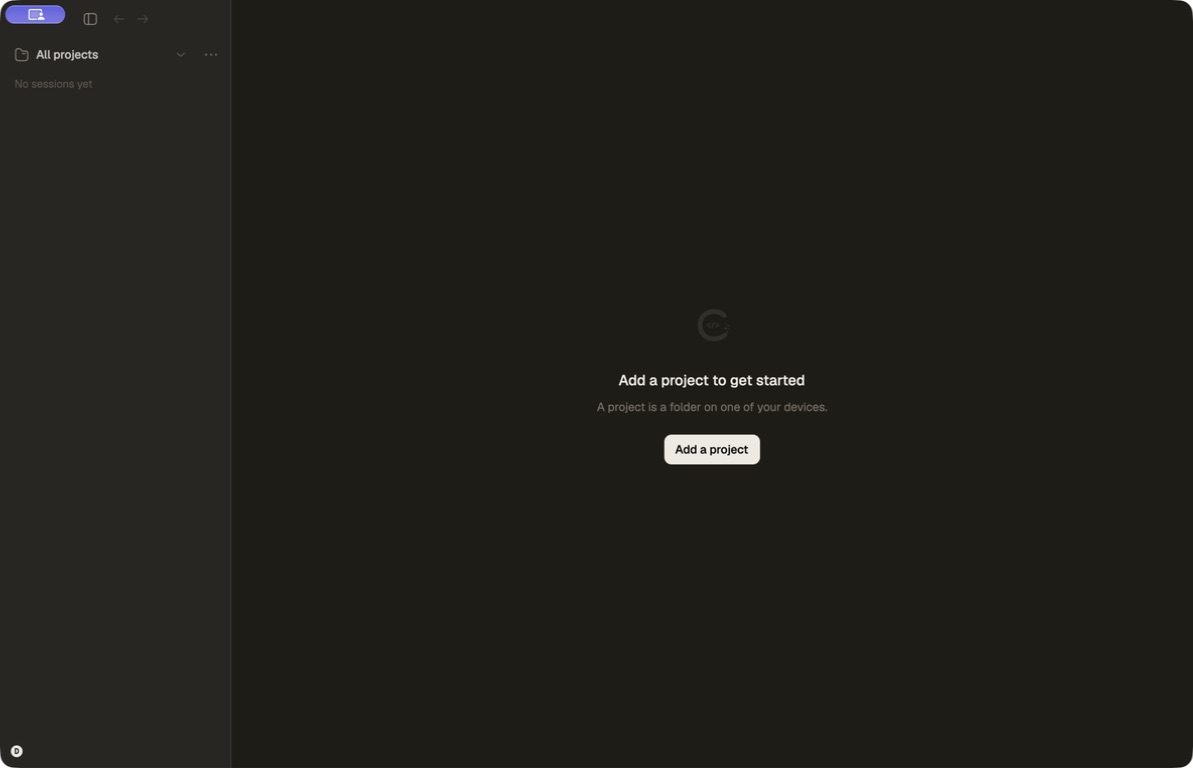
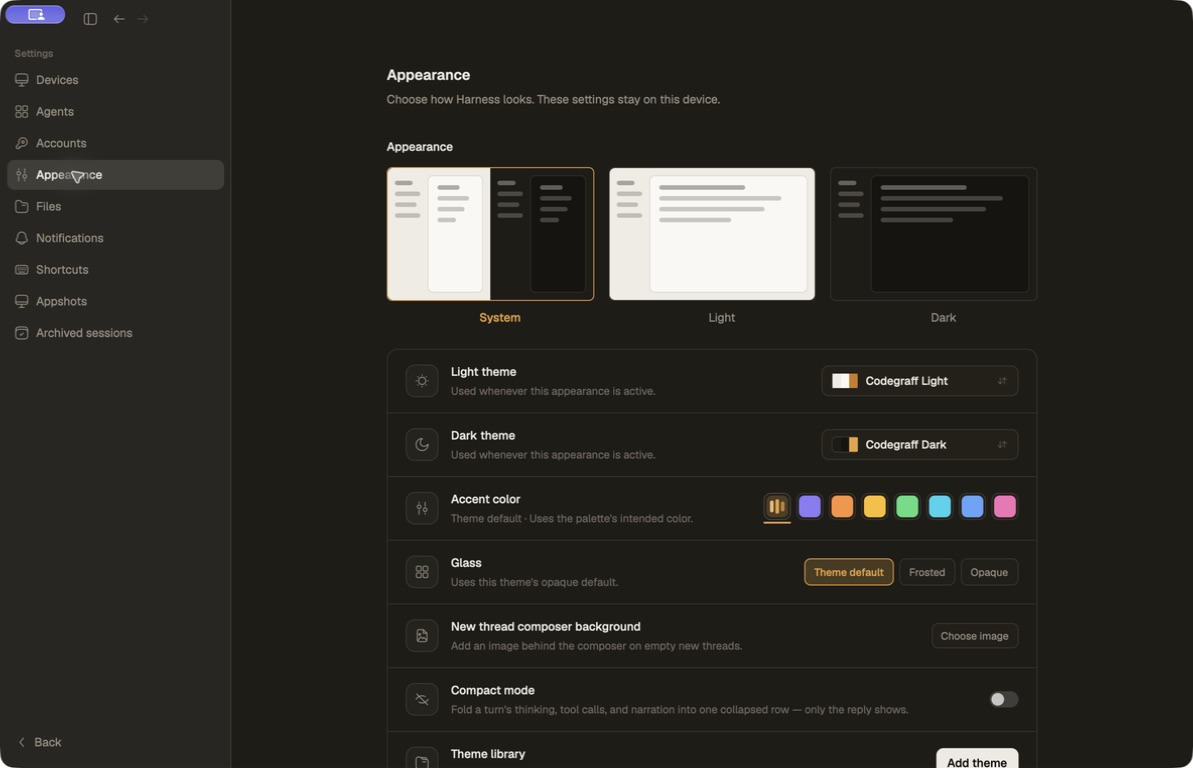
Replacement interface preview
The following captures preview a proposed replacement interface. Neither interface view is shipped in v0.0.302.4. This release still ships the Codegraff desktop interface described above.
Proposed project and session view — preview only, not shipped:
Proposed appearance settings — preview only, not shipped:
Install and verification
The release page provides versioned CLI archives and checksums. The macOS desktop download is the signed, notarized DMG attached to the same release; the stable desktop update archive is checked against its manifest before the release is published. Linux desktop packaging is included where supported.
The newest versioned release branch produces unique beta builds from its exact source commit. Those prereleases do not enter the stable desktop update feed. The stable tag triggers release checks and creates a draft. The release is published only after those checks and desktop signing gates pass. The full changelog lists additional fixes and their release context.
Offline checks cover formatting, source limits, test reachability, generated SDK consistency, terminal behavior, desktop regressions, and scripted harness behavior. Local transport and ACP fixtures cover retries, cancellation, tool ordering, and uncertain usage without live service calls.