
The fastest, litest AI Gateway. Rust core with Python SDK. Call 100+ LLM APIs in OpenAI (or native) format with cost tracking, guardrails, load balancing, and logging [Bedrock, Azure, OpenAI, Anthropic, OpenAI, VertexAI, vLLM, Nvidia NIM]
Python ai-gatewayanthropicazure-openaibedrockgatewaylangchainlitellmllmllm-gatewayllmopsmcp-gatewayopenaiopenai-proxyrustrust-aivertex-ai
docs update
shivamfd110cd5cfae
diff --git a/docs/my-website/docs/proxy/guardrails/policy_flow_builder.md b/docs/my-website/docs/proxy/guardrails/policy_flow_builder.mdindex 630930aa893..200a7ed9b18 100644--- a/docs/my-website/docs/proxy/guardrails/policy_flow_builder.md+++ b/docs/my-website/docs/proxy/guardrails/policy_flow_builder.md@@ -71,11 +71,105 @@ For each step you choose an action for **pass**, **fail**, and optionally **erro3. Select **Flow Builder** (instead of the simple form)4. Design your flow:- **Trigger** — Incoming LLM request (runs when the policy matches)- - **Steps** — Add guardrails, set **ON PASS**, **ON FAIL**, and **ON ERROR** actions per step (ON ERROR is optional; when unset, errors follow ON FAIL)- - **End** — Request proceeds to the LLM-5. Use the **+** between steps to insert new steps-6. Use the **Test** panel to run sample messages through the pipeline before saving-7. Click **Save** to create or update the policy+ - **Steps** — Add guardrails; set **ON PASS**, **ON FAIL**, and **ON API FAILURE** / **ON ERROR** per step (when **ON API FAILURE** is unset, technical errors follow **ON FAIL**)+ - **End** — Request proceeds to the LLM when the pipeline allows it+5. Use **+** between steps to insert another guardrail step (for fallbacks, retries, or stricter second checks)+6. Use **Test Pipeline** to run sample messages before saving+7. Click **Save Policy** (or **Save**) to create or update the policy++### Configure guardrail fallbacks in the UI (walkthrough)++1. Click **Policies**++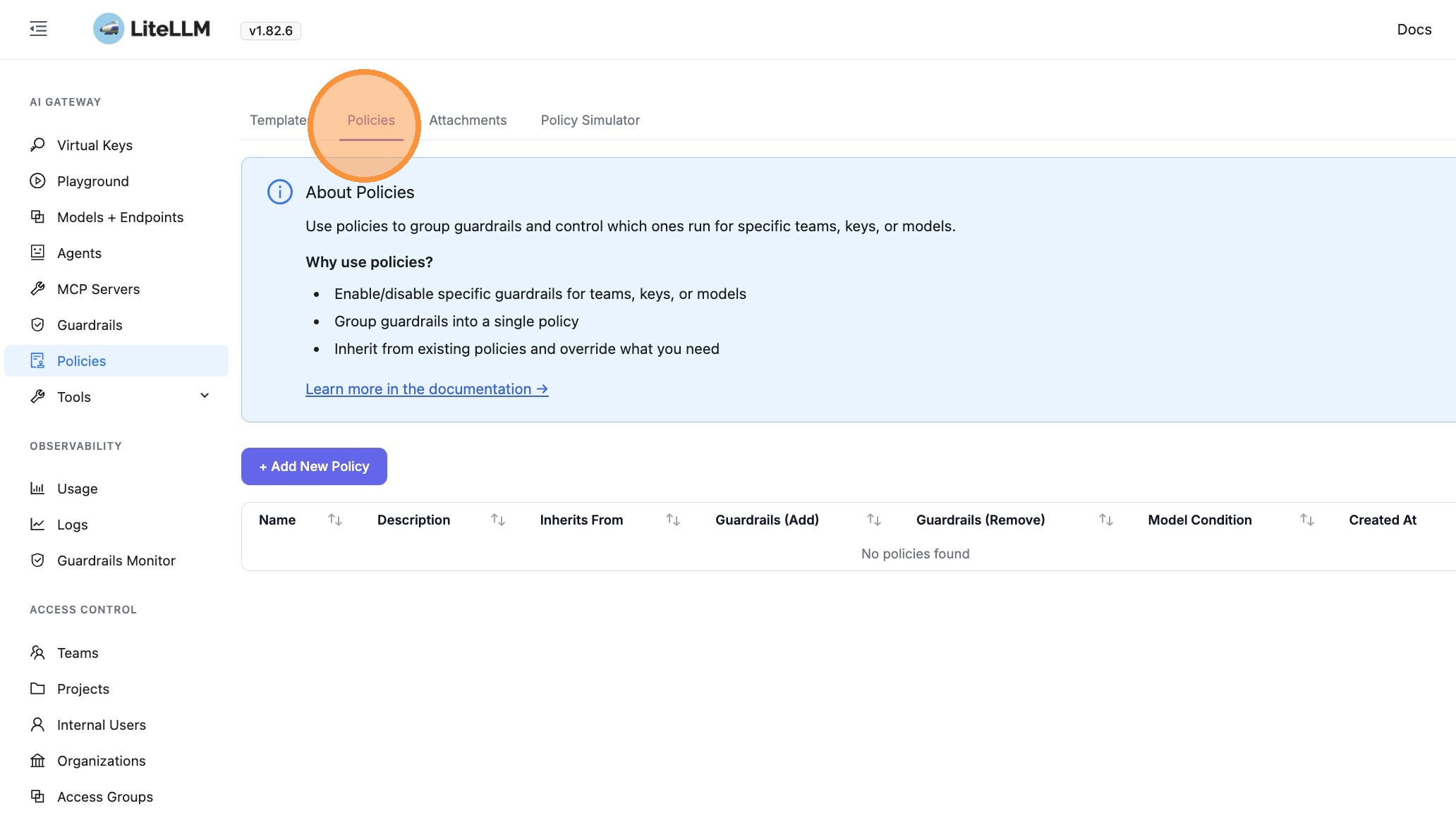++2. Click **+ Add New Policy**++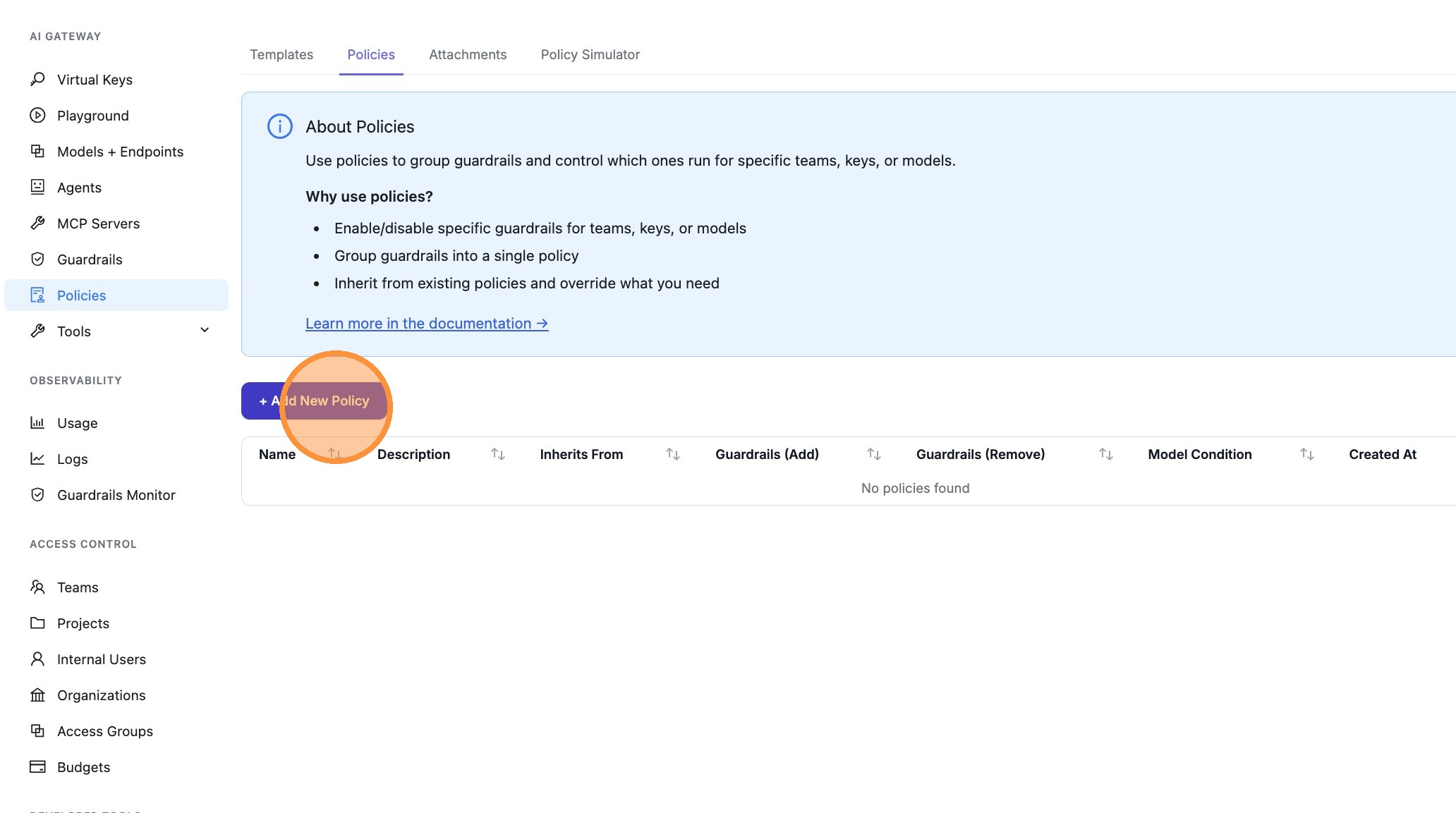++3. Click **Flow Builder**++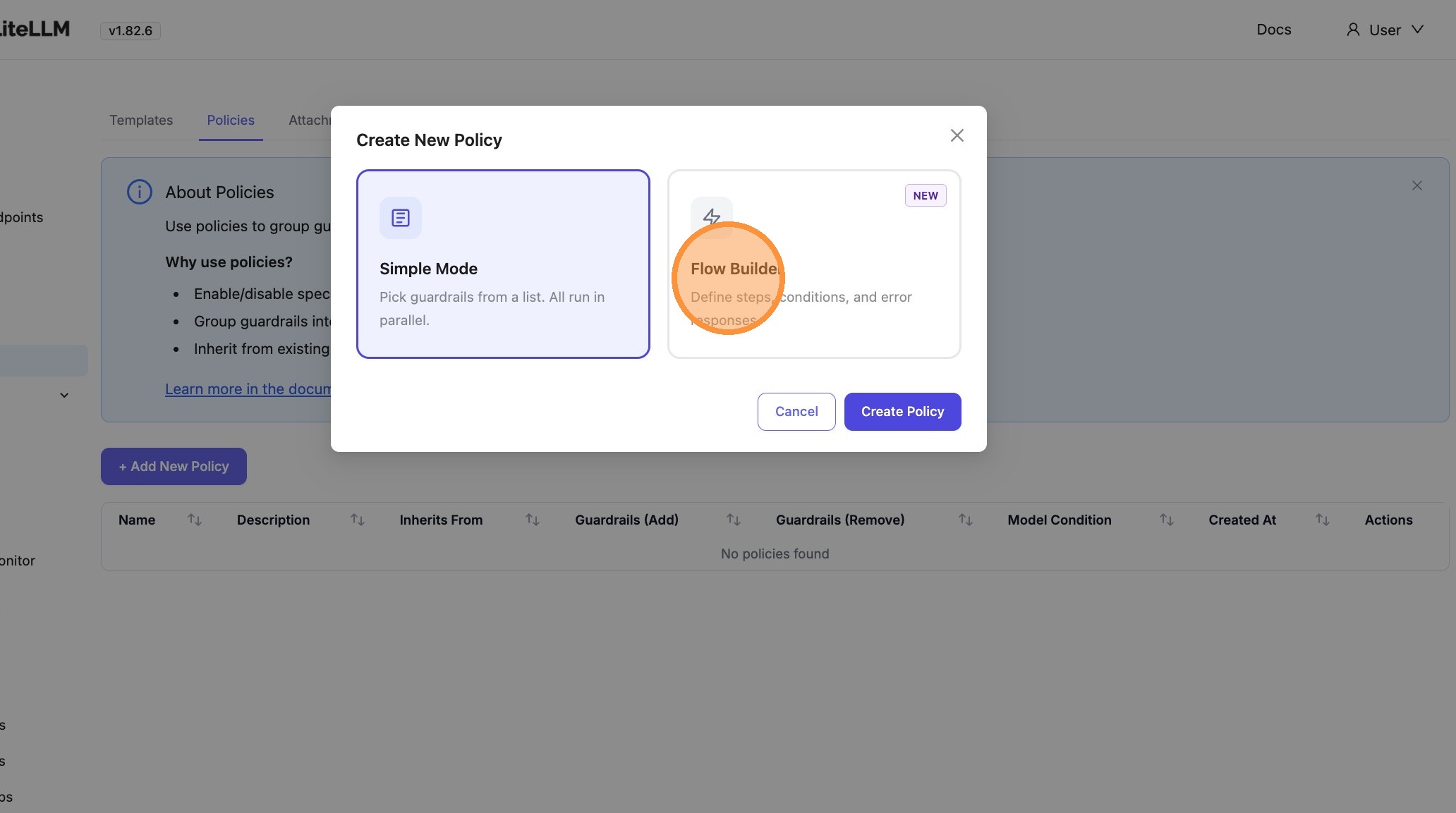++4. Click **Continue to Builder**++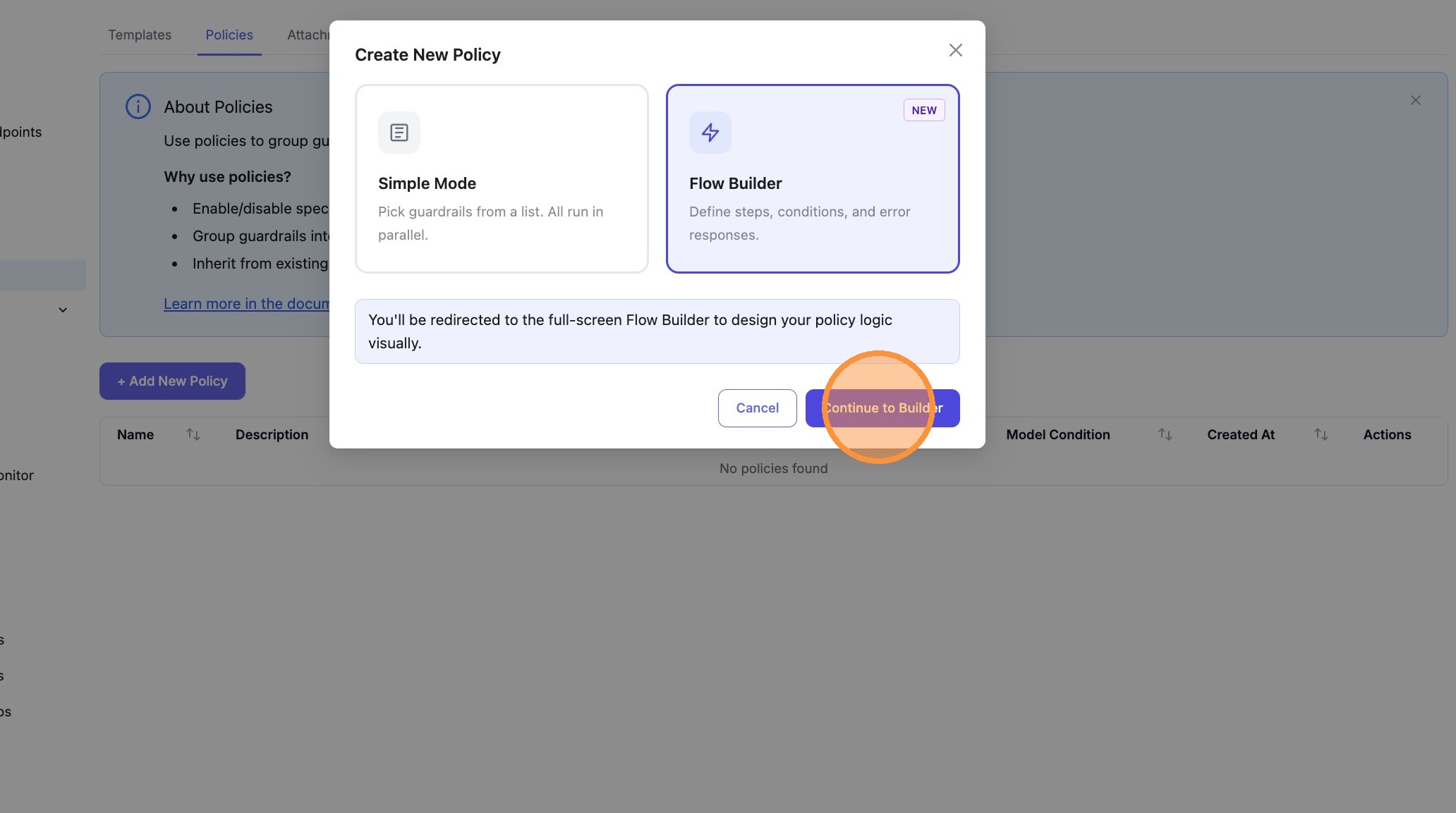++5. Click the **guardrail search** field on the first step++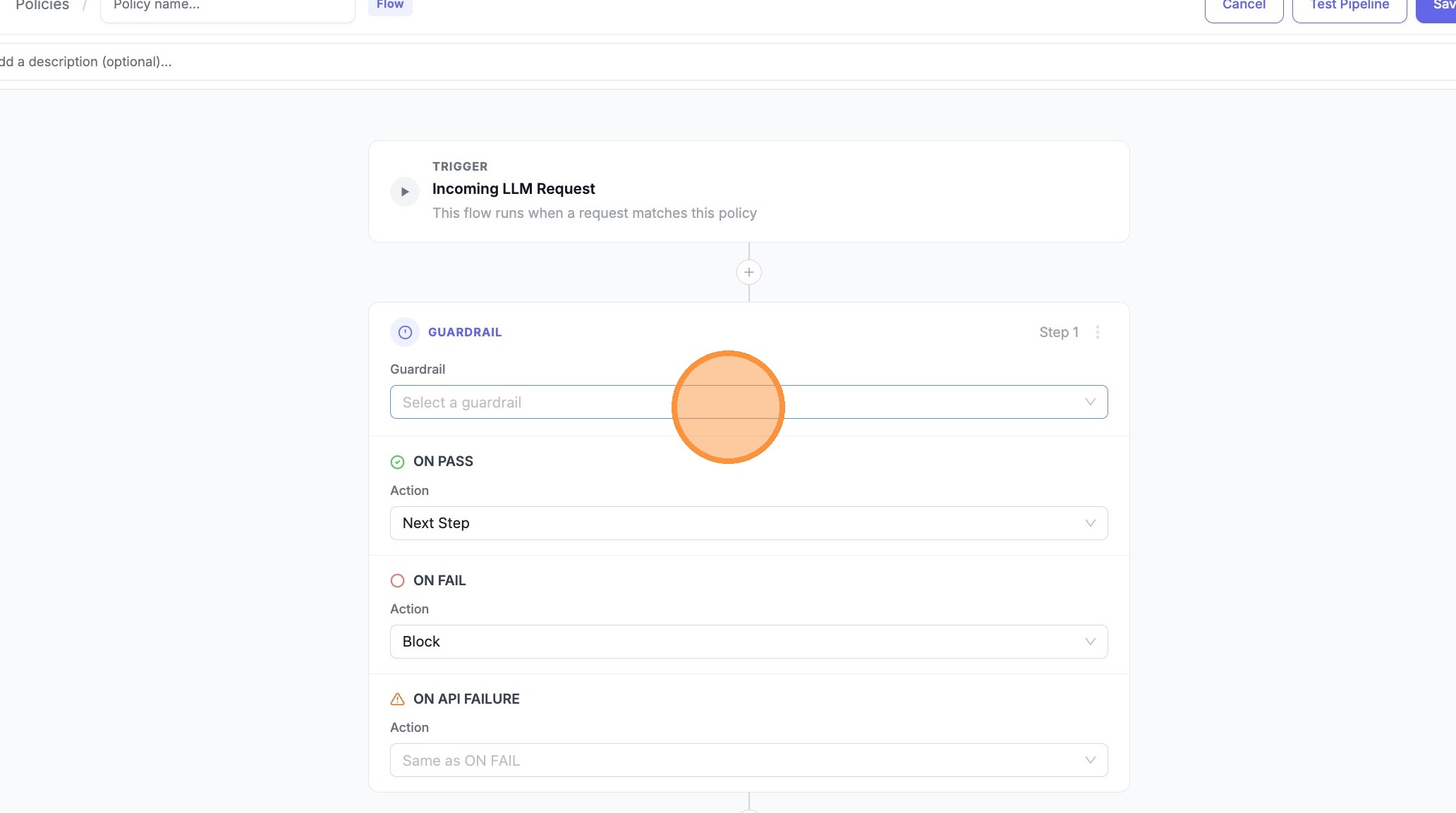++6. Choose **Test Moderation** (or your primary guardrail)++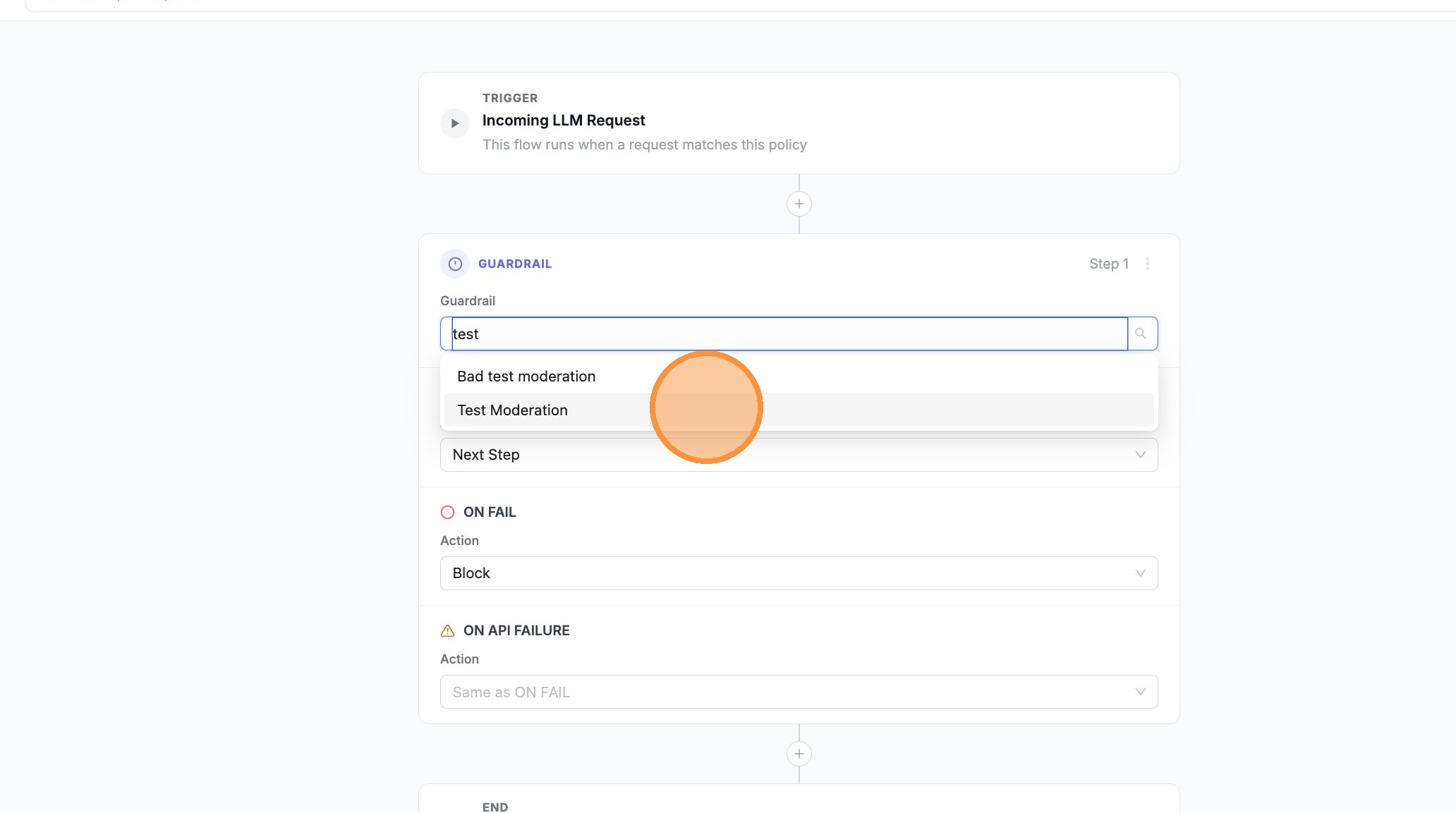++7. For one branch (e.g. **ON API FAILURE**), set the action to **Next Step** so the pipeline can fall through to the next guardrail when the API errors++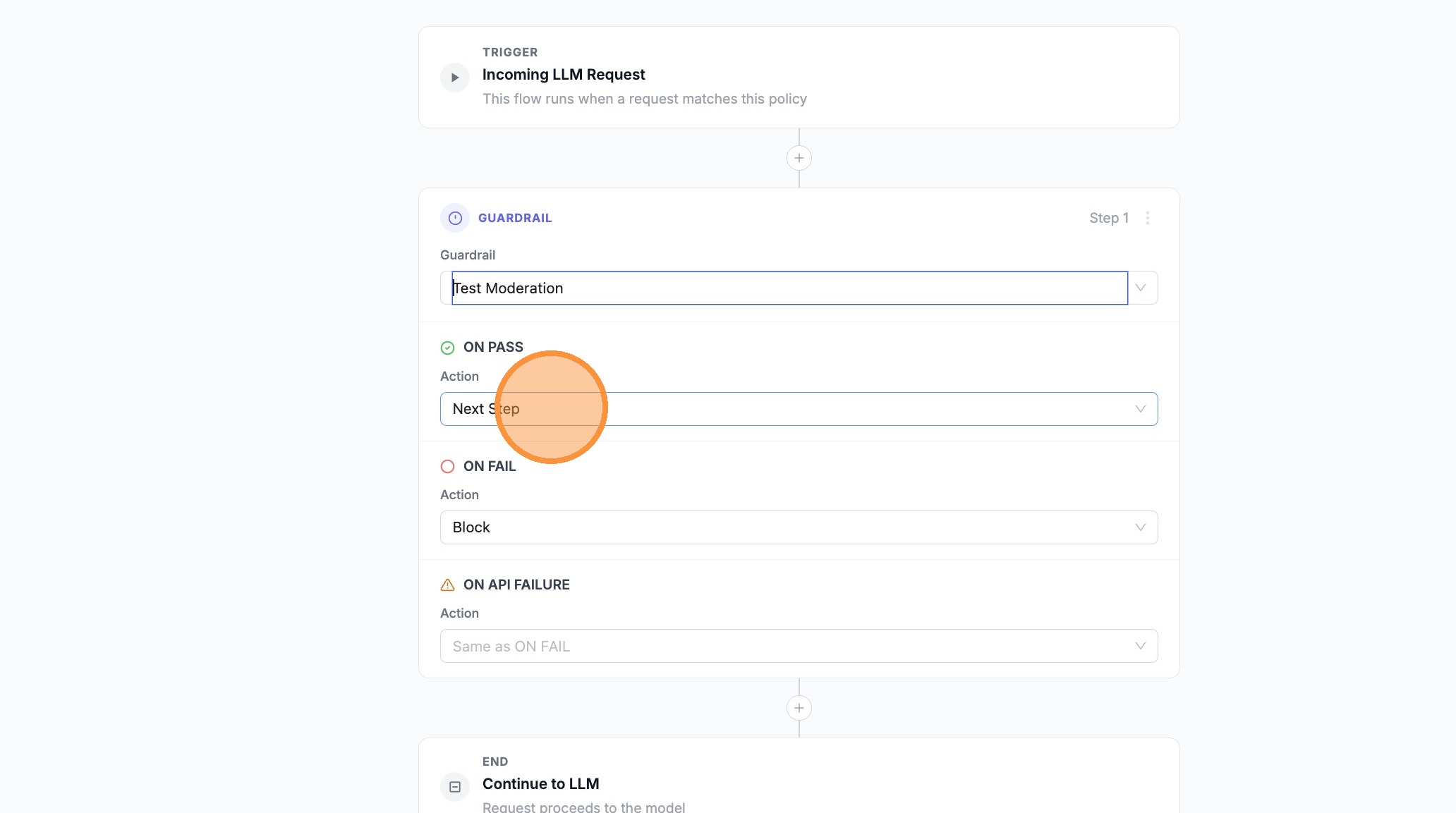++8. For **ON PASS**, set **Allow** (or **Next Step** if you need more steps before allowing)++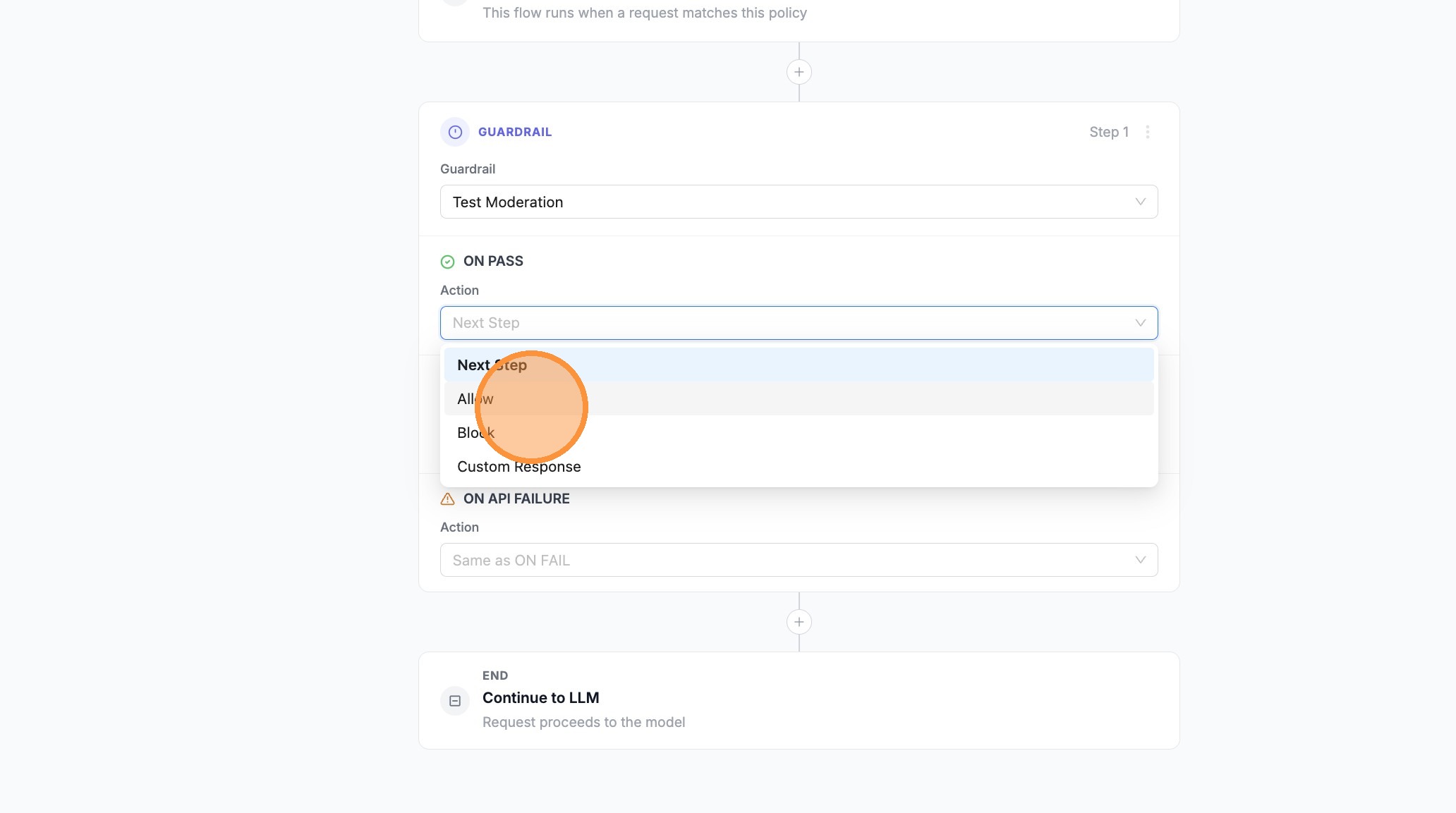++9. Open the next outcome’s search/dropdown (e.g. **ON FAIL**)++++10. Set that branch to **Next Step** if failed checks should continue to your backup guardrail++++11. Click **+** between steps to add a second guardrail++++12. Open the guardrail search field on the new step++++13. Select **Insults & Personal Attacks** (or your fallback / stricter guardrail)++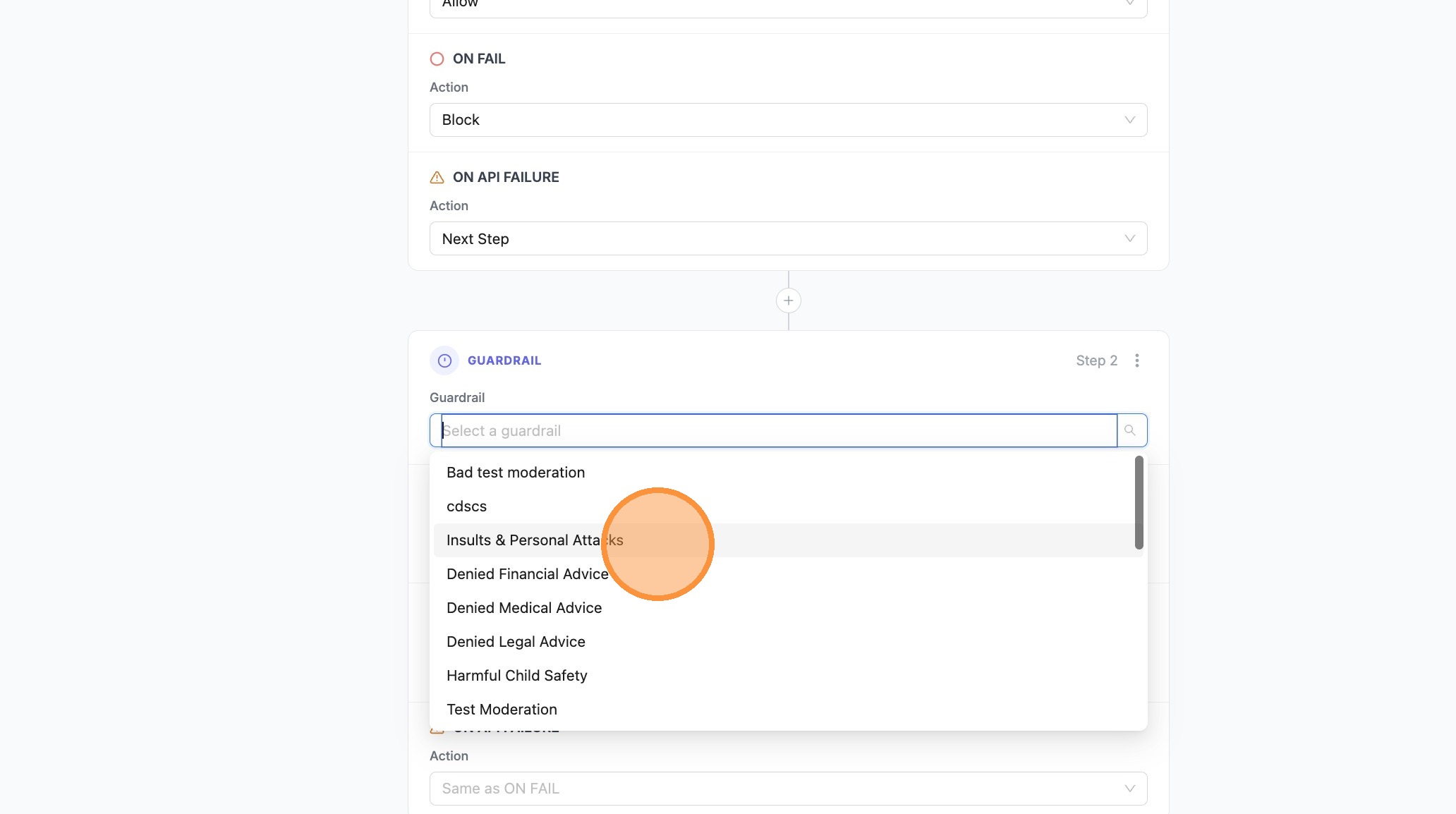++14. Set **Next Step** or **Block** on the branches as needed for this step++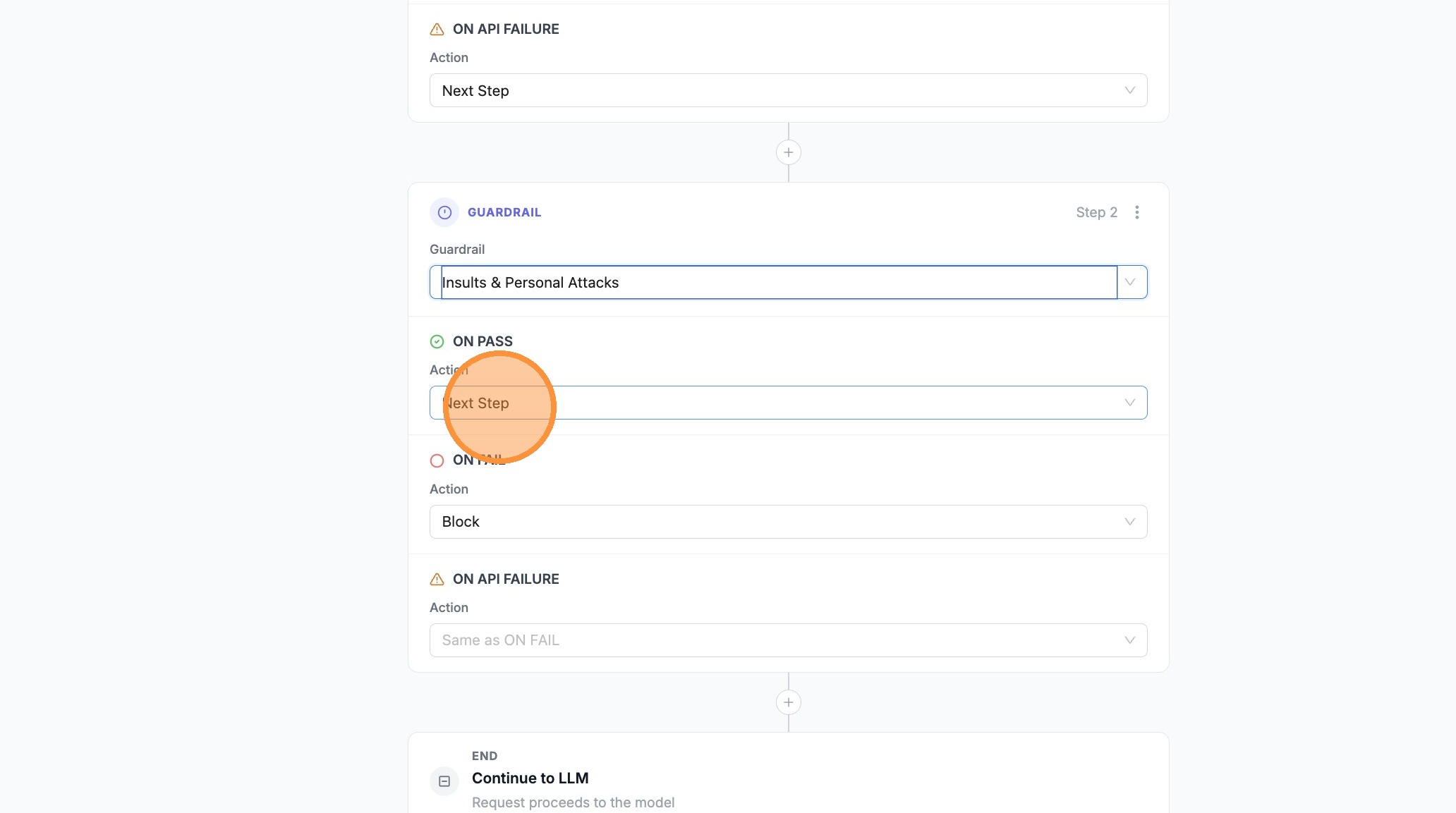++15. Set **ON PASS** to **Allow** when this guardrail should complete the pipeline successfully++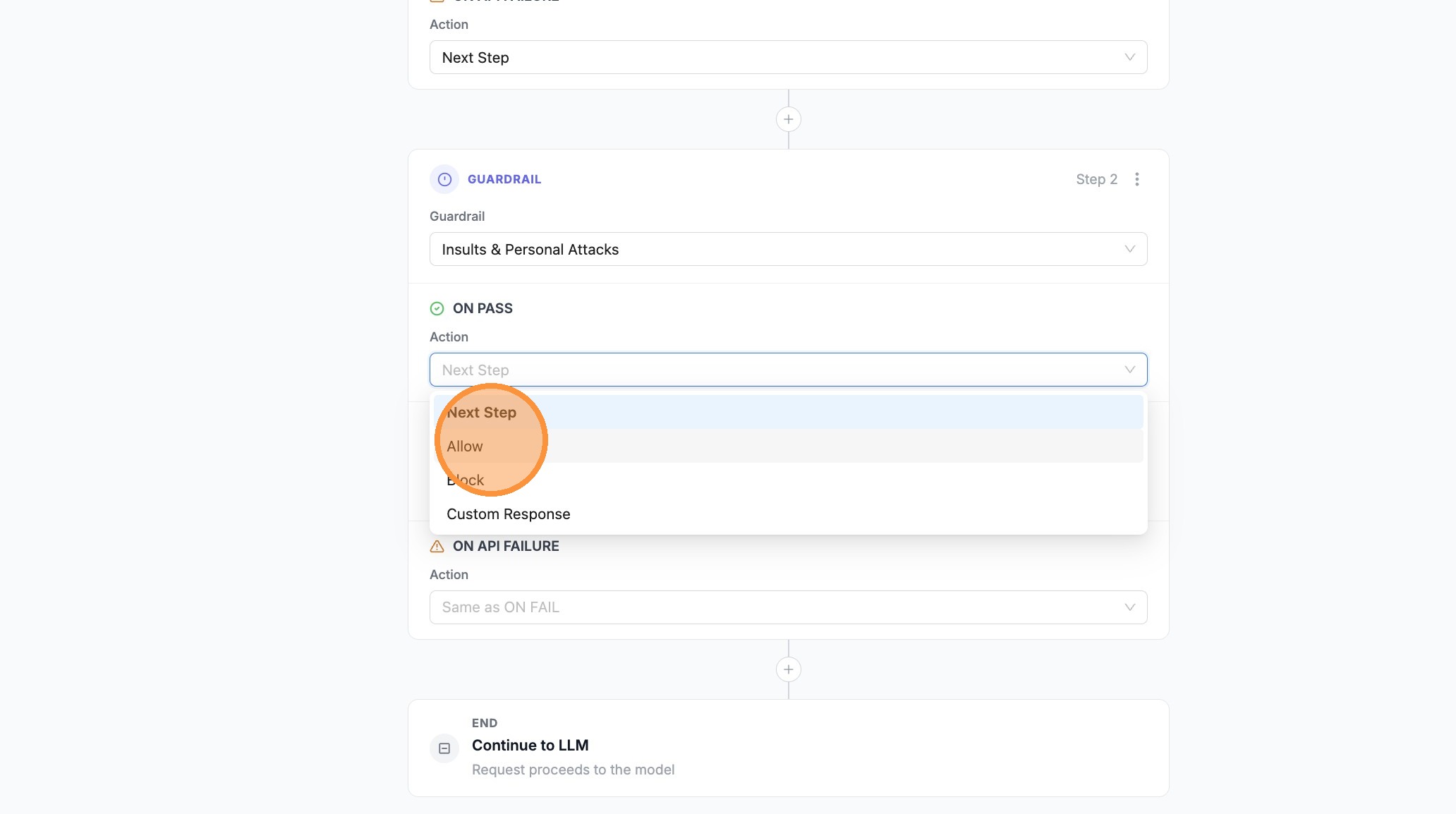++16. Open the branch where you want a **Custom Response** (e.g. **ON FAIL** on the last step)++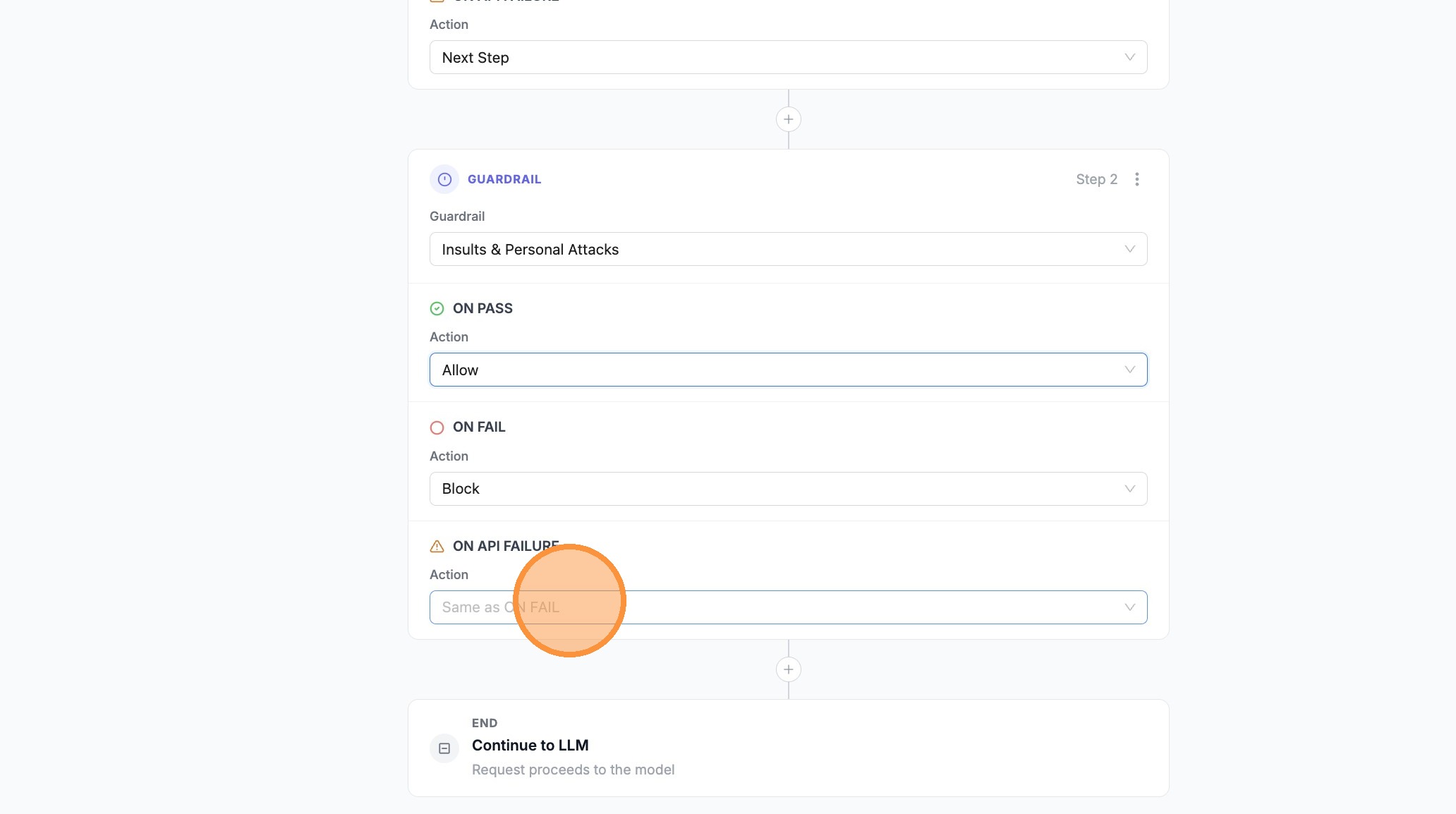++17. Choose **Custom Response**++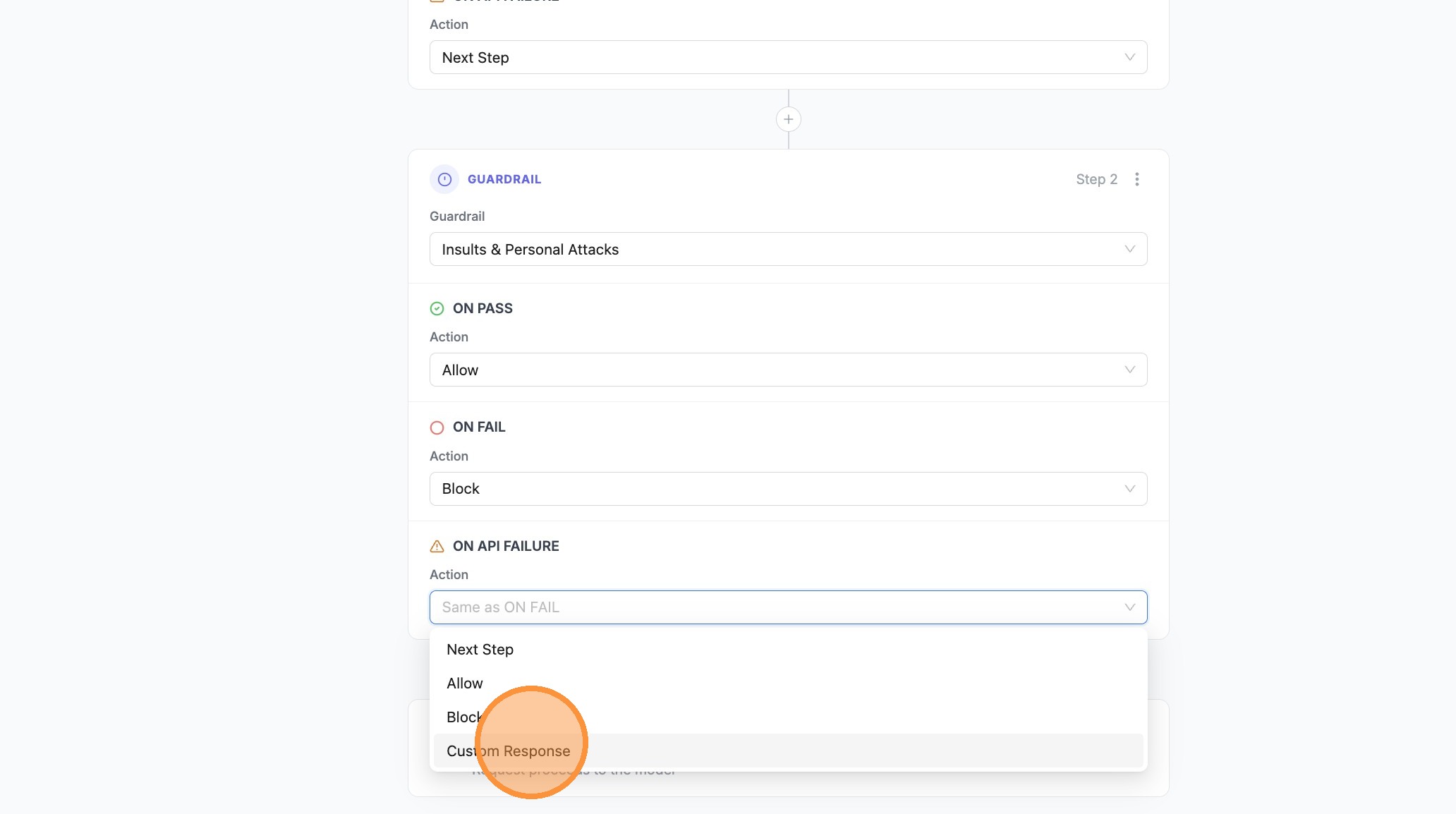++18. Click **Enter custom response...** and type your message++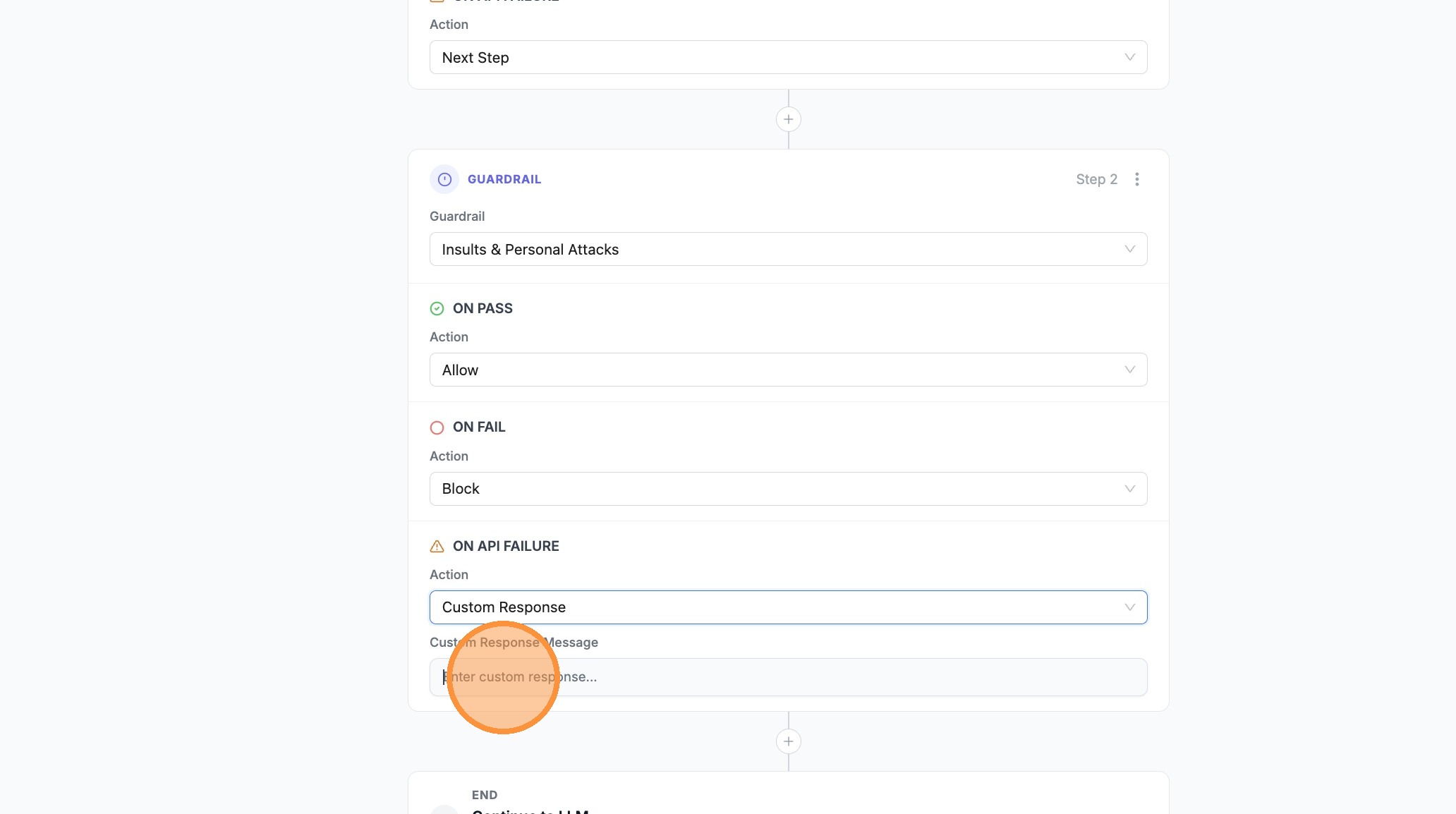++19. Confirm or edit the message in **Enter custom response...** as needed++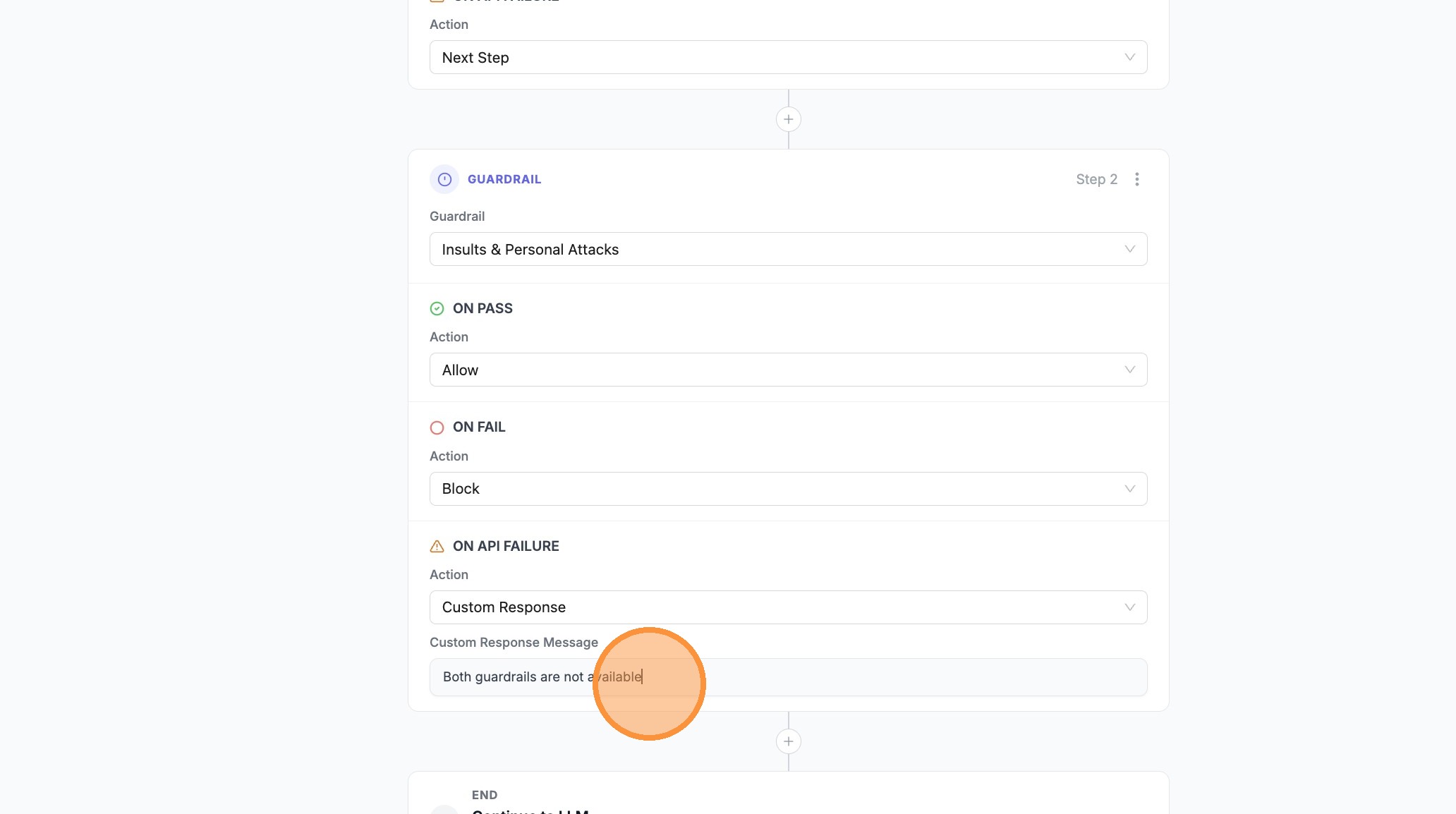++20. Open **Test Pipeline**++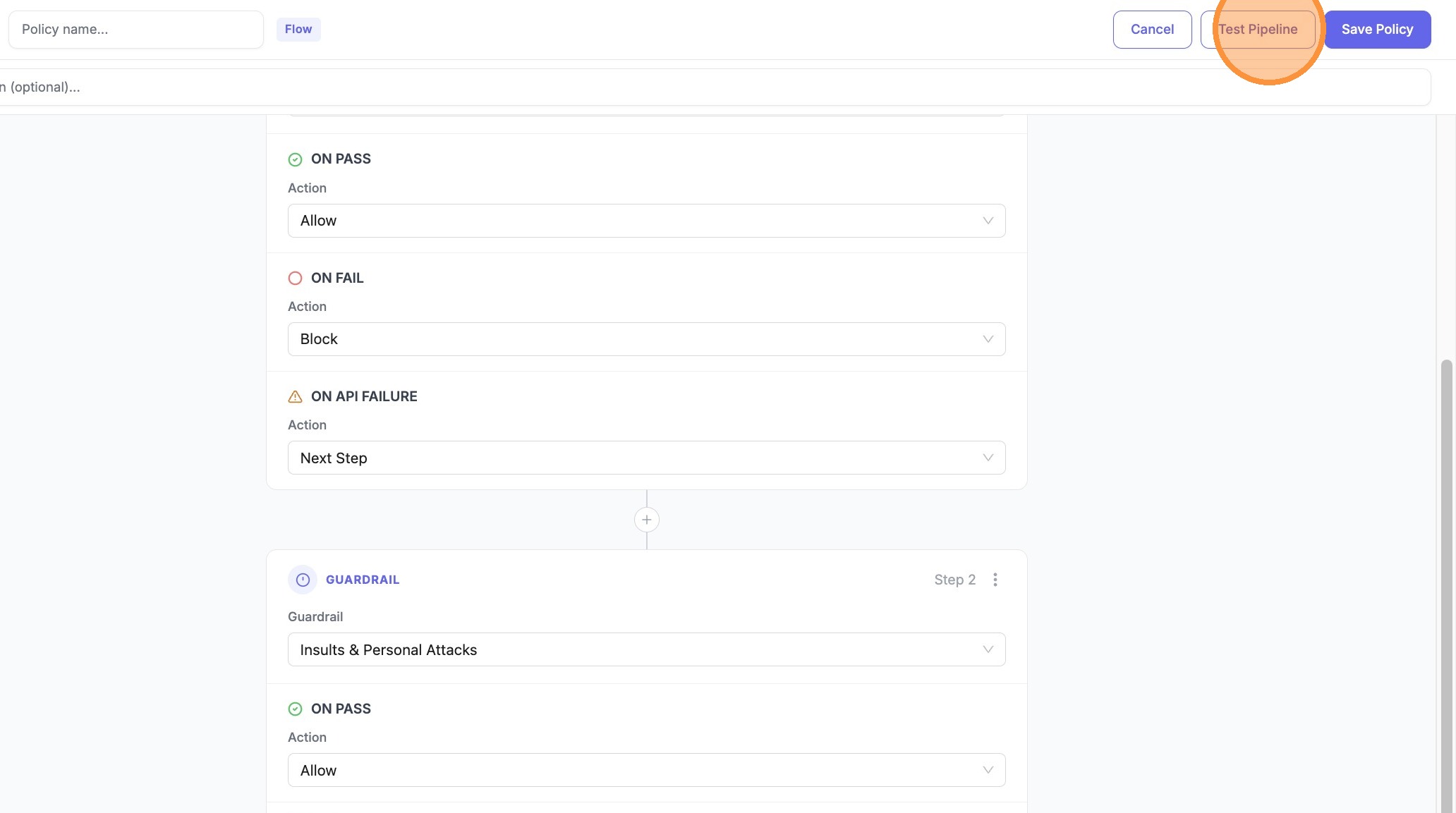++21. Click **Run Test**++++22. Expand **Step 1** (or the first guardrail row) in the results to see **ERROR** / **Next Step** vs **PASS** / **Allow**++++23. Expand **Step 2** (e.g. **Insults & Personal Attacks**) to confirm **PASS** and **Allow** after the fallback++## Config (YAML)