
SolidCraft: an open-source parametric 3D CAD application built in pure Rust. Desktop, web, and automation through MCP.
//! Types related to the keyboard.
// This file contains a substantial portion of the UI Events Specification by the W3C. In
// particular, the variant names within `Key` and `KeyCode` and their documentation are modified
// versions of contents of the aforementioned specification.
//
// The original documents are:
//
// ### For `Key`
// UI Events KeyboardEvent key Values
// https://www.w3.org/TR/2017/CR-uievents-key-20170601/
// Copyright © 2017 W3C® (MIT, ERCIM, Keio, Beihang).
//
// ### For `KeyCode`
// UI Events KeyboardEvent code Values
// https://www.w3.org/TR/2017/CR-uievents-code-20170601/
// Copyright © 2017 W3C® (MIT, ERCIM, Keio, Beihang).
//
// These documents were used under the terms of the following license. This W3C license as well as
// the W3C short notice apply to the `Key` and `KeyCode` enums and their variants and the
// documentation attached to their variants.
// --------- BEGINNING OF W3C LICENSE --------------------------------------------------------------
//
// License
//
// By obtaining and/or copying this work, you (the licensee) agree that you have read, understood,
// and will comply with the following terms and conditions.
//
// Permission to copy, modify, and distribute this work, with or without modification, for any
// purpose and without fee or royalty is hereby granted, provided that you include the following on
// ALL copies of the work or portions thereof, including modifications:
//
// - The full text of this NOTICE in a location viewable to users of the redistributed or derivative
// work.
// - Any pre-existing intellectual property disclaimers, notices, or terms and conditions. If none
// exist, the W3C Software and Document Short Notice should be included.
// - Notice of any changes or modifications, through a copyright statement on the new code or
// document such as "This software or document includes material copied from or derived from
// [title and URI of the W3C document]. Copyright © [YEAR] W3C® (MIT, ERCIM, Keio, Beihang)."
//
// Disclaimers
//
// THIS WORK IS PROVIDED "AS IS," AND COPYRIGHT HOLDERS MAKE NO REPRESENTATIONS OR WARRANTIES,
// EXPRESS OR IMPLIED, INCLUDING BUT NOT LIMITED TO, WARRANTIES OF MERCHANTABILITY OR FITNESS FOR
// ANY PARTICULAR PURPOSE OR THAT THE USE OF THE SOFTWARE OR DOCUMENT WILL NOT INFRINGE ANY THIRD
// PARTY PATENTS, COPYRIGHTS, TRADEMARKS OR OTHER RIGHTS.
//
// COPYRIGHT HOLDERS WILL NOT BE LIABLE FOR ANY DIRECT, INDIRECT, SPECIAL OR CONSEQUENTIAL DAMAGES
// ARISING OUT OF ANY USE OF THE SOFTWARE OR DOCUMENT.
//
// The name and trademarks of copyright holders may NOT be used in advertising or publicity
// pertaining to the work without specific, written prior permission. Title to copyright in this
// work will at all times remain with copyright holders.
//
// --------- END OF W3C LICENSE --------------------------------------------------------------------
// --------- BEGINNING OF W3C SHORT NOTICE ---------------------------------------------------------
//
// winit: https://github.com/rust-windowing/winit
//
// Copyright © 2021 World Wide Web Consortium, (Massachusetts Institute of Technology, European
// Research Consortium for Informatics and Mathematics, Keio University, Beihang). All Rights
// Reserved. This work is distributed under the W3C® Software License [1] in the hope that it will
// be useful, but WITHOUT ANY WARRANTY; without even the implied warranty of MERCHANTABILITY or
// FITNESS FOR A PARTICULAR PURPOSE.
//
// [1] http://www.w3.org/Consortium/Legal/copyright-software
//
// --------- END OF W3C SHORT NOTICE ---------------------------------------------------------------
use bitflags::bitflags;
#[cfg(feature = "serde")]
use serde::{Deserialize, Serialize};
pub use smol_str::SmolStr;
/// Contains the platform-native physical key identifier
///
/// The exact values vary from platform to platform (which is part of why this is a per-platform
/// enum), but the values are primarily tied to the key's physical location on the keyboard.
///
/// This enum is primarily used to store raw keycodes when Winit doesn't map a given native
/// physical key identifier to a meaningful [`KeyCode`] variant. In the presence of identifiers we
/// haven't mapped for you yet, this lets you use use [`KeyCode`] to:
///
/// - Correctly match key press and release events.
/// - On non-web platforms, support assigning keybinds to virtually any key through a UI.
#[derive(Clone, Copy, PartialEq, Eq, PartialOrd, Ord, Hash)]
#[cfg_attr(feature = "serde", derive(Serialize, Deserialize))]
pub enum NativeKeyCode {
Unidentified,
/// An Android "scancode".
Android(u32),
/// A macOS "scancode".
MacOS(u16),
/// A Windows "scancode".
Windows(u16),
/// An XKB "keycode".
Xkb(u32),
}
impl std::fmt::Debug for NativeKeyCode {
fn fmt(&self, f: &mut std::fmt::Formatter<'_>) -> std::fmt::Result {
use NativeKeyCode::{Android, MacOS, Unidentified, Windows, Xkb};
let mut debug_tuple;
match self {
Unidentified => {
debug_tuple = f.debug_tuple("Unidentified");
},
Android(code) => {
debug_tuple = f.debug_tuple("Android");
debug_tuple.field(&format_args!("0x{code:04X}"));
},
MacOS(code) => {
debug_tuple = f.debug_tuple("MacOS");
debug_tuple.field(&format_args!("0x{code:04X}"));
},
Windows(code) => {
debug_tuple = f.debug_tuple("Windows");
debug_tuple.field(&format_args!("0x{code:04X}"));
},
Xkb(code) => {
debug_tuple = f.debug_tuple("Xkb");
debug_tuple.field(&format_args!("0x{code:04X}"));
},
}
debug_tuple.finish()
}
}
/// Contains the platform-native logical key identifier
///
/// Exactly what that means differs from platform to platform, but the values are to some degree
/// tied to the currently active keyboard layout. The same key on the same keyboard may also report
/// different values on different platforms, which is one of the reasons this is a per-platform
/// enum.
///
/// This enum is primarily used to store raw keysym when Winit doesn't map a given native logical
/// key identifier to a meaningful [`Key`] variant. This lets you use [`Key`], and let the user
/// define keybinds which work in the presence of identifiers we haven't mapped for you yet.
#[derive(Clone, PartialEq, Eq, Hash, PartialOrd, Ord)]
#[cfg_attr(feature = "serde", derive(Serialize, Deserialize))]
pub enum NativeKey {
Unidentified,
/// An Android "keycode", which is similar to a "virtual-key code" on Windows.
Android(u32),
/// A macOS "scancode". There does not appear to be any direct analogue to either keysyms or
/// "virtual-key" codes in macOS, so we report the scancode instead.
MacOS(u16),
/// A Windows "virtual-key code".
Windows(u16),
/// An XKB "keysym".
Xkb(u32),
/// A "key value string".
Web(SmolStr),
}
impl std::fmt::Debug for NativeKey {
fn fmt(&self, f: &mut std::fmt::Formatter<'_>) -> std::fmt::Result {
use NativeKey::{Android, MacOS, Unidentified, Web, Windows, Xkb};
let mut debug_tuple;
match self {
Unidentified => {
debug_tuple = f.debug_tuple("Unidentified");
},
Android(code) => {
debug_tuple = f.debug_tuple("Android");
debug_tuple.field(&format_args!("0x{code:04X}"));
},
MacOS(code) => {
debug_tuple = f.debug_tuple("MacOS");
debug_tuple.field(&format_args!("0x{code:04X}"));
},
Windows(code) => {
debug_tuple = f.debug_tuple("Windows");
debug_tuple.field(&format_args!("0x{code:04X}"));
},
Xkb(code) => {
debug_tuple = f.debug_tuple("Xkb");
debug_tuple.field(&format_args!("0x{code:04X}"));
},
Web(code) => {
debug_tuple = f.debug_tuple("Web");
debug_tuple.field(code);
},
}
debug_tuple.finish()
}
}
impl From<NativeKeyCode> for NativeKey {
#[inline]
fn from(code: NativeKeyCode) -> Self {
match code {
NativeKeyCode::Unidentified => NativeKey::Unidentified,
NativeKeyCode::Android(x) => NativeKey::Android(x),
NativeKeyCode::MacOS(x) => NativeKey::MacOS(x),
NativeKeyCode::Windows(x) => NativeKey::Windows(x),
NativeKeyCode::Xkb(x) => NativeKey::Xkb(x),
}
}
}
impl PartialEq<NativeKey> for NativeKeyCode {
#[allow(clippy::cmp_owned)] // uses less code than direct match; target is stack allocated
#[inline]
fn eq(&self, rhs: &NativeKey) -> bool {
NativeKey::from(*self) == *rhs
}
}
impl PartialEq<NativeKeyCode> for NativeKey {
#[inline]
fn eq(&self, rhs: &NativeKeyCode) -> bool {
rhs == self
}
}
/// Represents the location of a physical key.
///
/// This type is a superset of [`KeyCode`], including an [`Unidentified`][Self::Unidentified]
/// variant.
#[derive(Debug, Clone, Copy, PartialEq, Eq, PartialOrd, Ord, Hash)]
#[cfg_attr(feature = "serde", derive(Serialize, Deserialize))]
pub enum PhysicalKey {
/// A known key code
Code(KeyCode),
/// This variant is used when the key cannot be translated to a [`KeyCode`]
///
/// The native keycode is provided (if available) so you're able to more reliably match
/// key-press and key-release events by hashing the [`PhysicalKey`]. It is also possible to use
/// this for keybinds for non-standard keys, but such keybinds are tied to a given platform.
Unidentified(NativeKeyCode),
}
impl From<KeyCode> for PhysicalKey {
#[inline]
fn from(code: KeyCode) -> Self {
PhysicalKey::Code(code)
}
}
impl From<NativeKeyCode> for PhysicalKey {
#[inline]
fn from(code: NativeKeyCode) -> Self {
PhysicalKey::Unidentified(code)
}
}
impl PartialEq<KeyCode> for PhysicalKey {
#[inline]
fn eq(&self, rhs: &KeyCode) -> bool {
match self {
PhysicalKey::Code(ref code) => code == rhs,
_ => false,
}
}
}
impl PartialEq<PhysicalKey> for KeyCode {
#[inline]
fn eq(&self, rhs: &PhysicalKey) -> bool {
rhs == self
}
}
impl PartialEq<NativeKeyCode> for PhysicalKey {
#[inline]
fn eq(&self, rhs: &NativeKeyCode) -> bool {
match self {
PhysicalKey::Unidentified(ref code) => code == rhs,
_ => false,
}
}
}
impl PartialEq<PhysicalKey> for NativeKeyCode {
#[inline]
fn eq(&self, rhs: &PhysicalKey) -> bool {
rhs == self
}
}
/// Code representing the location of a physical key
///
/// This mostly conforms to the UI Events Specification's [`KeyboardEvent.code`] with a few
/// exceptions:
/// - The keys that the specification calls "MetaLeft" and "MetaRight" are named "SuperLeft" and
/// "SuperRight" here.
/// - The key that the specification calls "Super" is reported as `Unidentified` here.
///
/// [`KeyboardEvent.code`]: https://w3c.github.io/uievents-code/#code-value-tables
#[non_exhaustive]
#[derive(Debug, Clone, Copy, PartialEq, Eq, PartialOrd, Ord, Hash)]
#[cfg_attr(feature = "serde", derive(Serialize, Deserialize))]
pub enum KeyCode {
/// <kbd>`</kbd> on a US keyboard. This is also called a backtick or grave.
/// This is the <kbd>半角</kbd>/<kbd>全角</kbd>/<kbd>漢字</kbd>
/// (hankaku/zenkaku/kanji) key on Japanese keyboards
Backquote,
/// Used for both the US <kbd>\\</kbd> (on the 101-key layout) and also for the key
/// located between the <kbd>"</kbd> and <kbd>Enter</kbd> keys on row C of the 102-,
/// 104- and 106-key layouts.
/// Labeled <kbd>#</kbd> on a UK (102) keyboard.
Backslash,
/// <kbd>[</kbd> on a US keyboard.
BracketLeft,
/// <kbd>]</kbd> on a US keyboard.
BracketRight,
/// <kbd>,</kbd> on a US keyboard.
Comma,
/// <kbd>0</kbd> on a US keyboard.
Digit0,
/// <kbd>1</kbd> on a US keyboard.
Digit1,
/// <kbd>2</kbd> on a US keyboard.
Digit2,
/// <kbd>3</kbd> on a US keyboard.
Digit3,
/// <kbd>4</kbd> on a US keyboard.
Digit4,
/// <kbd>5</kbd> on a US keyboard.
Digit5,
/// <kbd>6</kbd> on a US keyboard.
Digit6,
/// <kbd>7</kbd> on a US keyboard.
Digit7,
/// <kbd>8</kbd> on a US keyboard.
Digit8,
/// <kbd>9</kbd> on a US keyboard.
Digit9,
/// <kbd>=</kbd> on a US keyboard.
Equal,
/// Located between the left <kbd>Shift</kbd> and <kbd>Z</kbd> keys.
/// Labeled <kbd>\\</kbd> on a UK keyboard.
IntlBackslash,
/// Located between the <kbd>/</kbd> and right <kbd>Shift</kbd> keys.
/// Labeled <kbd>\\</kbd> (ro) on a Japanese keyboard.
IntlRo,
/// Located between the <kbd>=</kbd> and <kbd>Backspace</kbd> keys.
/// Labeled <kbd>¥</kbd> (yen) on a Japanese keyboard. <kbd>\\</kbd> on a
/// Russian keyboard.
IntlYen,
/// <kbd>a</kbd> on a US keyboard.
/// Labeled <kbd>q</kbd> on an AZERTY (e.g., French) keyboard.
KeyA,
/// <kbd>b</kbd> on a US keyboard.
KeyB,
/// <kbd>c</kbd> on a US keyboard.
KeyC,
/// <kbd>d</kbd> on a US keyboard.
KeyD,
/// <kbd>e</kbd> on a US keyboard.
KeyE,
/// <kbd>f</kbd> on a US keyboard.
KeyF,
/// <kbd>g</kbd> on a US keyboard.
KeyG,
/// <kbd>h</kbd> on a US keyboard.
KeyH,
/// <kbd>i</kbd> on a US keyboard.
KeyI,
/// <kbd>j</kbd> on a US keyboard.
KeyJ,
/// <kbd>k</kbd> on a US keyboard.
KeyK,
/// <kbd>l</kbd> on a US keyboard.
KeyL,
/// <kbd>m</kbd> on a US keyboard.
KeyM,
/// <kbd>n</kbd> on a US keyboard.
KeyN,
/// <kbd>o</kbd> on a US keyboard.
KeyO,
/// <kbd>p</kbd> on a US keyboard.
KeyP,
/// <kbd>q</kbd> on a US keyboard.
/// Labeled <kbd>a</kbd> on an AZERTY (e.g., French) keyboard.
KeyQ,
/// <kbd>r</kbd> on a US keyboard.
KeyR,
/// <kbd>s</kbd> on a US keyboard.
KeyS,
/// <kbd>t</kbd> on a US keyboard.
KeyT,
/// <kbd>u</kbd> on a US keyboard.
KeyU,
/// <kbd>v</kbd> on a US keyboard.
KeyV,
/// <kbd>w</kbd> on a US keyboard.
/// Labeled <kbd>z</kbd> on an AZERTY (e.g., French) keyboard.
KeyW,
/// <kbd>x</kbd> on a US keyboard.
KeyX,
/// <kbd>y</kbd> on a US keyboard.
/// Labeled <kbd>z</kbd> on a QWERTZ (e.g., German) keyboard.
KeyY,
/// <kbd>z</kbd> on a US keyboard.
/// Labeled <kbd>w</kbd> on an AZERTY (e.g., French) keyboard, and <kbd>y</kbd> on a
/// QWERTZ (e.g., German) keyboard.
KeyZ,
/// <kbd>-</kbd> on a US keyboard.
Minus,
/// <kbd>.</kbd> on a US keyboard.
Period,
/// <kbd>'</kbd> on a US keyboard.
Quote,
/// <kbd>;</kbd> on a US keyboard.
Semicolon,
/// <kbd>/</kbd> on a US keyboard.
Slash,
/// <kbd>Alt</kbd>, <kbd>Option</kbd>, or <kbd>⌥</kbd>.
AltLeft,
/// <kbd>Alt</kbd>, <kbd>Option</kbd>, or <kbd>⌥</kbd>.
/// This is labeled <kbd>AltGr</kbd> on many keyboard layouts.
AltRight,
/// <kbd>Backspace</kbd> or <kbd>⌫</kbd>.
/// Labeled <kbd>Delete</kbd> on Apple keyboards.
Backspace,
/// <kbd>CapsLock</kbd> or <kbd>⇪</kbd>
CapsLock,
/// The application context menu key, which is typically found between the right
/// <kbd>Super</kbd> key and the right <kbd>Control</kbd> key.
ContextMenu,
/// <kbd>Control</kbd> or <kbd>⌃</kbd>
ControlLeft,
/// <kbd>Control</kbd> or <kbd>⌃</kbd>
ControlRight,
/// <kbd>Enter</kbd> or <kbd>↵</kbd>. Labeled <kbd>Return</kbd> on Apple keyboards.
Enter,
/// The Windows, <kbd>⌘</kbd>, <kbd>Command</kbd>, or other OS symbol key.
SuperLeft,
/// The Windows, <kbd>⌘</kbd>, <kbd>Command</kbd>, or other OS symbol key.
SuperRight,
/// <kbd>Shift</kbd> or <kbd>⇧</kbd>
ShiftLeft,
/// <kbd>Shift</kbd> or <kbd>⇧</kbd>
ShiftRight,
/// <kbd> </kbd> (space)
Space,
/// <kbd>Tab</kbd> or <kbd>⇥</kbd>
Tab,
/// Japanese: <kbd>変</kbd> (henkan)
Convert,
/// Japanese: <kbd>カタカナ</kbd>/<kbd>ひらがな</kbd>/<kbd>ローマ字</kbd>
/// (katakana/hiragana/romaji)
KanaMode,
/// Korean: HangulMode <kbd>한/영</kbd> (han/yeong)
///
/// Japanese (Mac keyboard): <kbd>か</kbd> (kana)
Lang1,
/// Korean: Hanja <kbd>한</kbd> (hanja)
///
/// Japanese (Mac keyboard): <kbd>英</kbd> (eisu)
Lang2,
/// Japanese (word-processing keyboard): Katakana
Lang3,
/// Japanese (word-processing keyboard): Hiragana
Lang4,
/// Japanese (word-processing keyboard): Zenkaku/Hankaku
Lang5,
/// Japanese: <kbd>無変換</kbd> (muhenkan)
NonConvert,
/// <kbd>⌦</kbd>. The forward delete key.
/// Note that on Apple keyboards, the key labelled <kbd>Delete</kbd> on the main part of
/// the keyboard is encoded as [`Backspace`].
///
/// [`Backspace`]: Self::Backspace
Delete,
/// <kbd>Page Down</kbd>, <kbd>End</kbd>, or <kbd>↘</kbd>
End,
/// <kbd>Help</kbd>. Not present on standard PC keyboards.
Help,
/// <kbd>Home</kbd> or <kbd>↖</kbd>
Home,
/// <kbd>Insert</kbd> or <kbd>Ins</kbd>. Not present on Apple keyboards.
Insert,
/// <kbd>Page Down</kbd>, <kbd>PgDn</kbd>, or <kbd>⇟</kbd>
PageDown,
/// <kbd>Page Up</kbd>, <kbd>PgUp</kbd>, or <kbd>⇞</kbd>
PageUp,
/// <kbd>↓</kbd>
ArrowDown,
/// <kbd>←</kbd>
ArrowLeft,
/// <kbd>→</kbd>
ArrowRight,
/// <kbd>↑</kbd>
ArrowUp,
/// On the Mac, this is used for the numpad <kbd>Clear</kbd> key.
NumLock,
/// <kbd>0 Ins</kbd> on a keyboard. <kbd>0</kbd> on a phone or remote control
Numpad0,
/// <kbd>1 End</kbd> on a keyboard. <kbd>1</kbd> or <kbd>1 QZ</kbd> on a phone or remote
/// control
Numpad1,
/// <kbd>2 ↓</kbd> on a keyboard. <kbd>2 ABC</kbd> on a phone or remote control
Numpad2,
/// <kbd>3 PgDn</kbd> on a keyboard. <kbd>3 DEF</kbd> on a phone or remote control
Numpad3,
/// <kbd>4 ←</kbd> on a keyboard. <kbd>4 GHI</kbd> on a phone or remote control
Numpad4,
/// <kbd>5</kbd> on a keyboard. <kbd>5 JKL</kbd> on a phone or remote control
Numpad5,
/// <kbd>6 →</kbd> on a keyboard. <kbd>6 MNO</kbd> on a phone or remote control
Numpad6,
/// <kbd>7 Home</kbd> on a keyboard. <kbd>7 PQRS</kbd> or <kbd>7 PRS</kbd> on a phone
/// or remote control
Numpad7,
/// <kbd>8 ↑</kbd> on a keyboard. <kbd>8 TUV</kbd> on a phone or remote control
Numpad8,
/// <kbd>9 PgUp</kbd> on a keyboard. <kbd>9 WXYZ</kbd> or <kbd>9 WXY</kbd> on a phone
/// or remote control
Numpad9,
/// <kbd>+</kbd>
NumpadAdd,
/// Found on the Microsoft Natural Keyboard.
NumpadBackspace,
/// <kbd>C</kbd> or <kbd>A</kbd> (All Clear). Also for use with numpads that have a
/// <kbd>Clear</kbd> key that is separate from the <kbd>NumLock</kbd> key. On the Mac, the
/// numpad <kbd>Clear</kbd> key is encoded as [`NumLock`].
///
/// [`NumLock`]: Self::NumLock
NumpadClear,
/// <kbd>C</kbd> (Clear Entry)
NumpadClearEntry,
/// <kbd>,</kbd> (thousands separator). For locales where the thousands separator
/// is a "." (e.g., Brazil), this key may generate a <kbd>.</kbd>.
NumpadComma,
/// <kbd>. Del</kbd>. For locales where the decimal separator is "," (e.g.,
/// Brazil), this key may generate a <kbd>,</kbd>.
NumpadDecimal,
/// <kbd>/</kbd>
NumpadDivide,
NumpadEnter,
/// <kbd>=</kbd>
NumpadEqual,
/// <kbd>#</kbd> on a phone or remote control device. This key is typically found
/// below the <kbd>9</kbd> key and to the right of the <kbd>0</kbd> key.
NumpadHash,
/// <kbd>M</kbd> Add current entry to the value stored in memory.
NumpadMemoryAdd,
/// <kbd>M</kbd> Clear the value stored in memory.
NumpadMemoryClear,
/// <kbd>M</kbd> Replace the current entry with the value stored in memory.
NumpadMemoryRecall,
/// <kbd>M</kbd> Replace the value stored in memory with the current entry.
NumpadMemoryStore,
/// <kbd>M</kbd> Subtract current entry from the value stored in memory.
NumpadMemorySubtract,
/// <kbd>*</kbd> on a keyboard. For use with numpads that provide mathematical
/// operations (<kbd>+</kbd>, <kbd>-</kbd> <kbd>*</kbd> and <kbd>/</kbd>).
///
/// Use `NumpadStar` for the <kbd>*</kbd> key on phones and remote controls.
NumpadMultiply,
/// <kbd>(</kbd> Found on the Microsoft Natural Keyboard.
NumpadParenLeft,
/// <kbd>)</kbd> Found on the Microsoft Natural Keyboard.
NumpadParenRight,
/// <kbd>*</kbd> on a phone or remote control device.
///
/// This key is typically found below the <kbd>7</kbd> key and to the left of
/// the <kbd>0</kbd> key.
///
/// Use <kbd>"NumpadMultiply"</kbd> for the <kbd>*</kbd> key on
/// numeric keypads.
NumpadStar,
/// <kbd>-</kbd>
NumpadSubtract,
/// <kbd>Esc</kbd> or <kbd>⎋</kbd>
Escape,
/// <kbd>Fn</kbd> This is typically a hardware key that does not generate a separate code.
Fn,
/// <kbd>FLock</kbd> or <kbd>FnLock</kbd>. Function Lock key. Found on the Microsoft
/// Natural Keyboard.
FnLock,
/// <kbd>PrtScr SysRq</kbd> or <kbd>Print Screen</kbd>
PrintScreen,
/// <kbd>Scroll Lock</kbd>
ScrollLock,
/// <kbd>Pause Break</kbd>
Pause,
/// Some laptops place this key to the left of the <kbd>↑</kbd> key.
///
/// This also the "back" button (triangle) on Android.
BrowserBack,
BrowserFavorites,
/// Some laptops place this key to the right of the <kbd>↑</kbd> key.
BrowserForward,
/// The "home" button on Android.
BrowserHome,
BrowserRefresh,
BrowserSearch,
BrowserStop,
/// <kbd>Eject</kbd> or <kbd>⏏</kbd>. This key is placed in the function section on some Apple
/// keyboards.
Eject,
/// Sometimes labelled <kbd>My Computer</kbd> on the keyboard
LaunchApp1,
/// Sometimes labelled <kbd>Calculator</kbd> on the keyboard
LaunchApp2,
LaunchMail,
MediaPlayPause,
MediaSelect,
MediaStop,
MediaTrackNext,
MediaTrackPrevious,
/// This key is placed in the function section on some Apple keyboards, replacing the
/// <kbd>Eject</kbd> key.
Power,
Sleep,
AudioVolumeDown,
AudioVolumeMute,
AudioVolumeUp,
WakeUp,
// Legacy modifier key. Also called "Super" in certain places.
Meta,
// Legacy modifier key.
Hyper,
Turbo,
Abort,
Resume,
Suspend,
/// Found on Sun’s USB keyboard.
Again,
/// Found on Sun’s USB keyboard.
Copy,
/// Found on Sun’s USB keyboard.
Cut,
/// Found on Sun’s USB keyboard.
Find,
/// Found on Sun’s USB keyboard.
Open,
/// Found on Sun’s USB keyboard.
Paste,
/// Found on Sun’s USB keyboard.
Props,
/// Found on Sun’s USB keyboard.
Select,
/// Found on Sun’s USB keyboard.
Undo,
/// Use for dedicated <kbd>ひらがな</kbd> key found on some Japanese word processing keyboards.
Hiragana,
/// Use for dedicated <kbd>カタカナ</kbd> key found on some Japanese word processing keyboards.
Katakana,
/// General-purpose function key.
/// Usually found at the top of the keyboard.
F1,
/// General-purpose function key.
/// Usually found at the top of the keyboard.
F2,
/// General-purpose function key.
/// Usually found at the top of the keyboard.
F3,
/// General-purpose function key.
/// Usually found at the top of the keyboard.
F4,
/// General-purpose function key.
/// Usually found at the top of the keyboard.
F5,
/// General-purpose function key.
/// Usually found at the top of the keyboard.
F6,
/// General-purpose function key.
/// Usually found at the top of the keyboard.
F7,
/// General-purpose function key.
/// Usually found at the top of the keyboard.
F8,
/// General-purpose function key.
/// Usually found at the top of the keyboard.
F9,
/// General-purpose function key.
/// Usually found at the top of the keyboard.
F10,
/// General-purpose function key.
/// Usually found at the top of the keyboard.
F11,
/// General-purpose function key.
/// Usually found at the top of the keyboard.
F12,
/// General-purpose function key.
/// Usually found at the top of the keyboard.
F13,
/// General-purpose function key.
/// Usually found at the top of the keyboard.
F14,
/// General-purpose function key.
/// Usually found at the top of the keyboard.
F15,
/// General-purpose function key.
/// Usually found at the top of the keyboard.
F16,
/// General-purpose function key.
/// Usually found at the top of the keyboard.
F17,
/// General-purpose function key.
/// Usually found at the top of the keyboard.
F18,
/// General-purpose function key.
/// Usually found at the top of the keyboard.
F19,
/// General-purpose function key.
/// Usually found at the top of the keyboard.
F20,
/// General-purpose function key.
/// Usually found at the top of the keyboard.
F21,
/// General-purpose function key.
/// Usually found at the top of the keyboard.
F22,
/// General-purpose function key.
/// Usually found at the top of the keyboard.
F23,
/// General-purpose function key.
/// Usually found at the top of the keyboard.
F24,
/// General-purpose function key.
F25,
/// General-purpose function key.
F26,
/// General-purpose function key.
F27,
/// General-purpose function key.
F28,
/// General-purpose function key.
F29,
/// General-purpose function key.
F30,
/// General-purpose function key.
F31,
/// General-purpose function key.
F32,
/// General-purpose function key.
F33,
/// General-purpose function key.
F34,
/// General-purpose function key.
F35,
}
/// A [`Key::Named`] value
///
/// This mostly conforms to the UI Events Specification's [`KeyboardEvent.key`] with a few
/// exceptions:
/// - The `Super` variant here, is named `Meta` in the aforementioned specification. (There's
/// another key which the specification calls `Super`. That does not exist here.)
/// - The `Space` variant here, can be identified by the character it generates in the
/// specification.
///
/// [`KeyboardEvent.key`]: https://w3c.github.io/uievents-key/
#[non_exhaustive]
#[derive(Debug, Clone, Copy, PartialEq, Eq, Hash, PartialOrd, Ord)]
#[cfg_attr(feature = "serde", derive(Serialize, Deserialize))]
pub enum NamedKey {
/// The `Alt` (Alternative) key.
///
/// This key enables the alternate modifier function for interpreting concurrent or subsequent
/// keyboard input. This key value is also used for the Apple <kbd>Option</kbd> key.
Alt,
/// The Alternate Graphics (<kbd>AltGr</kbd> or <kbd>AltGraph</kbd>) key.
///
/// This key is used enable the ISO Level 3 shift modifier (the standard `Shift` key is the
/// level 2 modifier).
AltGraph,
/// The `Caps Lock` (Capital) key.
///
/// Toggle capital character lock function for interpreting subsequent keyboard input event.
CapsLock,
/// The `Control` or `Ctrl` key.
///
/// Used to enable control modifier function for interpreting concurrent or subsequent keyboard
/// input.
Control,
/// The Function switch `Fn` key. Activating this key simultaneously with another key changes
/// that key’s value to an alternate character or function. This key is often handled directly
/// in the keyboard hardware and does not usually generate key events.
Fn,
/// The Function-Lock (`FnLock` or `F-Lock`) key. Activating this key switches the mode of the
/// keyboard to changes some keys' values to an alternate character or function. This key is
/// often handled directly in the keyboard hardware and does not usually generate key events.
FnLock,
/// The `NumLock` or Number Lock key. Used to toggle numpad mode function for interpreting
/// subsequent keyboard input.
NumLock,
/// Toggle between scrolling and cursor movement modes.
ScrollLock,
/// Used to enable shift modifier function for interpreting concurrent or subsequent keyboard
/// input.
Shift,
/// The Symbol modifier key (used on some virtual keyboards).
Symbol,
SymbolLock,
// Legacy modifier key. Also called "Super" in certain places.
Meta,
// Legacy modifier key.
Hyper,
/// Used to enable "super" modifier function for interpreting concurrent or subsequent keyboard
/// input. This key value is used for the "Windows Logo" key and the Apple `Command` or `⌘`
/// key.
///
/// Note: In some contexts (e.g. the Web) this is referred to as the "Meta" key.
Super,
/// The `Enter` or `↵` key. Used to activate current selection or accept current input. This
/// key value is also used for the `Return` (Macintosh numpad) key. This key value is also
/// used for the Android `KEYCODE_DPAD_CENTER`.
Enter,
/// The Horizontal Tabulation `Tab` key.
Tab,
/// Used in text to insert a space between words. Usually located below the character keys.
Space,
/// Navigate or traverse downward. (`KEYCODE_DPAD_DOWN`)
ArrowDown,
/// Navigate or traverse leftward. (`KEYCODE_DPAD_LEFT`)
ArrowLeft,
/// Navigate or traverse rightward. (`KEYCODE_DPAD_RIGHT`)
ArrowRight,
/// Navigate or traverse upward. (`KEYCODE_DPAD_UP`)
ArrowUp,
/// The End key, used with keyboard entry to go to the end of content (`KEYCODE_MOVE_END`).
End,
/// The Home key, used with keyboard entry, to go to start of content (`KEYCODE_MOVE_HOME`).
/// For the mobile phone `Home` key (which goes to the phone’s main screen), use [`GoHome`].
///
/// [`GoHome`]: Self::GoHome
Home,
/// Scroll down or display next page of content.
PageDown,
/// Scroll up or display previous page of content.
PageUp,
/// Used to remove the character to the left of the cursor. This key value is also used for
/// the key labeled `Delete` on MacOS keyboards.
Backspace,
/// Remove the currently selected input.
Clear,
/// Copy the current selection. (`APPCOMMAND_COPY`)
Copy,
/// The Cursor Select key.
CrSel,
/// Cut the current selection. (`APPCOMMAND_CUT`)
Cut,
/// Used to delete the character to the right of the cursor. This key value is also used for
/// the key labeled `Delete` on MacOS keyboards when `Fn` is active.
Delete,
/// The Erase to End of Field key. This key deletes all characters from the current cursor
/// position to the end of the current field.
EraseEof,
/// The Extend Selection (Exsel) key.
ExSel,
/// Toggle between text modes for insertion or overtyping.
/// (`KEYCODE_INSERT`)
Insert,
/// The Paste key. (`APPCOMMAND_PASTE`)
Paste,
/// Redo the last action. (`APPCOMMAND_REDO`)
Redo,
/// Undo the last action. (`APPCOMMAND_UNDO`)
Undo,
/// The Accept (Commit, OK) key. Accept current option or input method sequence conversion.
Accept,
/// Redo or repeat an action.
Again,
/// The Attention (Attn) key.
Attn,
Cancel,
/// Show the application’s context menu.
/// This key is commonly found between the right `Super` key and the right `Control` key.
ContextMenu,
/// The `Esc` key. This key was originally used to initiate an escape sequence, but is
/// now more generally used to exit or "escape" the current context, such as closing a dialog
/// or exiting full screen mode.
Escape,
Execute,
/// Open the Find dialog. (`APPCOMMAND_FIND`)
Find,
/// Open a help dialog or toggle display of help information. (`APPCOMMAND_HELP`,
/// `KEYCODE_HELP`)
Help,
/// Pause the current state or application (as appropriate).
///
/// Note: Do not use this value for the `Pause` button on media controllers. Use `"MediaPause"`
/// instead.
Pause,
/// Play or resume the current state or application (as appropriate).
///
/// Note: Do not use this value for the `Play` button on media controllers. Use `"MediaPlay"`
/// instead.
Play,
/// The properties (Props) key.
Props,
Select,
/// The ZoomIn key. (`KEYCODE_ZOOM_IN`)
ZoomIn,
/// The ZoomOut key. (`KEYCODE_ZOOM_OUT`)
ZoomOut,
/// The Brightness Down key. Typically controls the display brightness.
/// (`KEYCODE_BRIGHTNESS_DOWN`)
BrightnessDown,
/// The Brightness Up key. Typically controls the display brightness. (`KEYCODE_BRIGHTNESS_UP`)
BrightnessUp,
/// Toggle removable media to eject (open) and insert (close) state. (`KEYCODE_MEDIA_EJECT`)
Eject,
LogOff,
/// Toggle power state. (`KEYCODE_POWER`)
/// Note: Note: Some devices might not expose this key to the operating environment.
Power,
/// The `PowerOff` key. Sometime called `PowerDown`.
PowerOff,
/// Initiate print-screen function.
PrintScreen,
/// The Hibernate key. This key saves the current state of the computer to disk so that it can
/// be restored. The computer will then shutdown.
Hibernate,
/// The Standby key. This key turns off the display and places the computer into a low-power
/// mode without completely shutting down. It is sometimes labelled `Suspend` or `Sleep` key.
/// (`KEYCODE_SLEEP`)
Standby,
/// The WakeUp key. (`KEYCODE_WAKEUP`)
WakeUp,
/// Initiate the multi-candidate mode.
AllCandidates,
Alphanumeric,
/// Initiate the Code Input mode to allow characters to be entered by
/// their code points.
CodeInput,
/// The Compose key, also known as "Multi_key" on the X Window System. This key acts in a
/// manner similar to a dead key, triggering a mode where subsequent key presses are combined
/// to produce a different character.
Compose,
/// Convert the current input method sequence.
Convert,
/// The Final Mode `Final` key used on some Asian keyboards, to enable the final mode for IMEs.
FinalMode,
/// Switch to the first character group. (ISO/IEC 9995)
GroupFirst,
/// Switch to the last character group. (ISO/IEC 9995)
GroupLast,
/// Switch to the next character group. (ISO/IEC 9995)
GroupNext,
/// Switch to the previous character group. (ISO/IEC 9995)
GroupPrevious,
/// Toggle between or cycle through input modes of IMEs.
ModeChange,
NextCandidate,
/// Accept current input method sequence without
/// conversion in IMEs.
NonConvert,
PreviousCandidate,
Process,
SingleCandidate,
/// Toggle between Hangul and English modes.
HangulMode,
HanjaMode,
JunjaMode,
/// The Eisu key. This key may close the IME, but its purpose is defined by the current IME.
/// (`KEYCODE_EISU`)
Eisu,
/// The (Half-Width) Characters key.
Hankaku,
/// The Hiragana (Japanese Kana characters) key.
Hiragana,
/// The Hiragana/Katakana toggle key. (`KEYCODE_KATAKANA_HIRAGANA`)
HiraganaKatakana,
/// The Kana Mode (Kana Lock) key. This key is used to enter hiragana mode (typically from
/// romaji mode).
KanaMode,
/// The Kanji (Japanese name for ideographic characters of Chinese origin) Mode key. This key
/// is typically used to switch to a hiragana keyboard for the purpose of converting input
/// into kanji. (`KEYCODE_KANA`)
KanjiMode,
/// The Katakana (Japanese Kana characters) key.
Katakana,
/// The Roman characters function key.
Romaji,
/// The Zenkaku (Full-Width) Characters key.
Zenkaku,
/// The Zenkaku/Hankaku (full-width/half-width) toggle key. (`KEYCODE_ZENKAKU_HANKAKU`)
ZenkakuHankaku,
/// General purpose virtual function key, as index 1.
Soft1,
/// General purpose virtual function key, as index 2.
Soft2,
/// General purpose virtual function key, as index 3.
Soft3,
/// General purpose virtual function key, as index 4.
Soft4,
/// Select next (numerically or logically) lower channel. (`APPCOMMAND_MEDIA_CHANNEL_DOWN`,
/// `KEYCODE_CHANNEL_DOWN`)
ChannelDown,
/// Select next (numerically or logically) higher channel. (`APPCOMMAND_MEDIA_CHANNEL_UP`,
/// `KEYCODE_CHANNEL_UP`)
ChannelUp,
/// Close the current document or message (Note: This doesn’t close the application).
/// (`APPCOMMAND_CLOSE`)
Close,
/// Open an editor to forward the current message. (`APPCOMMAND_FORWARD_MAIL`)
MailForward,
/// Open an editor to reply to the current message. (`APPCOMMAND_REPLY_TO_MAIL`)
MailReply,
/// Send the current message. (`APPCOMMAND_SEND_MAIL`)
MailSend,
/// Close the current media, for example to close a CD or DVD tray. (`KEYCODE_MEDIA_CLOSE`)
MediaClose,
/// Initiate or continue forward playback at faster than normal speed, or increase speed if
/// already fast forwarding. (`APPCOMMAND_MEDIA_FAST_FORWARD`, `KEYCODE_MEDIA_FAST_FORWARD`)
MediaFastForward,
/// Pause the currently playing media. (`APPCOMMAND_MEDIA_PAUSE`, `KEYCODE_MEDIA_PAUSE`)
///
/// Note: Media controller devices should use this value rather than `"Pause"` for their pause
/// keys.
MediaPause,
/// Initiate or continue media playback at normal speed, if not currently playing at normal
/// speed. (`APPCOMMAND_MEDIA_PLAY`, `KEYCODE_MEDIA_PLAY`)
MediaPlay,
/// Toggle media between play and pause states. (`APPCOMMAND_MEDIA_PLAY_PAUSE`,
/// `KEYCODE_MEDIA_PLAY_PAUSE`)
MediaPlayPause,
/// Initiate or resume recording of currently selected media. (`APPCOMMAND_MEDIA_RECORD`,
/// `KEYCODE_MEDIA_RECORD`)
MediaRecord,
/// Initiate or continue reverse playback at faster than normal speed, or increase speed if
/// already rewinding. (`APPCOMMAND_MEDIA_REWIND`, `KEYCODE_MEDIA_REWIND`)
MediaRewind,
/// Stop media playing, pausing, forwarding, rewinding, or recording, if not already stopped.
/// (`APPCOMMAND_MEDIA_STOP`, `KEYCODE_MEDIA_STOP`)
MediaStop,
/// Seek to next media or program track. (`APPCOMMAND_MEDIA_NEXTTRACK`, `KEYCODE_MEDIA_NEXT`)
MediaTrackNext,
/// Seek to previous media or program track. (`APPCOMMAND_MEDIA_PREVIOUSTRACK`,
/// `KEYCODE_MEDIA_PREVIOUS`)
MediaTrackPrevious,
/// Open a new document or message. (`APPCOMMAND_NEW`)
New,
/// Open an existing document or message. (`APPCOMMAND_OPEN`)
Open,
/// Print the current document or message. (`APPCOMMAND_PRINT`)
Print,
/// Save the current document or message. (`APPCOMMAND_SAVE`)
Save,
/// Spellcheck the current document or selection. (`APPCOMMAND_SPELL_CHECK`)
SpellCheck,
/// The `11` key found on media numpads that
/// have buttons from `1` ... `12`.
Key11,
/// The `12` key found on media numpads that
/// have buttons from `1` ... `12`.
Key12,
/// Adjust audio balance leftward. (`VK_AUDIO_BALANCE_LEFT`)
AudioBalanceLeft,
/// Adjust audio balance rightward. (`VK_AUDIO_BALANCE_RIGHT`)
AudioBalanceRight,
/// Decrease audio bass boost or cycle down through bass boost states. (`APPCOMMAND_BASS_DOWN`,
/// `VK_BASS_BOOST_DOWN`)
AudioBassBoostDown,
/// Toggle bass boost on/off. (`APPCOMMAND_BASS_BOOST`)
AudioBassBoostToggle,
/// Increase audio bass boost or cycle up through bass boost states. (`APPCOMMAND_BASS_UP`,
/// `VK_BASS_BOOST_UP`)
AudioBassBoostUp,
/// Adjust audio fader towards front. (`VK_FADER_FRONT`)
AudioFaderFront,
/// Adjust audio fader towards rear. (`VK_FADER_REAR`)
AudioFaderRear,
/// Advance surround audio mode to next available mode. (`VK_SURROUND_MODE_NEXT`)
AudioSurroundModeNext,
/// Decrease treble. (`APPCOMMAND_TREBLE_DOWN`)
AudioTrebleDown,
/// Increase treble. (`APPCOMMAND_TREBLE_UP`)
AudioTrebleUp,
/// Decrease audio volume. (`APPCOMMAND_VOLUME_DOWN`, `KEYCODE_VOLUME_DOWN`)
AudioVolumeDown,
/// Increase audio volume. (`APPCOMMAND_VOLUME_UP`, `KEYCODE_VOLUME_UP`)
AudioVolumeUp,
/// Toggle between muted state and prior volume level. (`APPCOMMAND_VOLUME_MUTE`,
/// `KEYCODE_VOLUME_MUTE`)
AudioVolumeMute,
/// Toggle the microphone on/off. (`APPCOMMAND_MIC_ON_OFF_TOGGLE`)
MicrophoneToggle,
/// Decrease microphone volume. (`APPCOMMAND_MICROPHONE_VOLUME_DOWN`)
MicrophoneVolumeDown,
/// Increase microphone volume. (`APPCOMMAND_MICROPHONE_VOLUME_UP`)
MicrophoneVolumeUp,
/// Mute the microphone. (`APPCOMMAND_MICROPHONE_VOLUME_MUTE`, `KEYCODE_MUTE`)
MicrophoneVolumeMute,
/// Show correction list when a word is incorrectly identified. (`APPCOMMAND_CORRECTION_LIST`)
SpeechCorrectionList,
/// Toggle between dictation mode and command/control mode.
/// (`APPCOMMAND_DICTATE_OR_COMMAND_CONTROL_TOGGLE`)
SpeechInputToggle,
/// The first generic "LaunchApplication" key. This is commonly associated with launching "My
/// Computer", and may have a computer symbol on the key. (`APPCOMMAND_LAUNCH_APP1`)
LaunchApplication1,
/// The second generic "LaunchApplication" key. This is commonly associated with launching
/// "Calculator", and may have a calculator symbol on the key. (`APPCOMMAND_LAUNCH_APP2`,
/// `KEYCODE_CALCULATOR`)
LaunchApplication2,
/// The "Calendar" key. (`KEYCODE_CALENDAR`)
LaunchCalendar,
/// The "Contacts" key. (`KEYCODE_CONTACTS`)
LaunchContacts,
/// The "Mail" key. (`APPCOMMAND_LAUNCH_MAIL`)
LaunchMail,
/// The "Media Player" key. (`APPCOMMAND_LAUNCH_MEDIA_SELECT`)
LaunchMediaPlayer,
LaunchMusicPlayer,
LaunchPhone,
LaunchScreenSaver,
LaunchSpreadsheet,
LaunchWebBrowser,
LaunchWebCam,
LaunchWordProcessor,
/// Navigate to previous content or page in current history. (`APPCOMMAND_BROWSER_BACKWARD`)
BrowserBack,
/// Open the list of browser favorites. (`APPCOMMAND_BROWSER_FAVORITES`)
BrowserFavorites,
/// Navigate to next content or page in current history. (`APPCOMMAND_BROWSER_FORWARD`)
BrowserForward,
/// Go to the user’s preferred home page. (`APPCOMMAND_BROWSER_HOME`)
BrowserHome,
/// Refresh the current page or content. (`APPCOMMAND_BROWSER_REFRESH`)
BrowserRefresh,
/// Call up the user’s preferred search page. (`APPCOMMAND_BROWSER_SEARCH`)
BrowserSearch,
/// Stop loading the current page or content. (`APPCOMMAND_BROWSER_STOP`)
BrowserStop,
/// The Application switch key, which provides a list of recent apps to switch between.
/// (`KEYCODE_APP_SWITCH`)
AppSwitch,
/// The Call key. (`KEYCODE_CALL`)
Call,
/// The Camera key. (`KEYCODE_CAMERA`)
Camera,
/// The Camera focus key. (`KEYCODE_FOCUS`)
CameraFocus,
/// The End Call key. (`KEYCODE_ENDCALL`)
EndCall,
/// The Back key. (`KEYCODE_BACK`)
GoBack,
/// The Home key, which goes to the phone’s main screen. (`KEYCODE_HOME`)
GoHome,
/// The Headset Hook key. (`KEYCODE_HEADSETHOOK`)
HeadsetHook,
LastNumberRedial,
/// The Notification key. (`KEYCODE_NOTIFICATION`)
Notification,
/// Toggle between manner mode state: silent, vibrate, ring, ... (`KEYCODE_MANNER_MODE`)
MannerMode,
VoiceDial,
/// Switch to viewing TV. (`KEYCODE_TV`)
TV,
/// TV 3D Mode. (`KEYCODE_3D_MODE`)
TV3DMode,
/// Toggle between antenna and cable input. (`KEYCODE_TV_ANTENNA_CABLE`)
TVAntennaCable,
/// Audio description. (`KEYCODE_TV_AUDIO_DESCRIPTION`)
TVAudioDescription,
/// Audio description mixing volume down. (`KEYCODE_TV_AUDIO_DESCRIPTION_MIX_DOWN`)
TVAudioDescriptionMixDown,
/// Audio description mixing volume up. (`KEYCODE_TV_AUDIO_DESCRIPTION_MIX_UP`)
TVAudioDescriptionMixUp,
/// Contents menu. (`KEYCODE_TV_CONTENTS_MENU`)
TVContentsMenu,
/// Contents menu. (`KEYCODE_TV_DATA_SERVICE`)
TVDataService,
/// Switch the input mode on an external TV. (`KEYCODE_TV_INPUT`)
TVInput,
/// Switch to component input #1. (`KEYCODE_TV_INPUT_COMPONENT_1`)
TVInputComponent1,
/// Switch to component input #2. (`KEYCODE_TV_INPUT_COMPONENT_2`)
TVInputComponent2,
/// Switch to composite input #1. (`KEYCODE_TV_INPUT_COMPOSITE_1`)
TVInputComposite1,
/// Switch to composite input #2. (`KEYCODE_TV_INPUT_COMPOSITE_2`)
TVInputComposite2,
/// Switch to HDMI input #1. (`KEYCODE_TV_INPUT_HDMI_1`)
TVInputHDMI1,
/// Switch to HDMI input #2. (`KEYCODE_TV_INPUT_HDMI_2`)
TVInputHDMI2,
/// Switch to HDMI input #3. (`KEYCODE_TV_INPUT_HDMI_3`)
TVInputHDMI3,
/// Switch to HDMI input #4. (`KEYCODE_TV_INPUT_HDMI_4`)
TVInputHDMI4,
/// Switch to VGA input #1. (`KEYCODE_TV_INPUT_VGA_1`)
TVInputVGA1,
/// Media context menu. (`KEYCODE_TV_MEDIA_CONTEXT_MENU`)
TVMediaContext,
/// Toggle network. (`KEYCODE_TV_NETWORK`)
TVNetwork,
/// Number entry. (`KEYCODE_TV_NUMBER_ENTRY`)
TVNumberEntry,
/// Toggle the power on an external TV. (`KEYCODE_TV_POWER`)
TVPower,
/// Radio. (`KEYCODE_TV_RADIO_SERVICE`)
TVRadioService,
/// Satellite. (`KEYCODE_TV_SATELLITE`)
TVSatellite,
/// Broadcast Satellite. (`KEYCODE_TV_SATELLITE_BS`)
TVSatelliteBS,
/// Communication Satellite. (`KEYCODE_TV_SATELLITE_CS`)
TVSatelliteCS,
/// Toggle between available satellites. (`KEYCODE_TV_SATELLITE_SERVICE`)
TVSatelliteToggle,
/// Analog Terrestrial. (`KEYCODE_TV_TERRESTRIAL_ANALOG`)
TVTerrestrialAnalog,
/// Digital Terrestrial. (`KEYCODE_TV_TERRESTRIAL_DIGITAL`)
TVTerrestrialDigital,
/// Timer programming. (`KEYCODE_TV_TIMER_PROGRAMMING`)
TVTimer,
/// Switch the input mode on an external AVR (audio/video receiver). (`KEYCODE_AVR_INPUT`)
AVRInput,
/// Toggle the power on an external AVR (audio/video receiver). (`KEYCODE_AVR_POWER`)
AVRPower,
/// General purpose color-coded media function key, as index 0 (red). (`VK_COLORED_KEY_0`,
/// `KEYCODE_PROG_RED`)
ColorF0Red,
/// General purpose color-coded media function key, as index 1 (green). (`VK_COLORED_KEY_1`,
/// `KEYCODE_PROG_GREEN`)
ColorF1Green,
/// General purpose color-coded media function key, as index 2 (yellow). (`VK_COLORED_KEY_2`,
/// `KEYCODE_PROG_YELLOW`)
ColorF2Yellow,
/// General purpose color-coded media function key, as index 3 (blue). (`VK_COLORED_KEY_3`,
/// `KEYCODE_PROG_BLUE`)
ColorF3Blue,
/// General purpose color-coded media function key, as index 4 (grey). (`VK_COLORED_KEY_4`)
ColorF4Grey,
/// General purpose color-coded media function key, as index 5 (brown). (`VK_COLORED_KEY_5`)
ColorF5Brown,
/// Toggle the display of Closed Captions. (`VK_CC`, `KEYCODE_CAPTIONS`)
ClosedCaptionToggle,
/// Adjust brightness of device, by toggling between or cycling through states. (`VK_DIMMER`)
Dimmer,
/// Swap video sources. (`VK_DISPLAY_SWAP`)
DisplaySwap,
/// Select Digital Video Recorder. (`KEYCODE_DVR`)
DVR,
/// Exit the current application. (`VK_EXIT`)
Exit,
/// Clear program or content stored as favorite 0. (`VK_CLEAR_FAVORITE_0`)
FavoriteClear0,
/// Clear program or content stored as favorite 1. (`VK_CLEAR_FAVORITE_1`)
FavoriteClear1,
/// Clear program or content stored as favorite 2. (`VK_CLEAR_FAVORITE_2`)
FavoriteClear2,
/// Clear program or content stored as favorite 3. (`VK_CLEAR_FAVORITE_3`)
FavoriteClear3,
/// Select (recall) program or content stored as favorite 0. (`VK_RECALL_FAVORITE_0`)
FavoriteRecall0,
/// Select (recall) program or content stored as favorite 1. (`VK_RECALL_FAVORITE_1`)
FavoriteRecall1,
/// Select (recall) program or content stored as favorite 2. (`VK_RECALL_FAVORITE_2`)
FavoriteRecall2,
/// Select (recall) program or content stored as favorite 3. (`VK_RECALL_FAVORITE_3`)
FavoriteRecall3,
/// Store current program or content as favorite 0. (`VK_STORE_FAVORITE_0`)
FavoriteStore0,
/// Store current program or content as favorite 1. (`VK_STORE_FAVORITE_1`)
FavoriteStore1,
/// Store current program or content as favorite 2. (`VK_STORE_FAVORITE_2`)
FavoriteStore2,
/// Store current program or content as favorite 3. (`VK_STORE_FAVORITE_3`)
FavoriteStore3,
/// Toggle display of program or content guide. (`VK_GUIDE`, `KEYCODE_GUIDE`)
Guide,
/// If guide is active and displayed, then display next day’s content. (`VK_NEXT_DAY`)
GuideNextDay,
/// If guide is active and displayed, then display previous day’s content. (`VK_PREV_DAY`)
GuidePreviousDay,
/// Toggle display of information about currently selected context or media. (`VK_INFO`,
/// `KEYCODE_INFO`)
Info,
/// Toggle instant replay. (`VK_INSTANT_REPLAY`)
InstantReplay,
/// Launch linked content, if available and appropriate. (`VK_LINK`)
Link,
/// List the current program. (`VK_LIST`)
ListProgram,
/// Toggle display listing of currently available live content or programs. (`VK_LIVE`)
LiveContent,
/// Lock or unlock current content or program. (`VK_LOCK`)
Lock,
/// Show a list of media applications: audio/video players and image viewers. (`VK_APPS`)
///
/// Note: Do not confuse this key value with the Windows' `VK_APPS` / `VK_CONTEXT_MENU` key,
/// which is encoded as `"ContextMenu"`.
MediaApps,
/// Audio track key. (`KEYCODE_MEDIA_AUDIO_TRACK`)
MediaAudioTrack,
/// Select previously selected channel or media. (`VK_LAST`, `KEYCODE_LAST_CHANNEL`)
MediaLast,
/// Skip backward to next content or program. (`KEYCODE_MEDIA_SKIP_BACKWARD`)
MediaSkipBackward,
/// Skip forward to next content or program. (`VK_SKIP`, `KEYCODE_MEDIA_SKIP_FORWARD`)
MediaSkipForward,
/// Step backward to next content or program. (`KEYCODE_MEDIA_STEP_BACKWARD`)
MediaStepBackward,
/// Step forward to next content or program. (`KEYCODE_MEDIA_STEP_FORWARD`)
MediaStepForward,
/// Media top menu. (`KEYCODE_MEDIA_TOP_MENU`)
MediaTopMenu,
/// Navigate in. (`KEYCODE_NAVIGATE_IN`)
NavigateIn,
/// Navigate to next key. (`KEYCODE_NAVIGATE_NEXT`)
NavigateNext,
/// Navigate out. (`KEYCODE_NAVIGATE_OUT`)
NavigateOut,
/// Navigate to previous key. (`KEYCODE_NAVIGATE_PREVIOUS`)
NavigatePrevious,
/// Cycle to next favorite channel (in favorites list). (`VK_NEXT_FAVORITE_CHANNEL`)
NextFavoriteChannel,
/// Cycle to next user profile (if there are multiple user profiles). (`VK_USER`)
NextUserProfile,
/// Access on-demand content or programs. (`VK_ON_DEMAND`)
OnDemand,
/// Pairing key to pair devices. (`KEYCODE_PAIRING`)
Pairing,
/// Move picture-in-picture window down. (`VK_PINP_DOWN`)
PinPDown,
/// Move picture-in-picture window. (`VK_PINP_MOVE`)
PinPMove,
/// Toggle display of picture-in-picture window. (`VK_PINP_TOGGLE`)
PinPToggle,
/// Move picture-in-picture window up. (`VK_PINP_UP`)
PinPUp,
/// Decrease media playback speed. (`VK_PLAY_SPEED_DOWN`)
PlaySpeedDown,
/// Reset playback to normal speed. (`VK_PLAY_SPEED_RESET`)
PlaySpeedReset,
/// Increase media playback speed. (`VK_PLAY_SPEED_UP`)
PlaySpeedUp,
/// Toggle random media or content shuffle mode. (`VK_RANDOM_TOGGLE`)
RandomToggle,
/// Not a physical key, but this key code is sent when the remote control battery is low.
/// (`VK_RC_LOW_BATTERY`)
RcLowBattery,
/// Toggle or cycle between media recording speeds. (`VK_RECORD_SPEED_NEXT`)
RecordSpeedNext,
/// Toggle RF (radio frequency) input bypass mode (pass RF input directly to the RF output).
/// (`VK_RF_BYPASS`)
RfBypass,
/// Toggle scan channels mode. (`VK_SCAN_CHANNELS_TOGGLE`)
ScanChannelsToggle,
/// Advance display screen mode to next available mode. (`VK_SCREEN_MODE_NEXT`)
ScreenModeNext,
/// Toggle display of device settings screen. (`VK_SETTINGS`, `KEYCODE_SETTINGS`)
Settings,
/// Toggle split screen mode. (`VK_SPLIT_SCREEN_TOGGLE`)
SplitScreenToggle,
/// Switch the input mode on an external STB (set top box). (`KEYCODE_STB_INPUT`)
STBInput,
/// Toggle the power on an external STB (set top box). (`KEYCODE_STB_POWER`)
STBPower,
/// Toggle display of subtitles, if available. (`VK_SUBTITLE`)
Subtitle,
/// Toggle display of teletext, if available (`VK_TELETEXT`, `KEYCODE_TV_TELETEXT`).
Teletext,
/// Advance video mode to next available mode. (`VK_VIDEO_MODE_NEXT`)
VideoModeNext,
/// Cause device to identify itself in some manner, e.g., audibly or visibly. (`VK_WINK`)
Wink,
/// Toggle between full-screen and scaled content, or alter magnification level. (`VK_ZOOM`,
/// `KEYCODE_TV_ZOOM_MODE`)
ZoomToggle,
/// General-purpose function key.
/// Usually found at the top of the keyboard.
F1,
/// General-purpose function key.
/// Usually found at the top of the keyboard.
F2,
/// General-purpose function key.
/// Usually found at the top of the keyboard.
F3,
/// General-purpose function key.
/// Usually found at the top of the keyboard.
F4,
/// General-purpose function key.
/// Usually found at the top of the keyboard.
F5,
/// General-purpose function key.
/// Usually found at the top of the keyboard.
F6,
/// General-purpose function key.
/// Usually found at the top of the keyboard.
F7,
/// General-purpose function key.
/// Usually found at the top of the keyboard.
F8,
/// General-purpose function key.
/// Usually found at the top of the keyboard.
F9,
/// General-purpose function key.
/// Usually found at the top of the keyboard.
F10,
/// General-purpose function key.
/// Usually found at the top of the keyboard.
F11,
/// General-purpose function key.
/// Usually found at the top of the keyboard.
F12,
/// General-purpose function key.
/// Usually found at the top of the keyboard.
F13,
/// General-purpose function key.
/// Usually found at the top of the keyboard.
F14,
/// General-purpose function key.
/// Usually found at the top of the keyboard.
F15,
/// General-purpose function key.
/// Usually found at the top of the keyboard.
F16,
/// General-purpose function key.
/// Usually found at the top of the keyboard.
F17,
/// General-purpose function key.
/// Usually found at the top of the keyboard.
F18,
/// General-purpose function key.
/// Usually found at the top of the keyboard.
F19,
/// General-purpose function key.
/// Usually found at the top of the keyboard.
F20,
/// General-purpose function key.
/// Usually found at the top of the keyboard.
F21,
/// General-purpose function key.
/// Usually found at the top of the keyboard.
F22,
/// General-purpose function key.
/// Usually found at the top of the keyboard.
F23,
/// General-purpose function key.
/// Usually found at the top of the keyboard.
F24,
/// General-purpose function key.
F25,
/// General-purpose function key.
F26,
/// General-purpose function key.
F27,
/// General-purpose function key.
F28,
/// General-purpose function key.
F29,
/// General-purpose function key.
F30,
/// General-purpose function key.
F31,
/// General-purpose function key.
F32,
/// General-purpose function key.
F33,
/// General-purpose function key.
F34,
/// General-purpose function key.
F35,
}
/// Key represents the meaning of a keypress.
///
/// This is a superset of the UI Events Specification's [`KeyboardEvent.key`] with
/// additions:
/// - All simple variants are wrapped under the `Named` variant
/// - The `Unidentified` variant here, can still identify a key through it's `NativeKeyCode`.
/// - The `Dead` variant here, can specify the character which is inserted when pressing the
/// dead-key twice.
///
/// [`KeyboardEvent.key`]: https://w3c.github.io/uievents-key/
#[derive(Debug, Clone, PartialEq, Eq, Hash, PartialOrd, Ord)]
#[cfg_attr(feature = "serde", derive(Serialize, Deserialize))]
pub enum Key<Str = SmolStr> {
/// A simple (unparameterised) action
Named(NamedKey),
/// A key string that corresponds to the character typed by the user, taking into account the
/// user’s current locale setting, and any system-level keyboard mapping overrides that are in
/// effect.
Character(Str),
/// This variant is used when the key cannot be translated to any other variant.
///
/// The native key is provided (if available) in order to allow the user to specify keybindings
/// for keys which are not defined by this API, mainly through some sort of UI.
Unidentified(NativeKey),
/// Contains the text representation of the dead-key when available.
///
/// ## Platform-specific
/// - **Web:** Always contains `None`
Dead(Option<char>),
}
impl From<NamedKey> for Key {
#[inline]
fn from(action: NamedKey) -> Self {
Key::Named(action)
}
}
impl From<NativeKey> for Key {
#[inline]
fn from(code: NativeKey) -> Self {
Key::Unidentified(code)
}
}
impl<Str> PartialEq<NamedKey> for Key<Str> {
#[inline]
fn eq(&self, rhs: &NamedKey) -> bool {
match self {
Key::Named(ref a) => a == rhs,
_ => false,
}
}
}
impl<Str: PartialEq<str>> PartialEq<str> for Key<Str> {
#[inline]
fn eq(&self, rhs: &str) -> bool {
match self {
Key::Character(ref s) => s == rhs,
_ => false,
}
}
}
impl<Str: PartialEq<str>> PartialEq<&str> for Key<Str> {
#[inline]
fn eq(&self, rhs: &&str) -> bool {
self == *rhs
}
}
impl<Str> PartialEq<NativeKey> for Key<Str> {
#[inline]
fn eq(&self, rhs: &NativeKey) -> bool {
match self {
Key::Unidentified(ref code) => code == rhs,
_ => false,
}
}
}
impl<Str> PartialEq<Key<Str>> for NativeKey {
#[inline]
fn eq(&self, rhs: &Key<Str>) -> bool {
rhs == self
}
}
impl Key<SmolStr> {
/// Convert `Key::Character(SmolStr)` to `Key::Character(&str)` so you can more easily match on
/// `Key`. All other variants remain unchanged.
pub fn as_ref(&self) -> Key<&str> {
match self {
Key::Named(a) => Key::Named(*a),
Key::Character(ch) => Key::Character(ch.as_str()),
Key::Dead(d) => Key::Dead(*d),
Key::Unidentified(u) => Key::Unidentified(u.clone()),
}
}
}
impl NamedKey {
/// Convert an action to its approximate textual equivalent.
///
/// # Examples
///
/// ```
/// use winit::keyboard::NamedKey;
///
/// assert_eq!(NamedKey::Enter.to_text(), Some("\r"));
/// assert_eq!(NamedKey::F20.to_text(), None);
/// ```
pub fn to_text(&self) -> Option<&str> {
match self {
NamedKey::Enter => Some("\r"),
NamedKey::Backspace => Some("\x08"),
NamedKey::Tab => Some("\t"),
NamedKey::Space => Some(" "),
NamedKey::Escape => Some("\x1b"),
_ => None,
}
}
}
impl Key {
/// Convert a key to its approximate textual equivalent.
///
/// # Examples
///
/// ```
/// use winit::keyboard::{Key, NamedKey};
///
/// assert_eq!(Key::Character("a".into()).to_text(), Some("a"));
/// assert_eq!(Key::Named(NamedKey::Enter).to_text(), Some("\r"));
/// assert_eq!(Key::Named(NamedKey::F20).to_text(), None);
/// ```
pub fn to_text(&self) -> Option<&str> {
match self {
Key::Named(action) => action.to_text(),
Key::Character(ch) => Some(ch.as_str()),
_ => None,
}
}
}
/// The location of the key on the keyboard.
///
/// Certain physical keys on the keyboard can have the same value, but are in different locations.
/// For instance, the Shift key can be on the left or right side of the keyboard, or the number
/// keys can be above the letters or on the numpad. This enum allows the user to differentiate
/// them.
///
/// See the documentation for the [`location`] field on the [`KeyEvent`] struct for more
/// information.
///
/// [`location`]: ../event/struct.KeyEvent.html#structfield.location
/// [`KeyEvent`]: crate::event::KeyEvent
#[derive(Debug, Clone, Copy, PartialEq, Eq, Hash)]
#[cfg_attr(feature = "serde", derive(Serialize, Deserialize))]
pub enum KeyLocation {
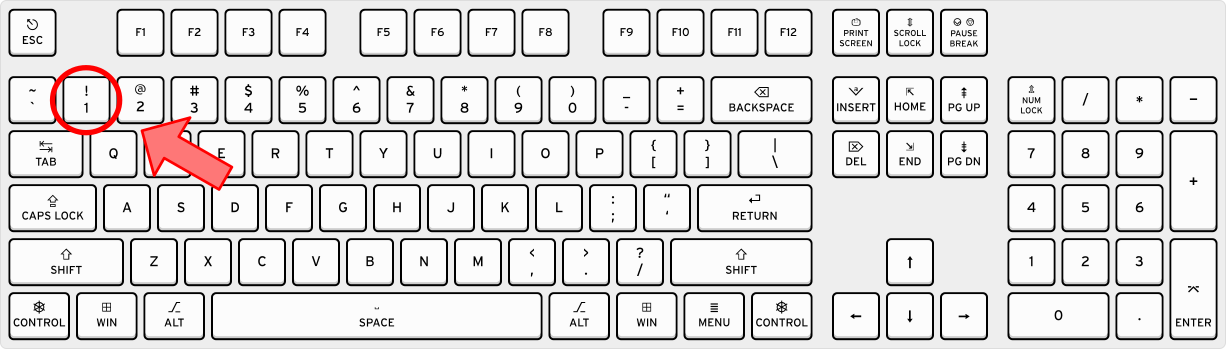
/// The key is in its "normal" location on the keyboard.
///
/// For instance, the "1" key above the "Q" key on a QWERTY keyboard will use this location.
/// This invariant is also returned when the location of the key cannot be identified.
///
/// 
///
/// <sub>
/// For image attribution, see the
/// <a href="https://github.com/rust-windowing/winit/blob/master/docs/res/ATTRIBUTION.md">
/// ATTRIBUTION.md
/// </a>
/// file.
/// </sub>
Standard,
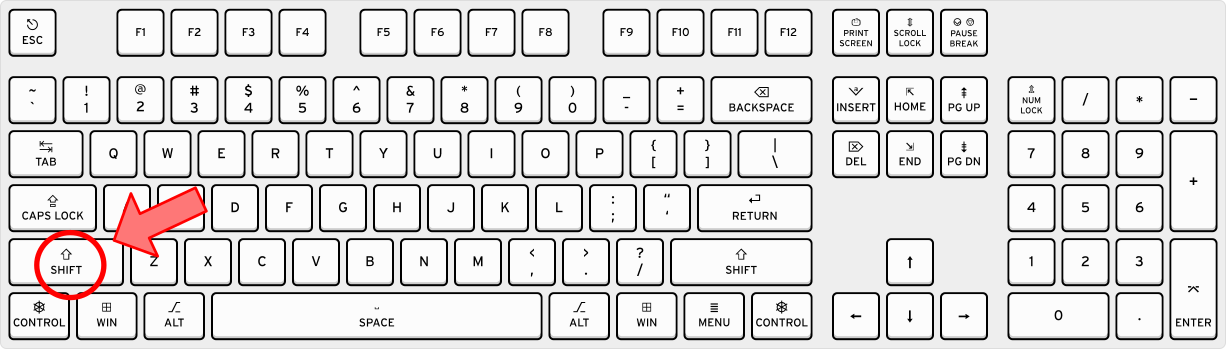
/// The key is on the left side of the keyboard.
///
/// For instance, the left Shift key below the Caps Lock key on a QWERTY keyboard will use this
/// location.
///
/// 
///
/// <sub>
/// For image attribution, see the
/// <a href="https://github.com/rust-windowing/winit/blob/master/docs/res/ATTRIBUTION.md">
/// ATTRIBUTION.md
/// </a>
/// file.
/// </sub>
Left,
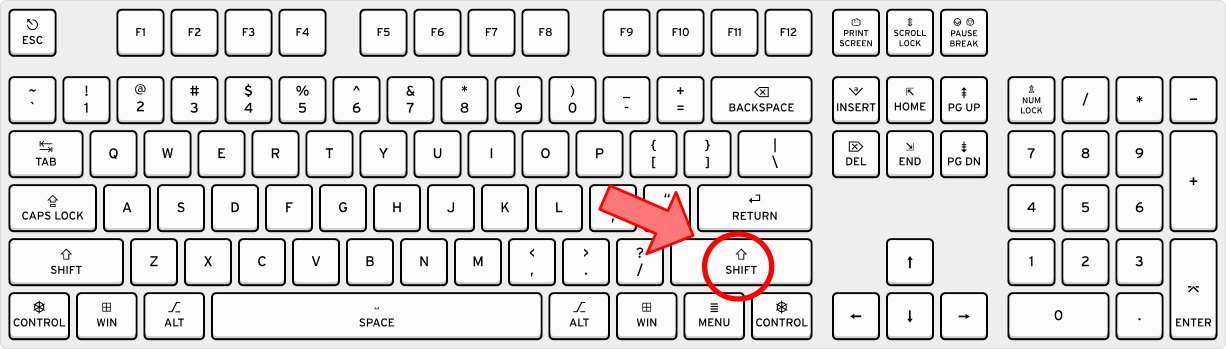
/// The key is on the right side of the keyboard.
///
/// For instance, the right Shift key below the Enter key on a QWERTY keyboard will use this
/// location.
///
/// 
///
/// <sub>
/// For image attribution, see the
/// <a href="https://github.com/rust-windowing/winit/blob/master/docs/res/ATTRIBUTION.md">
/// ATTRIBUTION.md
/// </a>
/// file.
/// </sub>
Right,
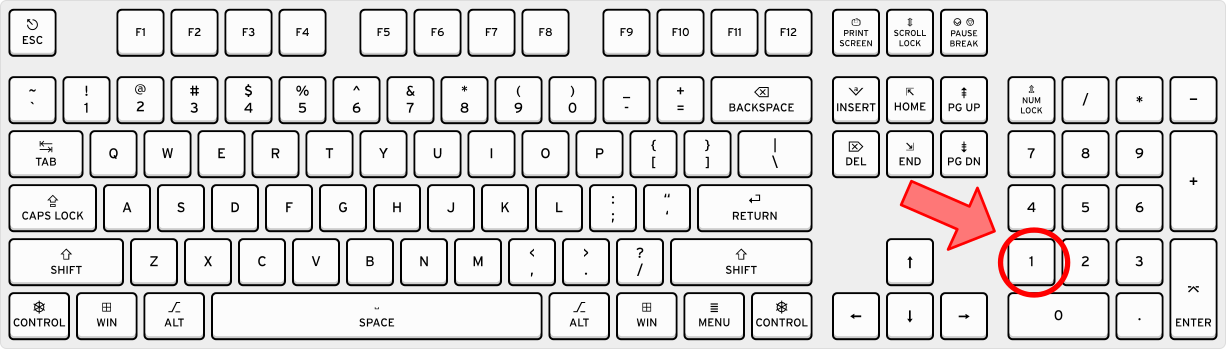
/// The key is on the numpad.
///
/// For instance, the "1" key on the numpad will use this location.
///
/// 
///
/// <sub>
/// For image attribution, see the
/// <a href="https://github.com/rust-windowing/winit/blob/master/docs/res/ATTRIBUTION.md">
/// ATTRIBUTION.md
/// </a>
/// file.
/// </sub>
Numpad,
}
bitflags! {
/// Represents the current state of the keyboard modifiers
///
/// Each flag represents a modifier and is set if this modifier is active.
#[derive(Default, Debug, Clone, Copy, PartialEq, Eq, PartialOrd, Ord, Hash)]
pub struct ModifiersState: u32 {
/// The "shift" key.
const SHIFT = 0b100;
/// The "control" key.
const CONTROL = 0b100 << 3;
/// The "alt" key.
const ALT = 0b100 << 6;
/// This is the "windows" key on PC and "command" key on Mac.
const SUPER = 0b100 << 9;
}
}
impl ModifiersState {
/// Returns `true` if the shift key is pressed.
pub fn shift_key(&self) -> bool {
self.intersects(Self::SHIFT)
}
/// Returns `true` if the control key is pressed.
pub fn control_key(&self) -> bool {
self.intersects(Self::CONTROL)
}
/// Returns `true` if the alt key is pressed.
pub fn alt_key(&self) -> bool {
self.intersects(Self::ALT)
}
/// Returns `true` if the super key is pressed.
pub fn super_key(&self) -> bool {
self.intersects(Self::SUPER)
}
}
/// The state of the particular modifiers key.
#[derive(Default, Debug, Clone, Copy, PartialEq, Eq)]
pub enum ModifiersKeyState {
/// The particular key is pressed.
Pressed,
/// The state of the key is unknown.
#[default]
Unknown,
}
// NOTE: the exact modifier key is not used to represent modifiers state in the
// first place due to a fact that modifiers state could be changed without any
// key being pressed and on some platforms like Wayland/X11 which key resulted
// in modifiers change is hidden, also, not that it really matters.
//
// The reason this API is even exposed is mostly to provide a way for users
// to treat modifiers differently based on their position, which is required
// on macOS due to their AltGr/Option situation.
bitflags! {
#[derive(Default, Debug, Clone, Copy, PartialEq, Eq, Hash)]
pub(crate) struct ModifiersKeys: u8 {
const LSHIFT = 0b0000_0001;
const RSHIFT = 0b0000_0010;
const LCONTROL = 0b0000_0100;
const RCONTROL = 0b0000_1000;
const LALT = 0b0001_0000;
const RALT = 0b0010_0000;
const LSUPER = 0b0100_0000;
const RSUPER = 0b1000_0000;
}
}
#[cfg(feature = "serde")]
mod modifiers_serde {
use super::ModifiersState;
use serde::{Deserialize, Deserializer, Serialize, Serializer};
#[derive(Default, Serialize, Deserialize)]
#[serde(default)]
#[serde(rename = "ModifiersState")]
pub struct ModifiersStateSerialize {
pub shift_key: bool,
pub control_key: bool,
pub alt_key: bool,
pub super_key: bool,
}
impl Serialize for ModifiersState {
fn serialize<S>(&self, serializer: S) -> Result<S::Ok, S::Error>
where
S: Serializer,
{
let s = ModifiersStateSerialize {
shift_key: self.shift_key(),
control_key: self.control_key(),
alt_key: self.alt_key(),
super_key: self.super_key(),
};
s.serialize(serializer)
}
}
impl<'de> Deserialize<'de> for ModifiersState {
fn deserialize<D>(deserializer: D) -> Result<Self, D::Error>
where
D: Deserializer<'de>,
{
let ModifiersStateSerialize { shift_key, control_key, alt_key, super_key } =
ModifiersStateSerialize::deserialize(deserializer)?;
let mut m = ModifiersState::empty();
m.set(ModifiersState::SHIFT, shift_key);
m.set(ModifiersState::CONTROL, control_key);
m.set(ModifiersState::ALT, alt_key);
m.set(ModifiersState::SUPER, super_key);
Ok(m)
}
}
}